Iran War Fear: Stunning US Attacks Raise Alarm


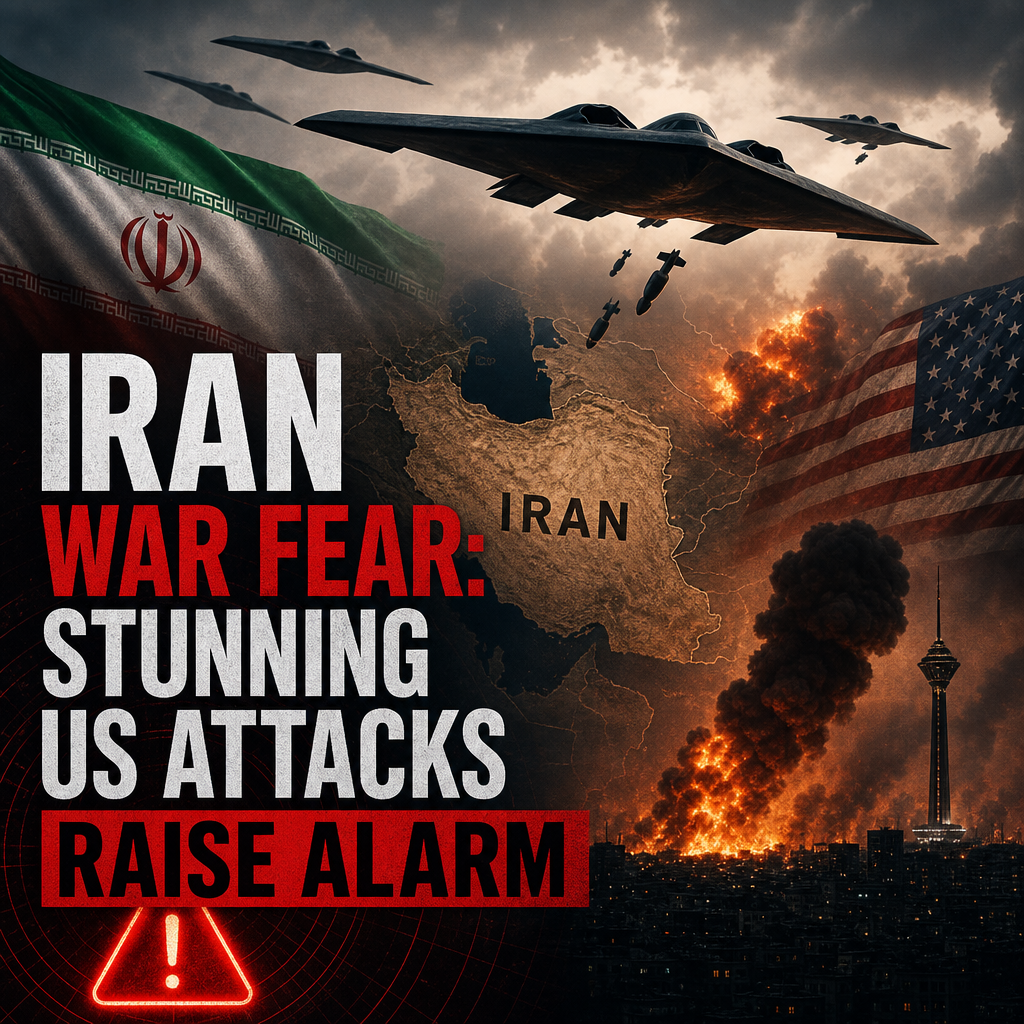
Iran war fear is rising again as new US strikes on military and civilian-linked targets have triggered warnings that the Middle East could slide back into a wider conflict.
What makes this moment especially fraught is not just the scale of the attacks, but the uncertainty around what comes next. Reporting across major international outlets suggests a common thread: the strikes have deepened alarm in Tehran, sharpened fears among regional neighbors, and left diplomats scrambling to prevent a cycle of retaliation from taking hold. At the same time, the coverage also shows that the picture is far from one-sided. Some voices frame the attacks as a necessary response to security threats, while others see them as a dangerous escalation that could easily spiral beyond control.



Why these attacks have raised the alarm
The immediate concern is that the US strikes did not stay neatly within a military lane. When civilian infrastructure or civilian-adjacent targets enter the picture, the political and emotional stakes change fast. That is partly why the reaction has been so sharp in the region: even limited strikes can be interpreted as a signal that the conflict is widening rather than being contained.
Al Jazeera’s reporting has emphasized the fear of “renewed war” and the possibility that the situation could shift from isolated exchanges into a larger confrontation involving multiple fronts. That concern is echoed in broader international coverage, which notes that Iran is unlikely to treat such attacks as minor incidents. Even when officials avoid immediate escalation, the pressure to respond is intense, especially when domestic audiences expect a show of strength.




Sky News coverage, meanwhile, has tended to focus on the strategic risk: once the US and Iran are both seen as directly engaged, the margin for miscalculation gets very small. That matters because in this kind of conflict, the most dangerous moves are often not planned offensives but retaliatory steps that trigger another round of escalation.
RT’s framing has generally leaned toward the idea that the US is expanding conflict under the banner of deterrence, highlighting the view that Washington’s actions can worsen instability rather than solve it. That perspective is important even if readers disagree with the political angle, because it captures a real concern shared by many analysts: military pressure may temporarily disrupt an opponent, but it can also strengthen hardliners and reduce room for diplomacy.
Iran war fear and the risk of a wider regional chain reaction
The biggest issue is that the conflict does not exist in a vacuum. Iran has relationships, proxies, and strategic interests across the region, and any direct attack raises the possibility of spillover. That could mean missile launches, drone attacks, cyber retaliation, maritime disruption, or action by allied groups operating in nearby theaters.
What could happen next?
There are several plausible paths, none of them reassuring:
– Limited retaliation: Iran could respond in a controlled way to restore deterrence without seeking full-scale war.
– Proxy escalation: Allied groups or regional partners could become more active, widening the conflict without a formal declaration.
– Diplomatic containment: Backchannel talks and international pressure could slow the cycle before it becomes unmanageable.
– Mistaken escalation: A single attack or misread signal could trigger a much broader military response than anyone intended.
This is where the reporting across sources converges most clearly: no one is treating the situation as routine. Even outlets that differ sharply in editorial tone appear to agree that the danger lies less in a single strike than in what it unlocks afterward. Once trust collapses, every move becomes easier to interpret as preparation for something bigger.
Another important theme is the civilian cost. When military operations are tied to civilian or mixed-use sites, the humanitarian and political consequences multiply. That not only increases international criticism, but also makes compromise harder. Leaders who might otherwise accept de-escalation can feel boxed in by domestic outrage and the need to appear defiant.
What the coverage suggests about US motives and regional anxieties
The US position is usually framed as deterrence: respond forcefully enough to prevent further attacks, restore credibility, and signal that threats will carry costs. Supporters of this approach argue that weakness invites more aggression and that controlled strikes can prevent a bigger war later. This is the logic often used to justify sudden, high-impact military action.
But the criticism is equally strong. Opponents argue that the US is repeating a familiar pattern: using force in the name of stability, then watching the region become more unstable. From this angle, the attacks are not just tactical decisions; they are political signals that may embolden confrontation on all sides.
For regional states, the fear is less ideological and more practical. They worry about disrupted trade, oil prices, shipping routes, refugee pressure, and the possibility of being pulled into a conflict not of their choosing. Even governments that privately welcome pressure on Iran may not want an open-ended war on their doorstep.
A cautious conclusion
The clearest takeaway from the reporting is that the situation has crossed into a more dangerous phase, but not yet into inevitable war. That distinction matters. There is still room for restraint, signaling, and diplomacy—but it is shrinking.
At this point, the most responsible reading is neither panic nor complacency. The attacks have undeniably heightened the risk of escalation, and the presence of both military and civilian targets has made that risk feel more immediate. Yet the next steps depend on decisions made in Tehran, Washington, and regional capitals over the coming days. If cooler heads hold, the crisis may still be contained. If not, the alarm now surrounding Iran war fear may turn out to have been a warning, not an overreaction.