Iranian Forces: Stunning Missile and Drone Attack on US Targets


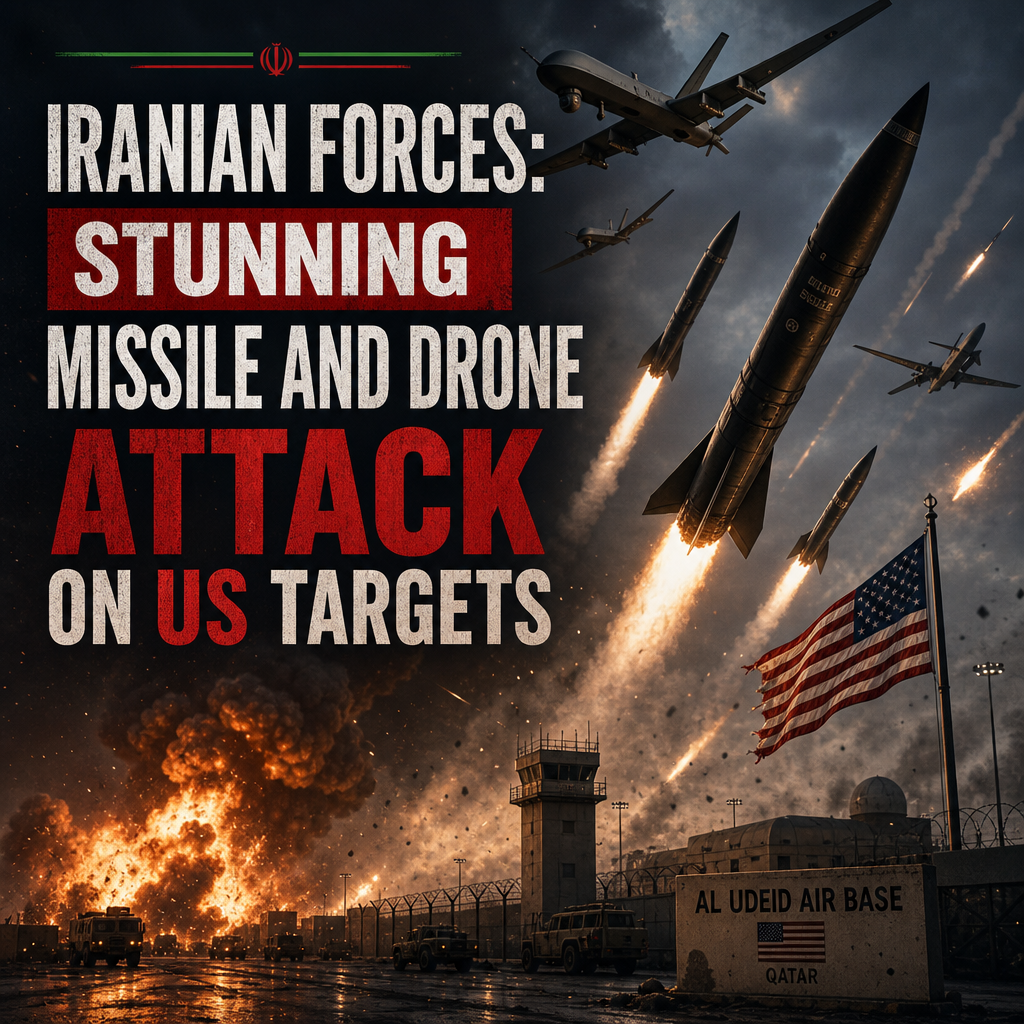
Iranian forces attack has once again pushed the Gulf into a moment of heightened anxiety, after reports that missiles and drones were launched toward US-linked targets in the region. What makes this episode especially significant is not only the scale of the strike, but the way it has been interpreted through very different political lenses: as retaliation, deterrence, escalation, or all three at once. Taken together, the coverage from regional and international outlets suggests one clear conclusion: whatever the immediate military impact, the strategic and diplomatic consequences could be far more important.
What happened and why it matters
According to reports circulating from multiple newsrooms, the strike involved a combination of missiles and drones directed at US targets in Gulf states. That detail matters because it points to a broader pattern in modern regional conflict: the use of layered, low-cost, high-pressure weapons to overwhelm defenses and send a political message at the same time. Drone attacks, in particular, are often chosen not only for their military utility but for their psychological effect. They can signal reach, speed, and intent without necessarily committing to a full-scale conventional confrontation.



Coverage from Al Jazeera framed the event within the long-running tension between Iran and the United States, especially the shadow conflict that plays out across the Gulf. That perspective emphasizes the region’s fragility: military incidents do not happen in isolation, but in an environment shaped by sanctions, proxy relationships, maritime insecurity, and unresolved grievances. In that reading, the strike is less a surprise than a warning that the current balance is unstable.
Sky News, by contrast, tends to place stronger emphasis on immediate security implications for Western interests and regional stability. From that angle, the central question becomes whether the attack was a one-off show of force or the beginning of a broader campaign. That distinction matters to governments and markets alike, because the Gulf is not only a military theater but a critical zone for energy, trade, and air traffic. Any perception that US assets are vulnerable can quickly ripple outward.




RT’s coverage of events like this often highlights the geopolitical context more sharply, including the argument that Iran is responding to pressure from Washington and its allies rather than acting without provocation. That viewpoint does not automatically justify the attack, but it does frame it as part of a cycle of escalation rather than an isolated act of aggression. Whether one accepts that framing or not, it reflects an important reality: regional violence is frequently reciprocal, with each side claiming defensive motives while the overall risk keeps rising.
Iranian forces attack: retaliation, deterrence, or messaging?
The hardest part of interpreting incidents like this is separating military intent from political theater. A missile and drone strike can be designed to cause damage, but it can also be meant to demonstrate capability and resolve. In that sense, Iranian forces attack strategies are often as much about signaling as they are about battlefield outcomes.
There are at least three plausible explanations for the operation:
– Retaliation: Iran may be responding to a prior perceived provocation, such as sanctions, covert action, or attacks on its interests.
– Deterrence: The strike may be intended to warn the US and its partners against future pressure or military action.
– Domestic messaging: It may also serve internal political goals by showing strength to domestic audiences and hardliners.
These motivations are not mutually exclusive. In fact, they often overlap. A government can simultaneously retaliate, deter, and reassure its own supporters. That complexity is one reason why outside observers should be cautious about reading any one statement too literally. Official claims of restraint or precision often coexist with actions that increase the danger of miscalculation.
What stands out across the coverage is that there is no strong sign of consensus about the broader meaning of the attack. Some outlets present it as a direct challenge to American power. Others stress the chain of escalation that made the strike more likely. That split is not just editorial; it reflects the reality that the region’s security environment is defined by competing narratives.
The wider regional stakes
The Gulf has long been one of the world’s most sensitive strategic spaces. Even limited attacks can have consequences far beyond the immediate target. They can affect shipping routes, insurance costs, diplomatic calculations, and military readiness. They can also trigger a response that is disproportionate to the original event.
This is what makes the situation so precarious. If the attack is treated as a contained incident, tensions may cool. If it is seen as a major challenge that requires forceful retaliation, the region could move into a more dangerous phase. History suggests that both restraint and escalation carry risks: restraint can be criticized as weakness, while retaliation can widen the conflict.
There is also an important civilian dimension that can be overlooked in military reporting. Even when missiles and drones miss their intended targets, they can still create fear, disrupt airports or infrastructure, and heighten insecurity for ordinary people living in the region. That human cost is often the least visible part of the story, but it is one of the most enduring.
A cautious reading of the moment
The most responsible interpretation of this attack is probably the least dramatic one: it is a serious escalation, but not necessarily the opening of a full-scale war. That does not make it less important. In today’s Middle East, major crises often begin with actions that are limited in form but expansive in implication.
What the current reporting makes clear is that the strike should be understood in context, not in isolation. Al Jazeera’s regional framing, Sky News’ focus on security risk, and RT’s emphasis on geopolitical pressure all point to different pieces of the same puzzle. Together, they suggest a region where deterrence is fragile, communication is strained, and every attack carries the possibility of unintended consequences.
For now, the biggest question is not simply what was fired, but what comes next. If the response is measured, there may still be room to contain the fallout. If it is forceful, the incident could become another turning point in a conflict that is increasingly fought through drones, missiles, and messaging rather than open battle.