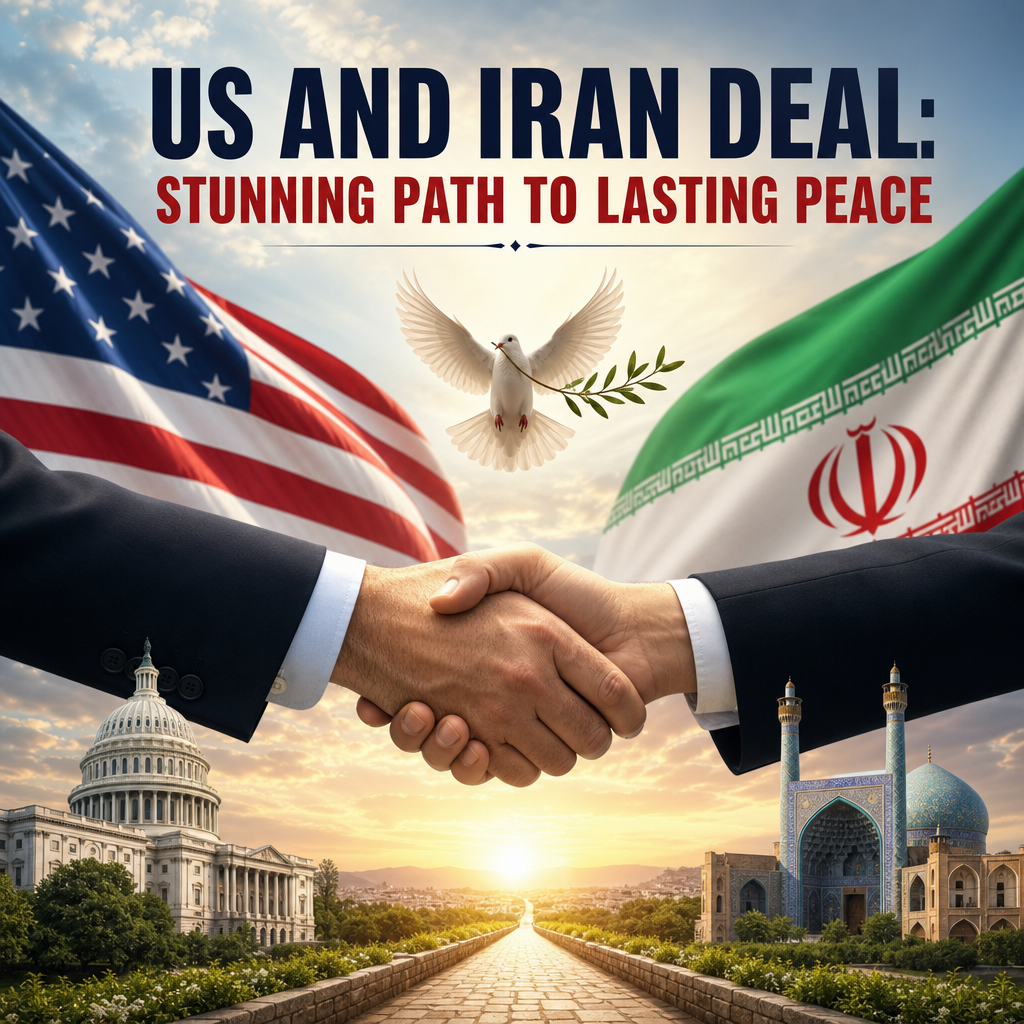
US and Iran Deal: Stunning Path to Lasting Peace


US and Iran deal talks continue to capture global attention because they sit at the intersection of nuclear fears, regional war, sanctions pressure, and a long history of mistrust. Across the latest coverage from international outlets, a common thread emerges: the idea of a lasting peace is not impossible, but it is far more complicated than a single agreement or headline can suggest.
The strongest shared message is that both Washington and Tehran have reasons to avoid an uncontrolled slide into wider conflict. Yet the sources also show how far apart the two sides remain on the fundamentals. One camp sees diplomacy as the only realistic path to prevent escalation. Another warns that any deal without firm verification and regional buy-in could simply delay the next crisis. A third argues that the US itself has often undermined trust through sanctions, withdrawals, and military pressure. Taken together, the picture is less about a clean breakthrough and more about whether a fragile bargain can survive long enough to matter.



Why a US and Iran deal still matters
A US and Iran deal would not just be about the two governments signing a document. It would affect nuclear oversight, sanctions, oil markets, proxy conflicts, and the security calculations of Israel, Gulf states, and European powers. That is why the stakes are so high: even a partial agreement could ease tensions, while failure could deepen instability across the region.
From a diplomatic standpoint, the case for talks is straightforward. Iran has repeatedly indicated that economic relief is central to any meaningful compromise, while the US and its allies want limits on uranium enrichment and stronger monitoring. In principle, those interests overlap. In practice, each side doubts the other’s willingness to honor commitments.




Al Jazeera’s coverage often frames this dilemma through the broader regional conflict, stressing that diplomacy cannot be separated from the wars and power struggles surrounding Iran. Sky News, by contrast, tends to emphasize the practical challenge for Western policymakers: how to prevent a nuclear breakout while keeping allies reassured and avoiding a deal that looks too permissive. RT’s commentary frequently pushes the argument that Washington’s role has been destabilizing, portraying US pressure as a major obstacle to trust-building. That disagreement matters, because it shapes how audiences interpret the same events.
The lesson from past talks
The core problem is not that diplomacy has never worked. It has. The 2015 nuclear agreement showed that technical constraints and verification mechanisms can produce real results. The problem is durability. Once a deal depends on domestic politics in multiple countries, one election, one assassination, one military strike, or one withdrawal can unravel it quickly.
That history leaves negotiators with a difficult lesson: any future agreement must be more resilient than the last one. That means clearer enforcement, better sequencing of sanctions relief, and a broader political framework that reduces the chance of immediate collapse.
The obstacles to lasting peace
A lasting peace deal between the US and Iran faces several obstacles that are bigger than the nuclear file alone.
– Mutual distrust: Both governments see the other as unreliable, and that distrust is reinforced by decades of confrontation.
– Regional flashpoints: Iran-linked groups, Israeli security concerns, and Gulf tensions all complicate negotiations.
– Sanctions pressure: Tehran wants meaningful economic relief, but Washington faces political resistance to easing sanctions too quickly.
– Domestic politics: Leaders in both countries must satisfy hardliners who often view compromise as weakness.
– Competing security visions: The US wants restraint and transparency; Iran wants recognition, deterrence, and relief from isolation.
This is where the “stunning path to lasting peace” idea becomes more aspirational than descriptive. There is no evidence that peace would arrive suddenly, or that a single summit would settle all the underlying disputes. The more realistic outcome is incremental: a freeze-for-relief arrangement, limited prisoner exchanges, indirect talks, or narrower understandings designed to reduce the risk of immediate conflict.
Still, incremental does not mean insignificant. In a region where miscalculation can be catastrophic, even a temporary pause can save lives and open political space for broader negotiations later.
What the sources agree on — and where they differ
There is broad agreement across the media landscape that the current standoff is dangerous and that diplomacy remains preferable to war. There is also consensus that the nuclear issue cannot be separated from the broader geopolitical contest.
The differences are sharper on blame and credibility.
– Some coverage stresses Iran’s enrichment advances and the need for strict limits.
– Some emphasizes the impact of US sanctions and broken promises.
– Some frames the situation as a regional security problem requiring wider diplomacy, not just a bilateral bargain.
That contrast is important because it reveals why public debate often stalls. Each side believes it is asking the other for restraint while receiving little in return. Without a shared baseline of trust, the same proposal can look like pragmatism to one side and surrender to the other.
A realistic path forward
The most balanced conclusion is that a US and Iran deal is possible, but only if it is treated as a process rather than a finish line. Lasting peace would require more than nuclear limits. It would need:
1. Reliable verification so neither side can claim surprise.
2. Phased sanctions relief tied to measurable compliance.
3. Regional de-escalation measures to reduce proxy conflict.
4. Political guarantees strong enough to outlast a single administration.
5. Communication channels that stay open even during crises.
That is a demanding list, and none of it is easy. But it reflects the reality highlighted across the coverage: the alternative to diplomacy is not stability, but a more dangerous cycle of pressure, retaliation, and uncertainty.
So while a lasting peace between the US and Iran remains distant, the idea should not be dismissed as naive. The more sensible view is that peace would probably arrive in stages, through imperfect compromises and constant testing. In a relationship this damaged, that may be the only path that has a chance of holding.