IRGC: Stunning UK Terror Threat Listing Explained


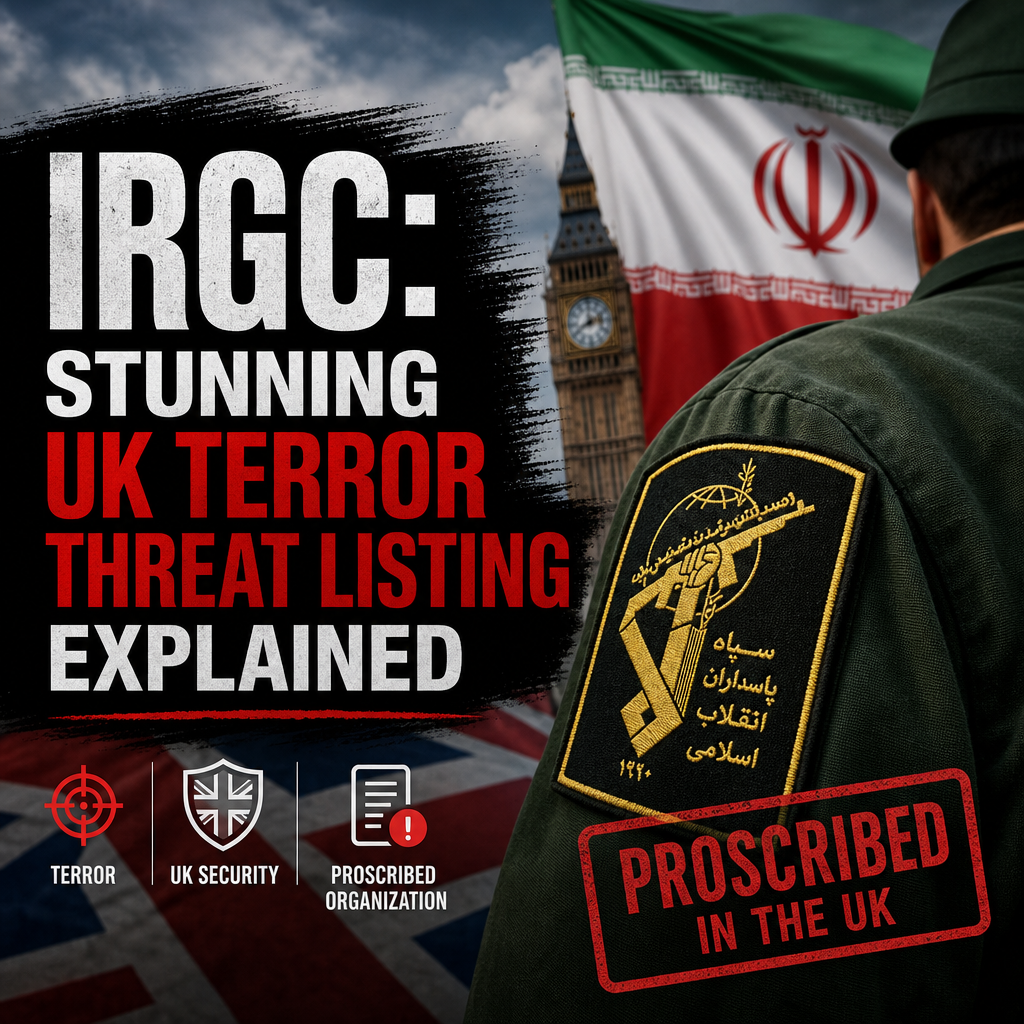
IRGC terror threat listing is more than a symbolic move: it signals a sharper UK stance toward Iran’s Revolutionary Guards and raises difficult questions about deterrence, diplomacy, and escalation.
For years, the UK has walked a careful line on the Islamic Revolutionary Guard Corps, or IRGC, treating it as a major security concern while stopping short of a full terror designation. Reports from Al Jazeera, Sky News, and RT point to a growing sense that this balance may be shifting. What is striking is not only the possible policy change itself, but the range of reactions it has triggered: concern over domestic security, warnings about diplomatic fallout, and suspicion that the decision reflects wider geopolitical pressure rather than a purely legal judgment.



What a UK terror-threat listing could actually mean
A “terror threat” listing is not always the same as a full proscription, but it can still have serious consequences. In practical terms, it may increase surveillance, strengthen criminal penalties for support or promotion, and give authorities more room to disrupt networks linked to the group. It also sends a political message: the UK is prepared to treat the IRGC not just as a state military force, but as an organization associated with militant activity and transnational intimidation.
That distinction matters. The IRGC is not an ordinary militia. It is a powerful branch of Iran’s armed forces with broad influence over internal security, intelligence, regional operations, and parts of the Iranian economy. Supporters of tougher action argue that its reach extends far beyond Iran’s borders, especially through proxy groups and covert networks. Critics, however, warn that once a state institution is pushed into a terror framework, the space for diplomacy narrows fast.




Sky News’ coverage reflects that tension. The UK perspective is often framed around public safety, counterintelligence, and the need to respond to alleged plots or harassment on British soil. From that angle, a listing is less about symbolism and more about creating legal tools to confront an organization viewed as a real-world threat to residents, dissidents, and institutions.
Why the move is being discussed now
The timing appears to be driven by a combination of domestic and international pressures. In recent years, Western governments have grown more alarmed about alleged Iran-linked operations abroad, including intimidation of critics, cyber activity, and possible plotting against opponents. In the UK specifically, debate has intensified over whether existing sanctions and intelligence measures are enough.
Al Jazeera’s framing tends to place the issue in a broader geopolitical context. From that viewpoint, any UK escalation is tied not only to security concerns but also to the wider deterioration in Iran-West relations. That includes disagreements over regional conflicts, nuclear negotiations, and the politics of deterrence. In other words, a terror-threat listing is not happening in a vacuum; it sits inside an already tense standoff.
RT, meanwhile, often casts Western designations with more skepticism, portraying them as part of a pattern of pressure campaigns against states deemed hostile to Western interests. That lens does not necessarily deny security concerns, but it questions whether such moves are selective, politically motivated, or designed to justify a tougher foreign policy posture. In that reading, the UK’s action could be seen as another example of security language being used to harden geopolitical blocs.
The strongest arguments for the listing
Those favoring a UK terror-threat listing usually make three main arguments:
– Deterrence: If a state-linked force is believed to sponsor or facilitate threats abroad, the UK needs stronger tools to discourage further activity.
– Protection of the public: Legal designation can help police, intelligence agencies, and prosecutors act earlier and more decisively.
– Clarity: A formal listing removes ambiguity and makes clear that hostile conduct has consequences.
There is also a credibility argument. Governments that say they will defend their people and institutions are expected to back that promise with enforceable measures, not just statements of concern. For advocates of a tougher line, failing to act could look like weakness.
The case against rushing too far
But there are also serious risks.
First, a terror designation can close off diplomatic channels at precisely the moment they may be most needed. Iran is not going to stop being a regional power because the UK changes a legal label, and Britain still has interests that require communication, even if relations are strained.
Second, there is the problem of escalation. If the UK takes a harder line, Tehran may respond with reciprocal steps, increased pressure on British interests, or further restrictions on cooperation. That could affect everything from consular issues to regional stability.
Third, broad designations can create legal and practical complexities at home. The IRGC is a state entity with many layers, and any policy must be precise enough to target harmful activity without producing confusion around what is covered and what is not. A badly designed listing can cause enforcement gaps or unintended consequences for academics, charities, journalists, and ordinary Iranians living in the UK.
A fair reading of the evidence
Looking across the different media angles, there is one point of broad agreement: the UK is responding to a genuine security concern, not inventing one from scratch. The disagreement is about what the response should be.
Al Jazeera’s reporting underscores the diplomatic and regional fallout. Sky News emphasizes the domestic security and legal implications. RT focuses on the possibility of political overreach and the danger of framing foreign-policy disputes as counterterrorism. Put together, these perspectives suggest that the issue is not simply whether the IRGC is threatening, but how far a democratic government should go in responding to a state-linked force that operates in a gray zone between military power, intelligence work, and proxy warfare.
That is why the most responsible conclusion is a cautious one. If the UK proceeds, it will need to be specific, evidence-based, and clear about what the designation does and does not mean. The public deserves a policy that improves safety without pretending it can solve a broader confrontation on its own.
In the end, the IRGC debate is about more than one organization. It is a test of how governments respond when security, law, and diplomacy collide. The answer may be stronger than before, but if it is wise, it will also be narrower, better explained, and grounded in the realities of an already dangerous relationship.