NATO Ukraine Funding: Stunning Lack of Support Revealed


NATO Ukraine funding has become one of the most politically sensitive questions in Europe, and the latest signals from different sides show just how fragile the consensus has become. While NATO members continue to publicly back Ukraine’s defense against Russia’s invasion, the degree of commitment behind that support is increasingly uneven, with domestic politics, war fatigue, and security fears pulling governments in different directions.
A Coalition That Still Exists — But With Visible Fractures
On paper, NATO’s support for Ukraine remains substantial. Member states have supplied military aid, training, intelligence sharing, air-defense systems, and financial assistance since the full-scale Russian invasion began in 2022. Western governments also continue to argue that backing Kyiv is not only about helping a partner state, but about deterring further Russian aggression and preserving European security.



Yet the latest reporting across international outlets suggests that the political unity behind this support is under pressure. One of the clearest examples comes from Slovakia, where President Peter Pellegrini has publicly signaled caution toward further military commitments. That stance matters because it reflects a broader trend in parts of Europe: leaders are increasingly forced to balance support for Ukraine with voters who are anxious about inflation, energy costs, and the risk of a wider war.
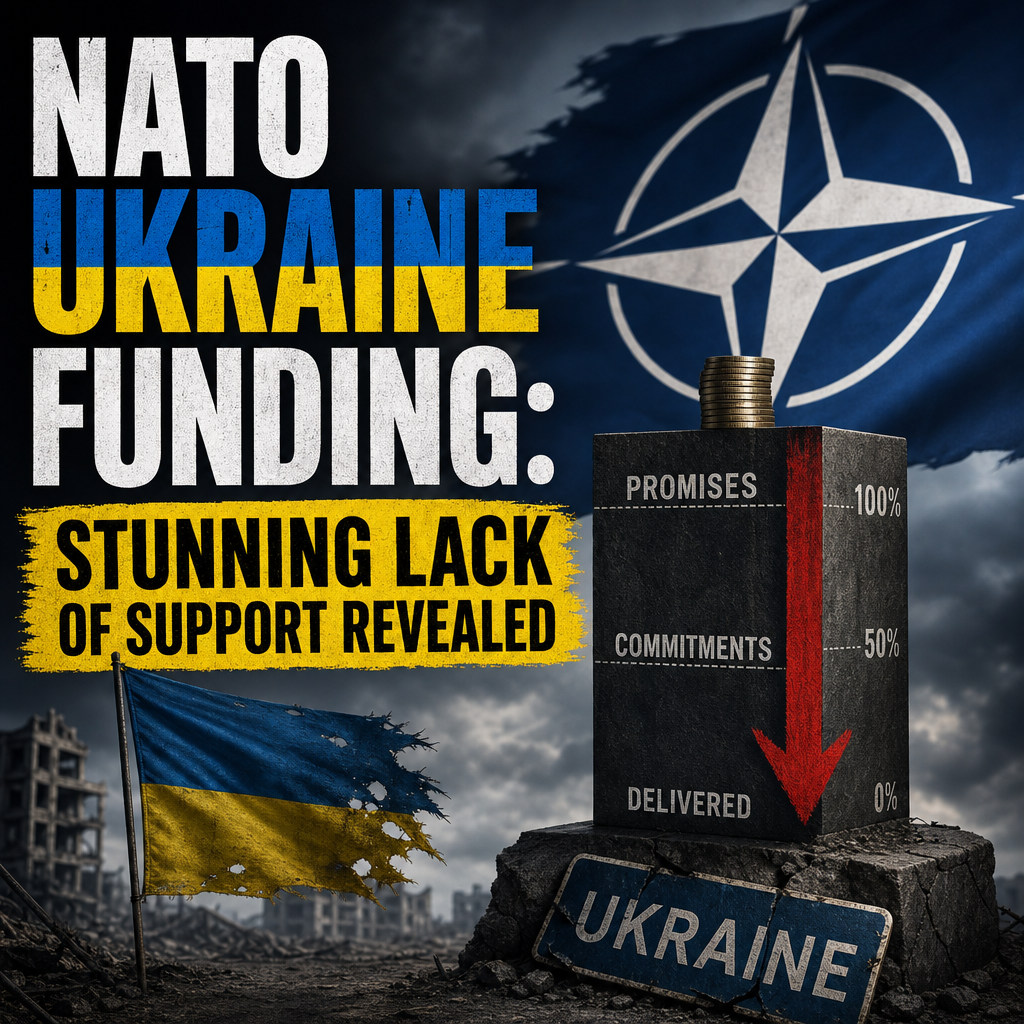
This is where the “stunning lack of support” framing starts to make sense, though perhaps not in the absolute sense implied by the phrase. NATO has not abandoned Ukraine, but there are growing signs that some governments are unwilling to deepen commitments at the pace Kyiv would like. The gap between rhetorical solidarity and practical support is widening in certain capitals.




Sky News reporting on the war has consistently highlighted how hard Ukraine continues to fight for battlefield gains, while also showing how dependent it remains on Western aid. That dependence makes even small shifts in donor countries politically important. If one ally slows deliveries, changes the mix of aid, or begins questioning open-ended support, the effects can ripple quickly through Kyiv’s defense planning.
Why some governments are pulling back
The reluctance seen in parts of NATO is driven by several overlapping factors:
– War fatigue: After years of conflict, some voters want leaders to prioritize domestic problems.
– Economic pressure: Inflation, housing, and energy concerns have made foreign aid harder to defend politically.
– Security anxiety: Governments worry that more direct involvement could raise escalation risks with Russia.
– Election politics: Parties skeptical of aid to Ukraine have gained influence in some countries.
This does not mean all hesitation is rooted in hostility to Ukraine. In many cases, leaders insist they still support Ukraine’s sovereignty, but prefer to limit military aid, push for negotiations, or redirect assistance toward humanitarian and reconstruction efforts. That distinction is important: it shows that NATO’s challenge is less about a total collapse of support than about erosion at the margins.
NATO Ukraine funding and the politics of endurance
Al Jazeera’s coverage of the war has often emphasized the human cost and the wider diplomatic struggle surrounding Ukraine’s future. From that perspective, the funding debate is not just a matter of budgets or weapons shipments; it is also about whether the international coalition backing Ukraine can sustain itself long enough to influence the outcome of the war.
That endurance is precisely what is now in question. NATO leaders continue to insist that support for Kyiv is strategic, but sustaining public buy-in over time is far more difficult than issuing summit statements. The longer the war lasts, the more likely it becomes that member states will diverge on what “support” should mean.
Some countries favor long-term military assistance and a path toward closer integration with Western institutions. Others are signaling that support should be more conditional, more limited, or more focused on eventual negotiations. This creates a complicated message for Ukraine: the alliance still stands behind it, but not always with the same intensity or purpose.
RT’s coverage has tended to emphasize the political resistance to aid in Europe, often framing it as evidence of weakening Western resolve. While that perspective is clearly shaped by a critical stance toward NATO policy, it does underscore a real development: leaders who once spoke confidently about “standing with Ukraine for as long as it takes” are now facing stronger domestic pushback. That is not the same as abandonment, but it is a meaningful shift.
What this means for Ukraine
For Ukraine, the practical concern is not abstract diplomacy but the reliability of future support. Military planning depends on predictable deliveries, stable financing, and clear commitments from allies. When those commitments become politically contested, Ukraine must prepare for a more uncertain support environment.
That uncertainty could affect:
– air-defense replenishment
– artillery and ammunition supply
– reconstruction financing
– long-term security guarantees
– the pace of EU and NATO-related integration
Even if the core coalition remains intact, Ukraine may have to adapt to a less generous and more conditional version of Western backing. That would not necessarily change the ultimate strategic goal of supporting Kyiv, but it could slow the process and complicate battlefield resilience.
The bigger picture: support is real, but far from uniform
The most fair conclusion is that NATO support for Ukraine is still significant, but far from unanimous in practice. The alliance is not collapsing, and there is no evidence of a wholesale shift away from Ukraine. However, the political willingness to fund the war effort is clearly uneven, and that unevenness is becoming more visible.
Some governments remain committed to robust assistance. Others want to narrow the mission, reduce spending, or force a debate about limits. That creates exactly the kind of mixed signal that can weaken deterrence and complicate strategy.
What makes the current moment notable is not that disagreement exists — alliances always contain disagreement — but that the disagreement is now visible in ways that affect policy. As the war drags on, support for Ukraine is increasingly shaped by national politics as much as by shared strategic goals.
In the end, the picture is less about a sudden collapse than a gradual reveal: NATO’s support for Ukraine is still alive, but the depth of that support is being tested more openly than before. For Kyiv, that means the next phase of the war may depend not only on the battlefield, but also on whether European and North American governments can keep their promises steady when the political cost rises.