Trump Iran Strikes: Exclusive Bold Warning Continues


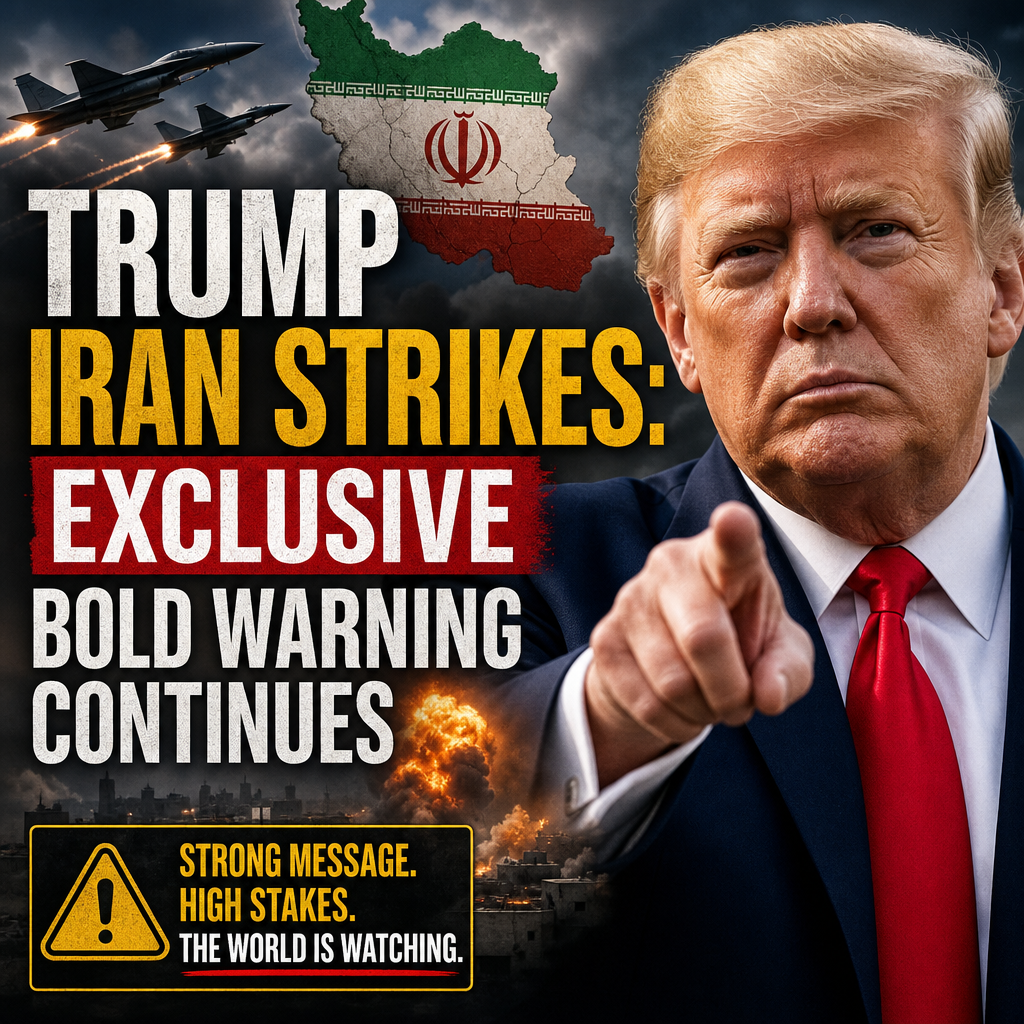
Trump Iran Strikes have pushed U.S.-Iran tensions back into the center of global security talks, with President Donald Trump adopting a harder line and signaling that the military campaign could continue if Tehran does not change course. The latest reporting paints a picture that is less about one isolated episode and more about a widening strategic gamble: Washington is trying to deter Iran, Tehran is warning of consequences, and outside observers are split on whether the pressure will restore leverage or pull the region closer to a broader conflict.
What makes the moment especially combustible is that each side appears to be reading escalation differently. Supporters of a tough U.S. posture argue that limited strikes can force Iran to reconsider its regional behavior. Critics, including many analysts in the Middle East and Europe, warn that even “targeted” attacks risk triggering retaliation that is harder to contain than the original strike. The result is a familiar but dangerous pattern: each side claims it is acting defensively, while the overall situation becomes more volatile.



Trump Iran Strikes and the Logic of Pressure
The strongest argument in favor of the Trump administration’s approach is deterrence. From this view, the point of strikes is not necessarily to start a war, but to convince Iran that further escalation will cost it more than it gains. That logic has long shaped U.S. policy in the region, especially when Iranian-backed groups or Iranian forces are seen as testing American resolve.
Al Jazeera’s coverage emphasizes the increasingly hard tone from Trump, suggesting the White House is prepared to continue if it believes pressure is working. That framing matters because it hints at an open-ended strategy rather than a one-off response. In practical terms, that means the administration may see strikes as a tool to shape negotiations, send a message to allies, and reassure domestic audiences that the U.S. is not standing still.




But deterrence is only effective if the other side believes the cost of retaliation will be even higher. That is where the strategy becomes risky. Iran has spent years building asymmetric capabilities, including regional proxy networks, missile capacity, and political influence. It does not need to respond symmetrically to make a point. Even a limited retaliation could hit shipping lanes, bases, or allied interests in ways that would force Washington to choose between restraint and further escalation.
Why some see the strikes as a warning rather than a strategy
There is also a political dimension. Trump has often framed foreign policy in terms of strength, unpredictability, and visible action. For supporters, that is part of the appeal: the U.S. is not merely warning Iran, it is demonstrating that warnings have consequences. RT’s coverage tends to present the issue through a more skeptical lens, highlighting the possibility that U.S. actions are less about stability and more about power projection, with the risk of dragging the region into a wider confrontation.
That critique is not hard to understand. Airstrikes may be tactically precise, but strategy is about outcomes, not just targets. If the goal is to reduce danger, then the administration still has to answer a difficult question: what comes after the bombs?
The Regional View: Fear of Spillover
For countries in the Middle East, the main concern is often not whether Washington is justified, but whether the conflict stays contained. Sky News’ reporting has reflected that broader international unease, where the focus is on the possibility of spillover, the safety of shipping routes, and the knock-on effects for energy markets and civilian populations.
That perspective matters because regional states are usually the ones who absorb the consequences first. Escalation can affect:
– commercial shipping through key waterways
– oil prices and supply stability
– military bases and diplomatic missions
– fragile political balances in neighboring countries
– already strained civilian populations
Even governments that quietly welcome pressure on Iran may worry that any military exchange will destabilize the region more than it weakens Tehran. That is especially true if strikes are followed by retaliation that is difficult to attribute or control. In a region where proxy conflict is already a fact of life, “limited” action can become anything but limited very quickly.
What the reporting agrees on
Despite different editorial angles, the sources broadly converge on three points:
1. The rhetoric has sharpened. Trump is not presenting this as a closed chapter; the warning is ongoing.
2. Iran is unlikely to remain passive. Even if the response is delayed or indirect, retaliation remains a serious possibility.
3. The broader risk is escalation, not just the immediate strike itself.
Where the coverage diverges is in interpretation. Al Jazeera highlights the seriousness of the U.S. posture and the possibility of continued strikes. RT pushes readers to question Washington’s motives and the long-term wisdom of force. Sky News frames the story through the lens of international stability and the anxieties of allies and markets. Put together, those views suggest there is no simple read on the situation—only a narrowing set of choices, each with real costs.
A cautious conclusion
The most honest assessment is that Trump Iran Strikes may create short-term leverage, but they do not automatically produce long-term security. If the purpose is deterrence, the administration must show not only that it can strike, but that it has a clear off-ramp. Without that, pressure can become its own escalation ladder.
That is why the current moment feels so unstable. The U.S. wants to look firm without being trapped in a larger war. Iran wants to avoid looking weak without inviting overwhelming retaliation. And the rest of the world is left hoping that both sides stop short of a move that would make a regional crisis far harder to control.
In the end, the bold warning from Washington may be as much a signal of uncertainty as of strength. The next phase will depend less on rhetoric than on whether either side believes it still has something to gain from stepping back.