Trump Iran Talks: Stunning Update After Hormuz Fire


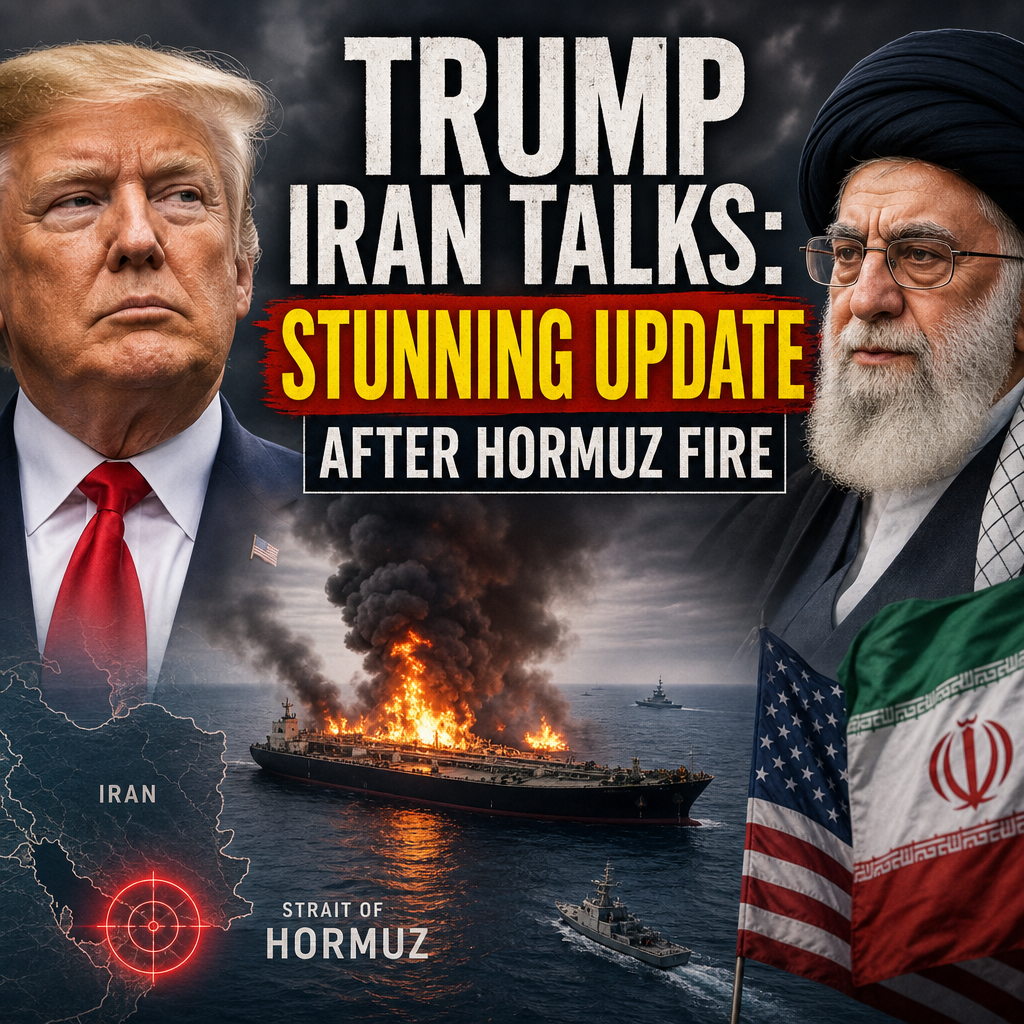
Trump Iran Talks have taken an unexpected turn after the latest violence in and around the Strait of Hormuz, where fears of escalation briefly gave way to a more complicated diplomatic picture. What looks, on the surface, like a ceasefire breakthrough is actually more fragile than that: the United States and Iran are still talking, but the tension that triggered the crisis has not disappeared. Reporting across Al Jazeera, Sky News, and RT points to a common theme — military pressure may have forced the parties back toward negotiation, but no one is pretending the underlying conflict has been resolved.
Trump Iran Talks and the fragile pause in hostilities
According to the latest updates, Trump has said the US has agreed to continue Iran talks, even as the ceasefire framework remains unsettled. That distinction matters. A ceasefire suggests a halt to active fighting, but a continuation of talks suggests the real objective is still being negotiated behind the scenes. In other words, the guns may be quieter for the moment, but the political confrontation is very much alive.



Al Jazeera’s reporting has emphasized the uncertainty around whether the ceasefire can hold and whether the diplomatic process has enough credibility to survive another incident in the Gulf. That caution is important. Whenever the Strait of Hormuz is involved, even a short burst of violence can rattle oil markets, unsettle shipping lanes, and raise the risk of broader regional spillover. The waterway is too strategically important for the world to treat any flare-up as a local event.
Sky News has framed the story around the practical question many governments are now asking: is this a real turning point, or simply a pause bought by pressure? That skepticism is warranted. Ceasefires announced in moments of crisis often collapse when the first hard issue is left unresolved. If the talks are only about freezing the immediate confrontation without tackling sanctions, enrichment, maritime security, and proxy tensions, then the arrangement may prove temporary.




RT’s coverage, meanwhile, has tended to reflect a more critical reading of US policy and the wider Western approach to Iran. From that angle, the latest talks can be seen less as a diplomatic triumph and more as evidence that force and brinkmanship have narrowed the options for everyone involved. Even if one does not accept that framing fully, it highlights an uncomfortable truth: a rushed deal can look like progress while masking the fact that no side has actually retreated from its core positions.
What the sources agree on
Despite their different angles, the three outlets converge on a few points:
– The situation is still unstable, especially after violence near Hormuz.
– Talks are continuing, but there is no clean, final settlement.
– The ceasefire or pause is politically useful, but strategically fragile.
– Any fresh incident could quickly undo diplomatic progress.
That is probably the fairest summary of the moment. There is no clear evidence yet that this is a lasting de-escalation. There is, however, evidence that all sides understand the cost of letting the crisis spin further out of control.
What the Hormuz fire changes in the bigger picture
The “Hormuz fire” matters because it changes the stakes well beyond the immediate military exchange. Even limited conflict in or around the strait can affect global energy prices, insurance rates for shipping, and the calculations of governments far from the Gulf. That is why these developments are being watched so closely in Washington, Tehran, London, and beyond.
What makes this moment especially delicate is that diplomacy is now moving alongside deterrence rather than replacing it. In past crises, leaders often tried to separate negotiation from the battlefield. Here, the two are unfolding at the same time. That can work if both sides believe they have more to gain from a pause than from escalation. But it can also fail if one party sees the talks as a way to extract leverage while preparing for the next round.
There is also a domestic political layer to the story. For Trump, agreeing to continue talks may serve multiple purposes at once: projecting strength, claiming control over escalation, and keeping diplomatic space open without appearing to concede too much. For Iran, staying in the talks may be a way to avoid isolation while signaling that pressure will not force an unconditional climbdown. Both sides can sell continuation as success, which is often what makes these episodes so hard to read.
Why caution is the only sensible conclusion
The temptation in fast-moving crises is to call every negotiation either a breakthrough or a bluff. The reality is usually messier. Based on the reporting available, the most responsible conclusion is that Trump Iran Talks have entered a more serious phase, but one that remains vulnerable to any new attack, miscalculation, or political hardening.
A balanced read of the situation suggests three things:
1. There is real diplomatic movement. Continued talks are better than complete silence or immediate retaliation.
2. The ceasefire remains provisional. Without a deeper agreement, it can unravel quickly.
3. The regional risk is still high. Hormuz is too strategically sensitive for optimism to be taken at face value.
So while the latest update is certainly stunning, it is not yet reassuring. It shows that crisis can sometimes force diplomacy back onto the table — but it also shows how little margin for error remains. If the talks hold, they may become a rare case where pressure opened the door to negotiation. If they fail, the brief pause will be remembered less as progress than as the moment everyone realized how close the region had come to a wider conflict.