
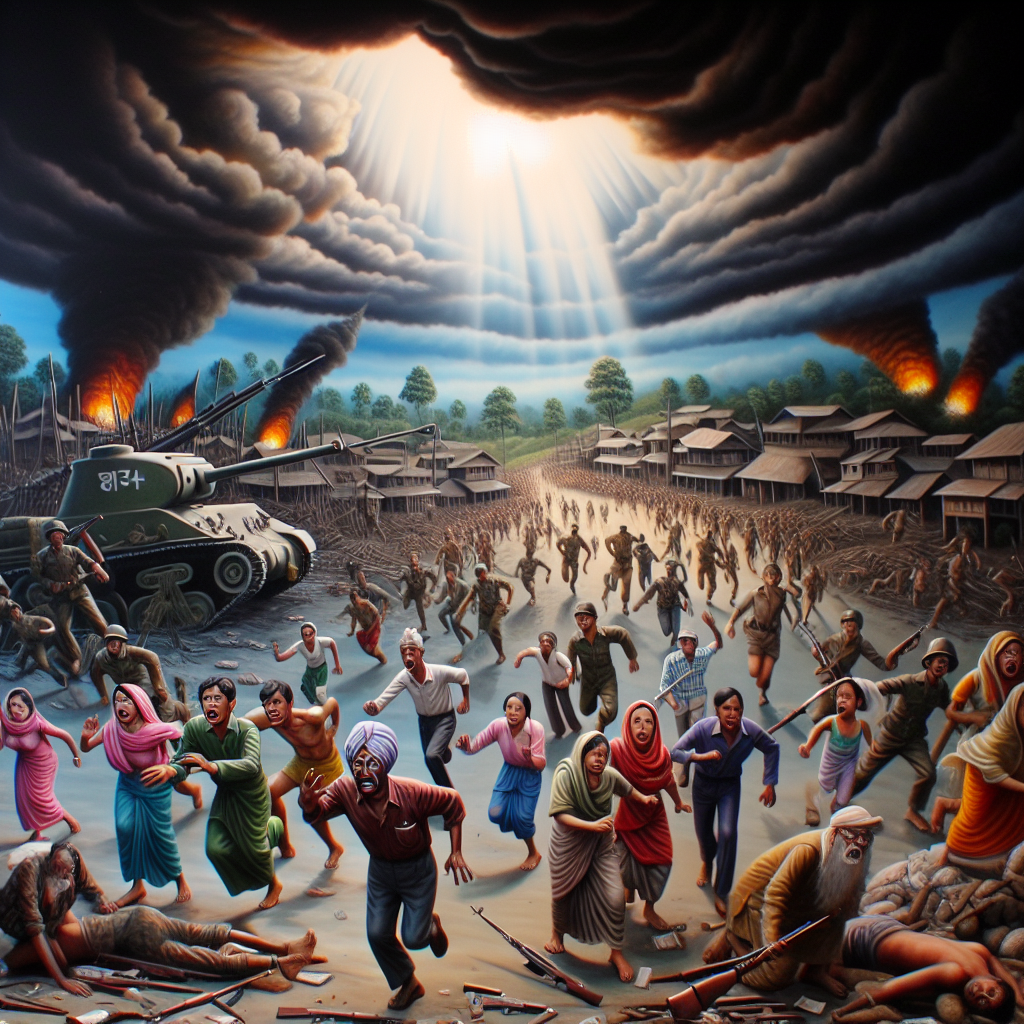
Civilian Warfare: Bombs and Mortars in Manipur’s Struggle for Peace


Civilian Warfare: Bombs and Mortars in Manipur’s Struggle for Peace
Introduction
Manipur, a northeastern state in India, is currently embroiled in a conflict that has escalated to alarming levels. The region, known for its rich cultural heritage, is now witnessing a surge in violence characterized by the use of bombs and mortars, impacting the lives of civilians and challenging the quest for peace.
Background of the Conflict
The conflict in Manipur is deeply rooted in ethnic tensions and political disputes. Various groups are vying for control and recognition, leading to a volatile environment.



- Ethnic diversity and historical grievances fuel the conflict.
- Political instability and lack of effective governance exacerbate tensions.
- Armed groups are increasingly resorting to violence to assert their demands.
Impact on Civilians
The escalation of violence has had a profound impact on the civilian population, with many caught in the crossfire.
- Increased casualties and injuries among non-combatants.
- Displacement of families seeking safety from conflict zones.
- Psychological trauma and disruption of daily life.
Efforts for Peace
Despite the ongoing violence, efforts are being made to restore peace and stability in the region.




- Dialogue initiatives between conflicting parties.
- Intervention by national and international peace organizations.
- Community-led peacebuilding efforts to bridge ethnic divides.
Conclusion
The situation in Manipur remains precarious, with the use of bombs and mortars highlighting the severity of the conflict. While efforts for peace are underway, the path to stability is fraught with challenges. The international community’s support and a concerted effort from all stakeholders are crucial to achieving lasting peace in the region.