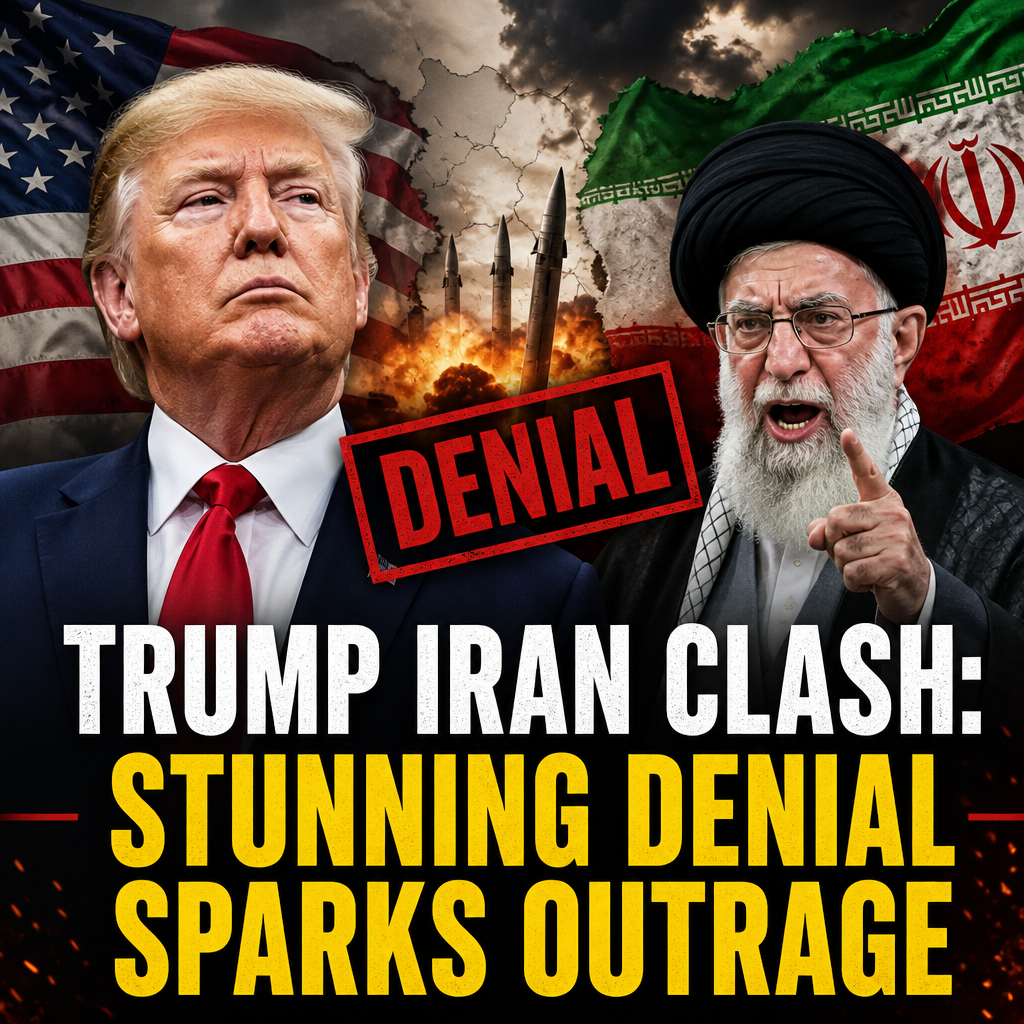
Trump Iran Clash: Stunning Denial Sparks Outrage


Trump Iran clash over denied talks has once again exposed how fragile U.S.-Iran messaging can be, and why every public statement now lands like a test of credibility as much as diplomacy.
The immediate dispute is simple on the surface: Donald Trump accused Iran of being “duplicitous” after Tehran rejected the idea that it was already in talks with Washington. But beneath that denial sits a much bigger question: are both sides speaking past each other to shape domestic and international audiences, or is there still a narrow opening for negotiations that neither side wants to admit publicly?



Trump Iran clash: what the dispute is really about
From the reporting and commentary across the available feeds, the core issue is not just whether talks are happening. It is about who controls the narrative.
Al Jazeera’s coverage frames the exchange as a familiar cycle of accusation and denial, with Trump attacking Tehran’s credibility after Iranian officials dismissed claims of ongoing discussions with the U.S. That framing matters because it shows the disagreement is not only diplomatic, but rhetorical: Trump appears to be signaling toughness, while Iran is signaling resistance to pressure and refusal to accept Washington’s framing.




Sky News-style international coverage of such moments typically emphasizes the political theater involved. A denial from Tehran can be read in at least two ways: either there truly are no meaningful talks, or Iran is refusing to acknowledge them because public admission would look like weakness at home and concession abroad. In that sense, silence or denial does not necessarily mean diplomacy is impossible. It may simply mean both sides want to preserve leverage.
RT’s broader foreign-policy style often highlights U.S. inconsistency and the way Washington alternates between threats and engagement. That perspective is relevant here, because the Trump administration has long been associated with sharp reversals in tone: maximum pressure one day, deal-making language the next. For critics, that volatility makes trust harder. For supporters, it is deliberate brinkmanship designed to force better terms.
The result is a standoff where each side has incentives to deny, accuse, or obscure.
Three competing interpretations
There are at least three plausible readings of the clash:
– Trump is trying to project strength by publicly pressuring Iran and branding its denials as dishonest.
– Iran is protecting its political position by refusing to confirm any backchannel contact or negotiation.
– Both are leaving room for future talks while performing hostility for domestic and regional audiences.
That third possibility is often the least dramatic, but in diplomacy it is frequently the most realistic.
Why the rhetoric matters beyond the headlines
This confrontation is not happening in a vacuum. U.S.-Iran relations have long been shaped by sanctions, military threats, nuclear concerns, regional proxy conflicts, and years of mutual mistrust. That history makes even ordinary diplomatic signals look loaded.
When Trump accuses Iran of being “duplicitous,” the word does more than express anger. It reinforces a long-standing U.S. argument that Tehran cannot be trusted to negotiate in good faith. Iranian officials, meanwhile, have every reason to reject that accusation and insist that Washington is the party that has repeatedly altered commitments and increased pressure. In other words, both sides are drawing on a deep archive of grievance.
There is also a domestic political angle. For Trump, framing Iran as evasive plays well with audiences that favor a hard line. It reinforces an image of him as confrontational and unafraid to call out adversaries. For Iranian leaders, denying talks can help them avoid appearing vulnerable to U.S. pressure, especially if the domestic audience sees negotiations as potentially humiliating.
That does not mean diplomacy is impossible. It means the messaging around diplomacy is nearly as important as the substance.
What the coverage suggests, and what remains unclear
The most responsible conclusion from the available reporting is that no clear breakthrough is visible, and any talk of imminent progress should be treated cautiously. The sources suggest tension, mistrust, and competing public narratives more strongly than they suggest a fully developed negotiation.
Still, the disagreement should not be mistaken for proof that engagement is dead. In high-stakes disputes like this, official denials can coexist with informal contacts, indirect messages, or exploratory discussions. That is especially true when both governments have reasons to avoid appearing politically weak.
What is clearer is this: public confrontation may serve short-term political goals, but it also narrows the space for serious diplomacy. Each accusation hardens expectations. Each denial raises the cost of compromise. And each side becomes more invested in proving the other is lying than in proving a deal is possible.
The broader takeaway
The Trump-Iran exchange is best understood as a contest over credibility, not just a dispute over whether talks exist. The facts available point to uncertainty rather than certainty, and the tone from all sides suggests that perception management is currently outweighing transparency.
That is not unusual in U.S.-Iran relations, but it is dangerous. When diplomacy becomes performative, it becomes harder to tell the difference between posturing and policy. And in a relationship as volatile as this one, that ambiguity can be as consequential as any formal statement.