
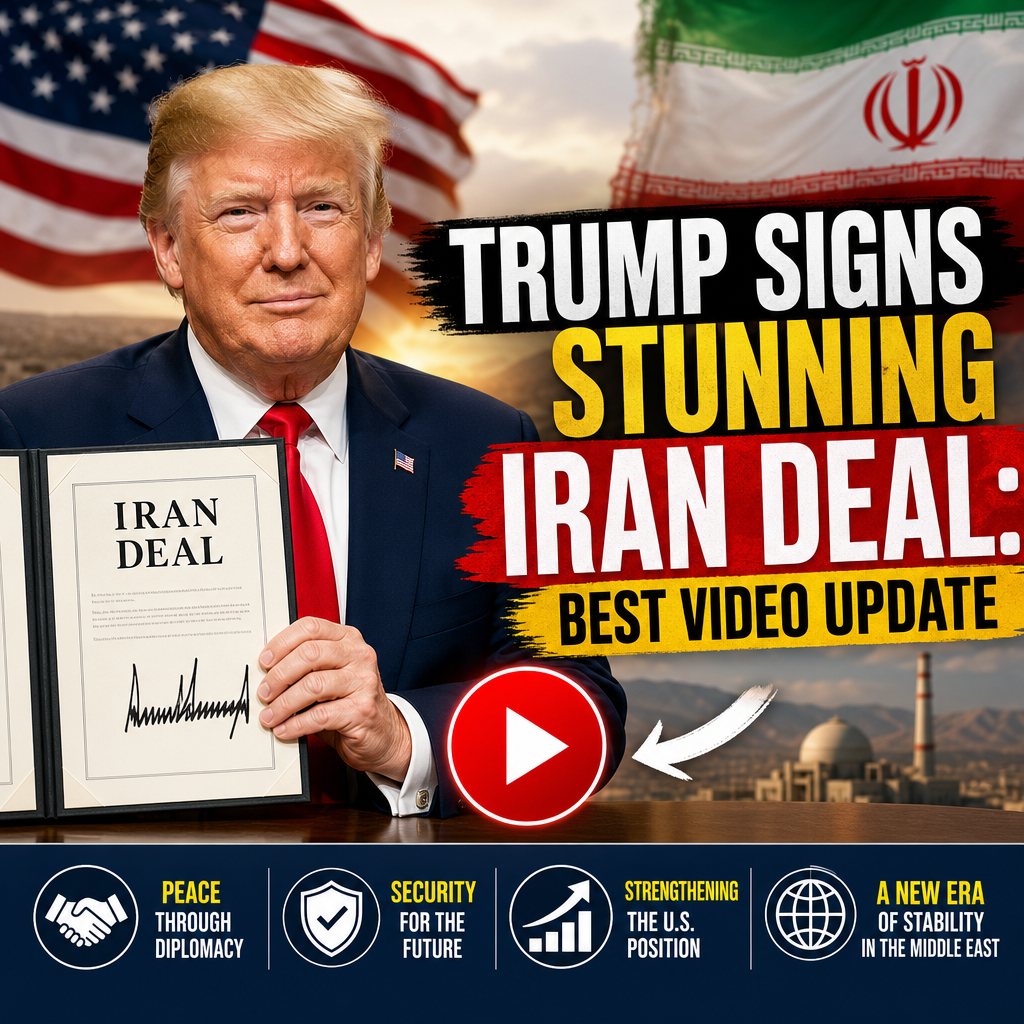
Trump Signs Stunning Iran Deal: Best VIDEO Update


Trump Signs Stunning Iran Deal is the kind of headline that grabs attention immediately, but the bigger story is less about spectacle and more about what the reported agreement could actually mean. Based on coverage across international outlets, the picture is still fluid: one side emphasizes a diplomatic reset and a possible opening for dialogue, while others frame it as a highly contested move shaped by pressure, distrust, and unresolved security concerns.
The most important takeaway is that, despite the dramatic language, this is not necessarily a final peace settlement. In the reporting available from multiple outlets, the apparent deal is better understood as a memorandum or preliminary arrangement rather than a comprehensive resolution to years of U.S.-Iran tensions. That distinction matters. A signed document can signal intent, but it does not automatically settle the deeper disputes over sanctions, nuclear activity, regional influence, or military posture.



Trump Signs Stunning Iran Deal: what the reported agreement appears to cover
At the center of the coverage is the idea that the Trump administration has moved to re-engage Iran through a formal document that could reshape negotiations. Supporters of the move are likely to see it as pragmatic. After years of confrontation, they may argue that even limited contact is better than no channel at all. If the goal is to reduce the risk of escalation, a memorandum can create at least a framework for further talks.
That said, the reporting also makes clear that the deal’s substance is still being debated. Some outlets and commentators are treating the development as a diplomatic breakthrough; others are more cautious, pointing out that Iran-U.S. relations have repeatedly swung between hope and collapse. A memorandum may lower temperatures temporarily, but it does not erase mutual suspicion.




A few themes appear consistently across the coverage:
– The agreement is being presented as significant, but not definitive.
– It may be aimed more at managing tensions than solving them outright.
– The nuclear question remains a major source of uncertainty.
– Regional actors are likely to watch closely for any shift in U.S. commitments.
That last point is especially important. Any movement between Washington and Tehran affects a wider web of interests, including Gulf states, Israel, and global energy markets. Even a limited U.S.-Iran thaw can change calculations far beyond the two countries involved.
Why reactions are split
The tone of the coverage from different sources reflects a broader divide in how this development is being interpreted. RT’s framing leans toward the idea of a notable diplomatic move with potentially major implications. Al Jazeera’s reporting tends to place such developments in a wider geopolitical context, emphasizing the long history of mistrust, sanctions, proxy conflict, and domestic political pressures in both countries. Sky News, meanwhile, typically foregrounds the immediate political and strategic consequences, especially for allies who may be uneasy about any apparent softening toward Tehran.
That mix of perspectives is useful because it prevents the story from being flattened into either a triumph or a failure. In reality, both readings can be partly true. A signed memorandum could be a serious attempt at de-escalation, while also remaining fragile, politically risky, and easy to reverse.
There is also a domestic political angle. For Trump, any Iran-related move is bound to be judged through the lens of strength. His supporters may see a deal as evidence that he can extract concessions where others could not. Critics, however, may worry that the agreement is too vague, too trusting, or too easily marketed as success before its consequences are known. In other words, the political meaning of the deal may be almost as important as the diplomatic one.
Trump Signs Stunning Iran Deal and the limits of optimism
The strongest argument in favor of cautious optimism is simple: communication can reduce the odds of miscalculation. When tensions are high, even small steps can matter. A formal agreement, however narrow, can open space for lower-level talks, confidence-building measures, or at least more predictable contact.
But the limits of optimism are just as clear. Iran and the United States have a long record of breakdowns, and neither side has a strong incentive to trust the other blindly. Any deal that does not address verification, sanctions relief, and regional security risks may struggle to survive scrutiny from hard-liners on both sides.
This is where uncertainty should be stated plainly. Based on the available reporting, it is not yet possible to say whether this agreement marks the beginning of a genuine diplomatic shift or simply a tactical pause. The next few steps will matter far more than the signing ceremony itself.
What to watch next
If this development is going to have lasting significance, several questions need answers:
– Does the agreement include concrete follow-up talks?
– Are sanctions being eased, suspended, or left in place?
– Is there any new commitment on nuclear monitoring or inspections?
– How do Iran’s regional partners and rivals respond?
– Will both governments sell the arrangement domestically as a win?
Until those details become clearer, the safest conclusion is that the reported deal is important, but not yet transformative. It may represent the opening of a diplomatic door that has been shut for years. Or it may prove to be another short-lived headline in a relationship defined by mistrust.
For now, the balanced view is this: the agreement deserves attention because it signals movement, but it should not be mistaken for a durable breakthrough unless the follow-through is real. In a relationship this fraught, the hardest part is not signing a document. It is making it last.

























