Iran World Cup Protest: Stunning FIFA Standup to US Abuse


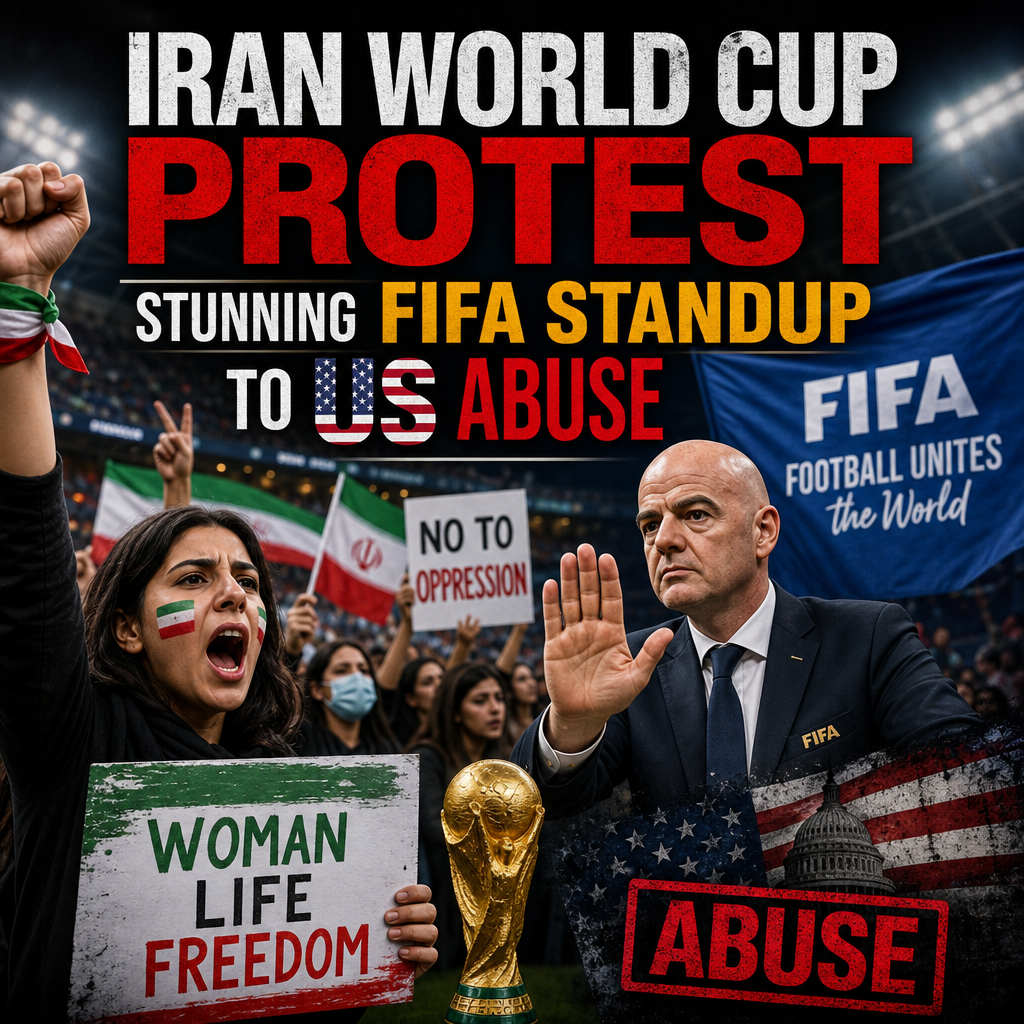
Iran World Cup protest has become more than a football story, turning into a test of how far FIFA is willing to go when geopolitics threatens to spill into the tournament itself. Iran’s complaints that its players, officials, and supporters are facing harsh treatment from the United States have revived an old question: can the sport’s governing body really act as a neutral referee when a host country’s policies collide with the promise of a global event?
Iran World Cup protest and the question of fair treatment
At the center of the dispute is Iran’s call for FIFA to step in and ensure what it sees as equal treatment ahead of the World Cup. Reporting from Al Jazeera described Tehran’s frustration with what Iranian officials called “really terrible” treatment by the US, the host nation for much of the tournament’s logistical and administrative setup. The concern is not just symbolic. It touches visas, travel access, security protocols, and the practical ability of teams and fans to participate without political obstacles.



That matters because the World Cup is supposed to operate on a simple principle: football should be larger than the disputes between states. But in reality, it rarely is. As past tournaments have shown, travel rules and diplomatic tensions can shape who gets in, how smoothly teams arrive, and whether supporters feel welcomed or unwelcome. Iran’s case is especially sensitive given the long and strained history between Tehran and Washington.
What makes this situation notable is not simply that Iran is protesting, but that it is directing the complaint toward FIFA rather than solely at the US government. That signals a belief that football’s institutions should protect the integrity of the competition, even when the politics around it are uncomfortable.




Iran World Cup protest: what FIFA can actually do
FIFA often presents itself as politically detached, but its power is limited and often inconsistent. It can press hosts, mediate disputes, and issue public statements, yet it cannot rewrite a country’s immigration laws or fully override national security policy. That is why calls for FIFA to “stand up” tend to raise expectations that the organization may not be able to meet.
Still, that does not mean FIFA is powerless. It can demand clearer procedures, faster processing, and equal treatment for delegations and supporters. It can also use its platform to remind host nations that international tournaments carry obligations beyond ordinary domestic policy.
There are two competing views here:
– Iran’s position: the host nation should make room for the spirit of international sport, especially when a country’s players and staff are trying to compete in good faith.
– The US position, as reflected in the broader security-first approach often seen in major events: governments have a right to control borders and vet arrivals, especially amid geopolitical tension.
Neither side is entirely without merit. The problem is that a tournament built on inclusion loses credibility if one team believes it is being singled out. But it also becomes unrealistic to expect a host government to ignore every political or security concern in the name of harmony.
Why reactions differ across media coverage
Different outlets frame the issue through different lenses, and that matters because the story is not just about one complaint. Al Jazeera’s coverage emphasizes the perspective of Iranian officials and the imbalance they feel in dealing with the US. That angle highlights the diplomatic asymmetry and the broader mistrust that shapes this confrontation.
Sky News, by contrast, typically situates such disputes in the practical realities of hosting major events: visa systems, security screenings, and the legal limits of what FIFA can demand from a sovereign country. That framing tends to make the issue feel less like a moral standoff and more like an administrative battle with political undertones.
RT, meanwhile, often leans into the geopolitical conflict itself, portraying the controversy as evidence of Western hypocrisy or double standards in global sport. That perspective can sharpen the criticism of the US, but it can also flatten the complexity by turning a real logistics problem into a simple narrative of blame.
Taken together, those viewpoints suggest a broader truth: this is not a case with one clean villain. It is a collision between:
– a politically isolated nation wanting equal access,
– a host country defending its border controls,
– and a sports body trying to preserve credibility without enough enforcement power.
The bigger issue: can football stay above politics?
The uncomfortable answer is probably no, not completely. Football can try to rise above politics, but it is always vulnerable to the pressures of politics because the World Cup depends on governments, airports, police, consular offices, and public sentiment. When those pieces stop aligning, the idea of “neutral sport” starts to look fragile.
That is why Iran’s protest should not be dismissed as routine diplomacy. Even if some of the rhetoric is predictably sharp, the underlying concern is legitimate: if a host country makes it harder for one nation to participate, the tournament’s fairness is damaged. Fans notice that. Players notice it too.
At the same time, FIFA faces a dilemma of its own. If it intervenes too forcefully, it risks looking like it is overriding sovereign policy. If it does too little, it looks weak and selective, especially if other teams receive smoother treatment.
The most realistic outcome may be limited but meaningful pressure: clearer visa channels, public assurances, and a visible commitment from FIFA that no team should be disadvantaged because of politics. That would not solve the larger US-Iran divide, but it might protect the tournament from becoming another battlefield in that conflict.
A fair test of FIFA’s credibility
In the end, the Iran World Cup protest is less about one angry statement than about FIFA’s broader credibility. The organization likes to say football unites the world. That claim is easiest to believe when every team can travel, compete, and be treated with basic fairness.
If FIFA wants that message to mean anything, it has to prove it in moments like this. Not by picking sides, but by insisting that a World Cup host cannot turn international football into a political filter. That is a demanding standard, and maybe even an imperfect one. But it is the standard the sport asks the world to believe in.