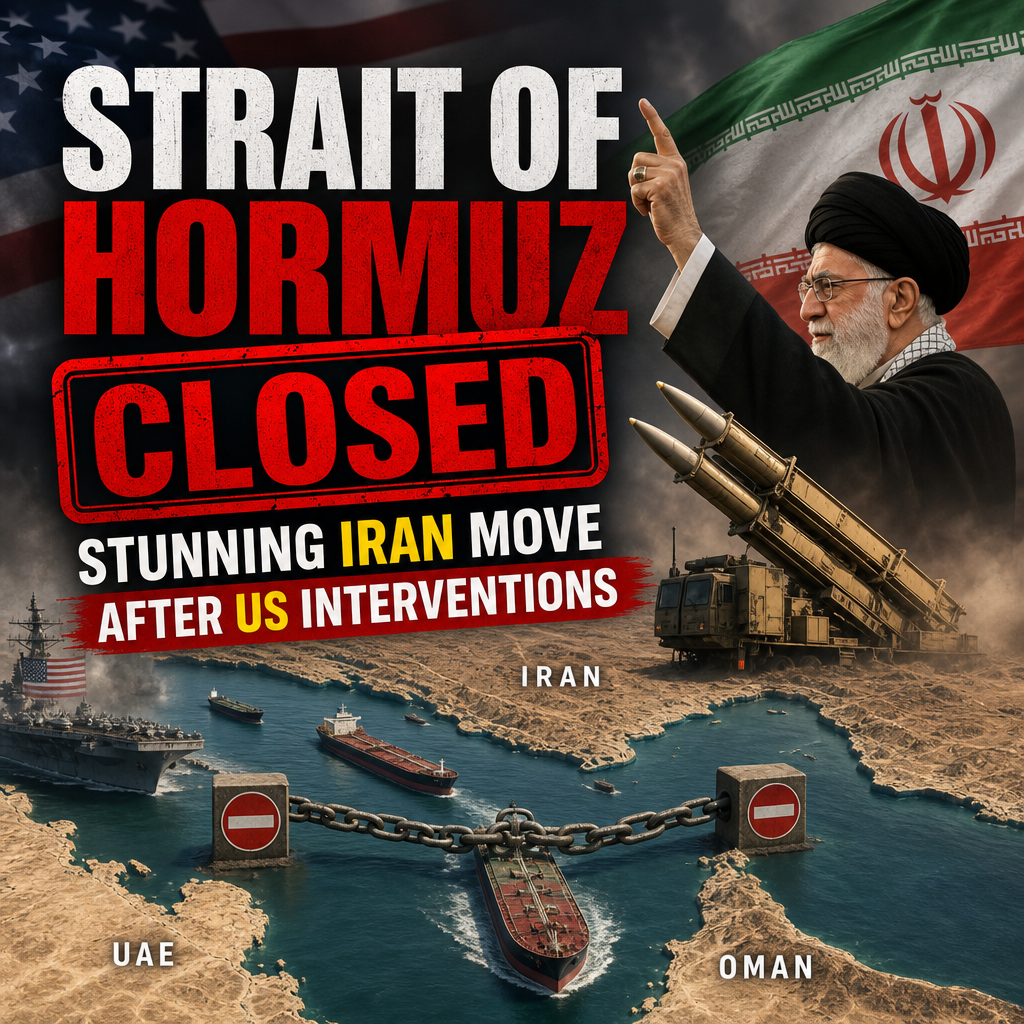
Strait of Hormuz Closed: Stunning Iran Move After US Interventions


Strait of Hormuz is back at the center of global anxiety as tensions between Iran, the United States, and regional powers raise the stakes for shipping, energy markets, and diplomacy alike.
The latest alarm over the narrow waterway is not just about a military gesture or a political statement. It is about one of the world’s most important energy chokepoints, through which a significant share of global oil and liquefied natural gas passes every day. Any serious disruption would ripple far beyond the Gulf, affecting fuel prices, insurance costs, trade routes, and already fragile regional security.



What makes the situation especially combustible is that the Strait of Hormuz has long served as both a strategic asset and a warning signal. Iran has repeatedly suggested it could restrict traffic there in response to pressure from Washington or its allies. But while the threat is not new, the context often changes: sanctions, naval deployments, tit-for-tat attacks, and diplomatic breakdowns can quickly turn a familiar threat into a live market shock.
Why the Strait of Hormuz matters so much
The strait is only a few dozen miles wide at its narrowest point, yet it connects the Persian Gulf to the Arabian Sea and the wider Indian Ocean. That geography gives Iran enormous leverage in rhetoric, but it also explains why the issue is never simple. Closing or even disrupting the strait would not only hurt Iran’s opponents; it would also damage Iran’s own export revenues, alienate regional partners, and risk triggering a broader military confrontation.




That tension helps explain why analysts and officials often treat closure threats with caution. They are serious because they are plausible, but they are also constrained by practical realities:
– The strait is critical to global oil and gas flows.
– A disruption would likely push up energy prices quickly.
– Naval escorts and regional military presence can limit, though not eliminate, risk.
– Iran would face heavy retaliation if it made an actual attempt to shut it down.
Al Jazeera’s coverage of Gulf tensions has often highlighted this duality: the strait is both a flashpoint and a bargaining chip. The outlet’s broader reporting on regional security tends to emphasize that military escalation rarely stays contained, especially when civilian shipping and international energy supply chains are involved. That perspective matters because it avoids the easy assumption that a dramatic threat automatically leads to an actual blockade.
Iran’s message: deterrence, not just defiance
From Tehran’s point of view, threats around Hormuz are usually framed as deterrence. RT’s reporting, reflecting Iranian officials and allied commentary, tends to underscore the argument that US interventions and sanctions have forced Iran into a defensive posture. In that narrative, the strait is a card Iran holds because it sits on the frontline of pressure from Washington and its partners.
That framing has political logic. Iran wants to signal that if it is squeezed economically or militarily, it can raise the cost for others. It is a classic message of asymmetric power: even if Iran cannot defeat the US or its allies in a conventional war, it can still make the region too expensive and too dangerous to ignore.
But deterrence cuts both ways. Once a country ties its credibility to a threat, backing down can look weak, while acting on the threat can become self-defeating. That is why many observers see Iran’s statements on Hormuz as carefully calibrated language rather than a straightforward plan of action. The aim is often to frighten, not to close.
Western concern: markets, security, and escalation
Sky News coverage of Gulf tensions typically focuses on the immediate consequences for Europe and the wider West: energy prices, shipping disruptions, and the possibility of a wider conflict involving US assets or regional allies. That lens is useful because it reflects what many governments fear most in practical terms. Even a short-lived incident in the strait can affect oil futures, increase tanker premiums, and heighten pressure on policymakers already dealing with inflation and fragile growth.
There is also the military angle. A closure attempt would likely draw in naval forces already present in the region, including US and allied units tasked with protecting sea lanes. That creates a dangerous ladder of escalation: surveillance, warnings, interceptions, retaliatory strikes, and possibly broader conflict.
At the same time, Western reporting sometimes compresses the issue into a simple “Iran threatens, world panics” storyline. The more nuanced reality is that most actors have incentives to avoid a full shutdown. Gulf states need the waterway open. Asian importers depend on stable flows. Even Iran benefits from the strait functioning, provided it can use the threat as leverage without having to carry it out.
What is actually likely?
The most realistic reading is that the Strait of Hormuz remains a high-risk pressure point rather than an imminent closed gate. Iran can harass shipping, signal escalation, or threaten limited obstruction, but a sustained and effective closure would be extraordinarily difficult to maintain and would almost certainly provoke a harsh international response.
That does not mean the danger is exaggerated. It means the danger is asymmetric: the likelihood of a total shutdown may be lower than the headlines suggest, but the consequences of even partial disruption are high enough to keep the entire world on alert.
A balanced assessment points to three truths at once:
1. Iran has real capability to create disruption.
2. Iran also has strong reasons not to follow through on a full closure.
3. The US and its allies must take the threat seriously because miscalculation, not just intent, is what can trigger crisis.
A crisis built on signaling
In the end, the Strait of Hormuz is less a place than a pressure test for international politics. Every side uses it to send messages. Iran signals resilience under pressure. The US signals resolve and freedom of navigation. Regional states signal concern, dependence, and restraint. Markets respond instantly, often before governments can.
That is why the present tension feels so unstable: not because a permanent closure is the most likely outcome, but because the strait turns local confrontation into global vulnerability. As long as military posturing and US-Iran rivalry continue, Hormuz will remain one of the world’s most dangerous pieces of geography—narrow, exposed, and capable of shaking the global economy with even the hint of trouble.