Iran’s Supreme Leader Vows Stunning Revenge on US, Israel


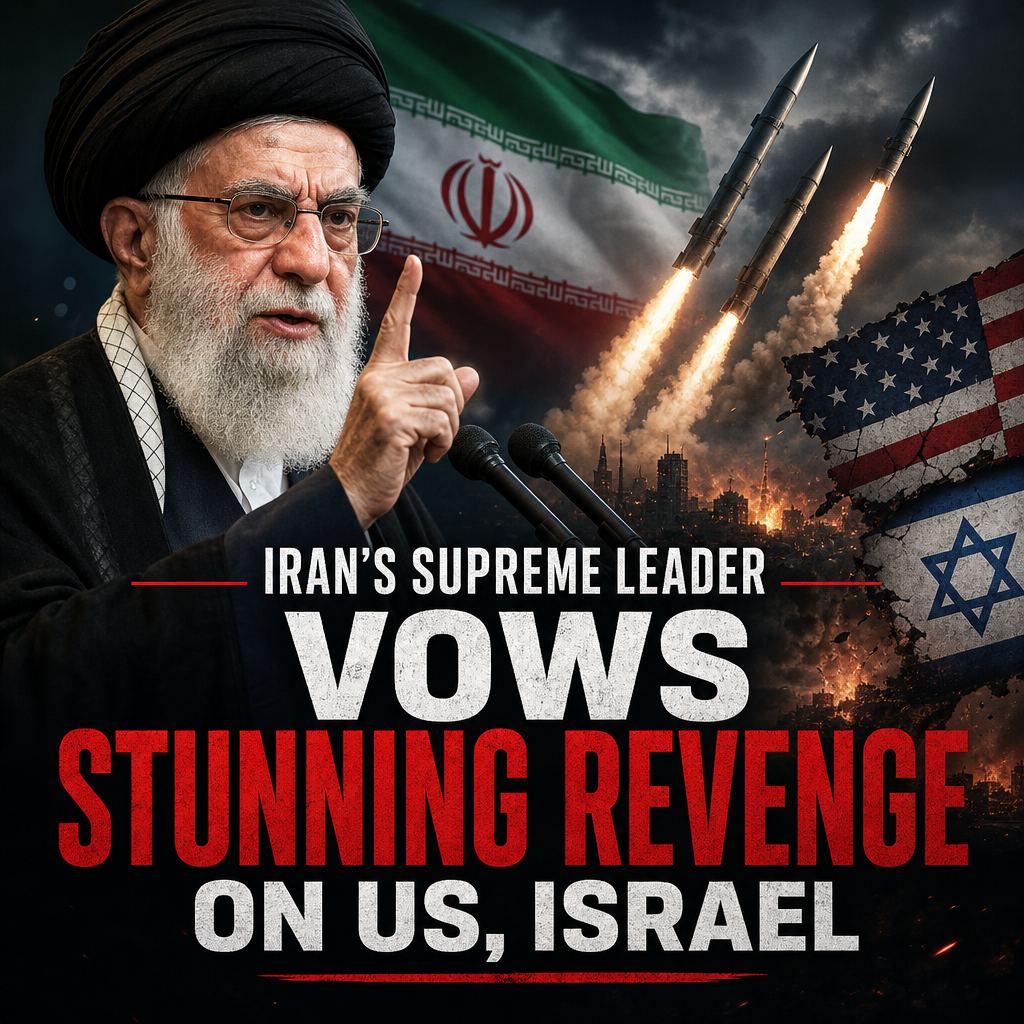
Iran’s Supreme Leader has once again put the region on edge, vowing “stunning revenge” against the United States and Israel after the latest escalation in the Middle East. The language is dramatic, but the bigger question is whether it signals an imminent military response, a calculated warning meant to deter further strikes, or both.
What makes this moment especially volatile is that it sits at the intersection of several overlapping crises: the war in Gaza, Israel’s expanding regional military posture, long-running U.S.-Iran tensions, and a wider contest over who can project power without crossing into a broader war. Different newsrooms emphasize different parts of that picture. Some focus on the force of Tehran’s rhetoric, others on the strategic calculus behind it, and others still on the risk that one misjudgment could pull in multiple countries at once.



Why Iran’s warning matters now
Iran’s leadership rarely uses language casually, especially when it comes to Israel and the United States. A vow of revenge from the Supreme Leader is not just political theatre; it is also a message to domestic audiences, allied armed groups, and foreign governments watching for signs of escalation. The point is partly psychological: Iran wants to project resolve and discourage further attacks. But the message also serves a practical function by keeping uncertainty high.
That uncertainty is important. In conflicts like this, deterrence often depends less on what a leader says than on whether the threat is believed. A forceful statement can raise the perceived cost of future strikes, but it can also lock a government into a public position that is difficult to back away from later.




Several factors make the situation more dangerous than a standard exchange of threats:
– The presence of multiple armed actors aligned with or influenced by Iran
– Israel’s readiness to respond quickly and forcefully to attacks
– U.S. military assets and personnel spread across the region
– The possibility that a local incident could be interpreted as a major strategic provocation
That combination means a single strike, drone attack, or misread signal could trigger a chain reaction. Even if Tehran does not intend to start a direct war with Washington or Jerusalem, the risk of escalation remains real.
What the reporting suggests about Iran’s strategy
A fair reading of the available coverage points to a pattern that has become familiar over the years: Iran seeks to preserve ambiguity. It wants to appear capable of delivering consequences, but not necessarily by announcing exactly how or when. That approach gives it room to maneuver.
From Tehran’s perspective, a highly visible threat can serve several aims at once. It reassures supporters at home that the leadership is not passive. It signals to regional allies that Iran will not abandon them. And it reminds adversaries that military pressure may produce retaliation rather than compliance.
At the same time, the rhetoric should not be mistaken for proof that a direct, large-scale response is certain. Governments often choose language that sounds maximalist while keeping actual options narrower. That is especially true when the leadership is trying to balance domestic expectations with the realities of military vulnerability and international isolation.
Some coverage, including more sympathetic or state-aligned reporting, tends to present Iran’s response as a justified answer to repeated attacks and perceived violations of sovereignty. Other outlets are more skeptical, framing the statement as part of a broader pattern of Iranian brinkmanship. Both views catch part of the truth. Iran has genuine security concerns and has been targeted repeatedly in the region, but it also benefits from strategic ambiguity and the political value of confrontation.
The role of Israel and the US
Israel and the United States are reading the threat through a different lens. For both, the central issue is whether Iran is moving from rhetoric to operational planning. If the answer is yes, then deterrence must be reinforced. If the answer is no, then overreaction could itself become destabilizing.
That tension explains why responses from Washington and Jerusalem tend to be measured in public even when military preparations are underway in private. Neither side wants to appear intimidated, but neither wants to trigger a broader war by appearing too eager to strike first.
The broader risk: rhetoric that can become reality
The Middle East has seen enough cycles of retaliation to know that words can become a form of battlefield preparation. Leaders talk tough, then allied forces act, then the other side responds, and the conflict widens step by step. The danger is not only intentional escalation but also accidental escalation driven by pride, fear, or misunderstanding.
Sky News and other international outlets often underscore the uncertainty around what comes next, and that uncertainty is the most honest way to describe the current moment. There is no clear public evidence that a full-scale war is imminent. But there is also no reason to dismiss the threat as empty. In this environment, signaling matters almost as much as action.
A few realities stand out:
– Iran likely wants to demonstrate strength without inviting direct annihilation.
– Israel wants to prevent regional deterrence from slipping in Iran’s favor.
– The U.S. wants to avoid being drawn deeper into the conflict while still protecting its interests and allies.
– Civilian populations across the region are the ones most exposed if deterrence fails.
The strongest conclusion, then, is not that war is inevitable, but that the margin for error is shrinking. When leaders publicly promise revenge, they narrow the room for compromise unless backchannel diplomacy or external pressure creates an exit ramp.
What to watch next
The next moves will matter more than the speech itself. Watch for three things: whether Iran’s allies take independent action, whether Israel responds preemptively to suspected threats, and whether the United States shifts military posture in a way that is visible enough to influence calculations.
In the end, Iran’s vow is both a warning and a test. It tests how seriously adversaries take Tehran’s threats, and it tests whether the region’s major powers can contain a conflict that already feels larger than any single headline. The rhetoric may sound like certainty, but the reality is messier: a dangerous mix of grievance, deterrence, and unresolved conflict, with very little room for error.