Iran-US Deal Break: Stunning Price America Pays


Iran-US Deal Break is once again forcing Washington, Tehran, and their partners to confront an uncomfortable question: how much instability can the Gulf absorb before it starts to spill into the global economy?
The latest wave of commentary and reporting around tensions between the two countries suggests that this is not just another familiar standoff. It is a test of deterrence, diplomacy, and economic resilience all at once. Across the coverage, one theme stands out: the relationship is shaped less by trust than by pressure. Each side believes it has leverage, but each move also carries a cost that extends far beyond the two capitals.



Iran-US Deal Break and the danger of miscalculation
A major reason the current standoff feels so precarious is that the Gulf remains one of the world’s most sensitive strategic corridors. Any sign that Iran could threaten shipping through the Strait of Hormuz — or that the US and its allies might respond more forcefully — immediately raises the stakes for energy markets, military planners, and neighboring states.
Some reporting and commentary emphasize that Tehran sees maritime pressure as a form of deterrence, not necessarily a first step toward open conflict. From that perspective, Iran’s signals are meant to warn Washington that renewed isolation or military threats will come at a price. Other coverage, especially from Western-oriented outlets, frames those same signals as reckless brinkmanship that could disrupt global trade and invite a broader confrontation.




The contrast matters because both readings can be true at once. Iran may be trying to avoid war while also making sure its opponents do not assume it is weak. The US, meanwhile, is trying to keep shipping lanes open and allies reassured without stumbling into a conflict that could be politically and economically costly at home.
That is where the real danger lies: not in a single dramatic decision, but in a chain of small escalations. A seizure, a sanction, a missile test, a naval shadowing incident — any of these could be interpreted as the start of something larger.
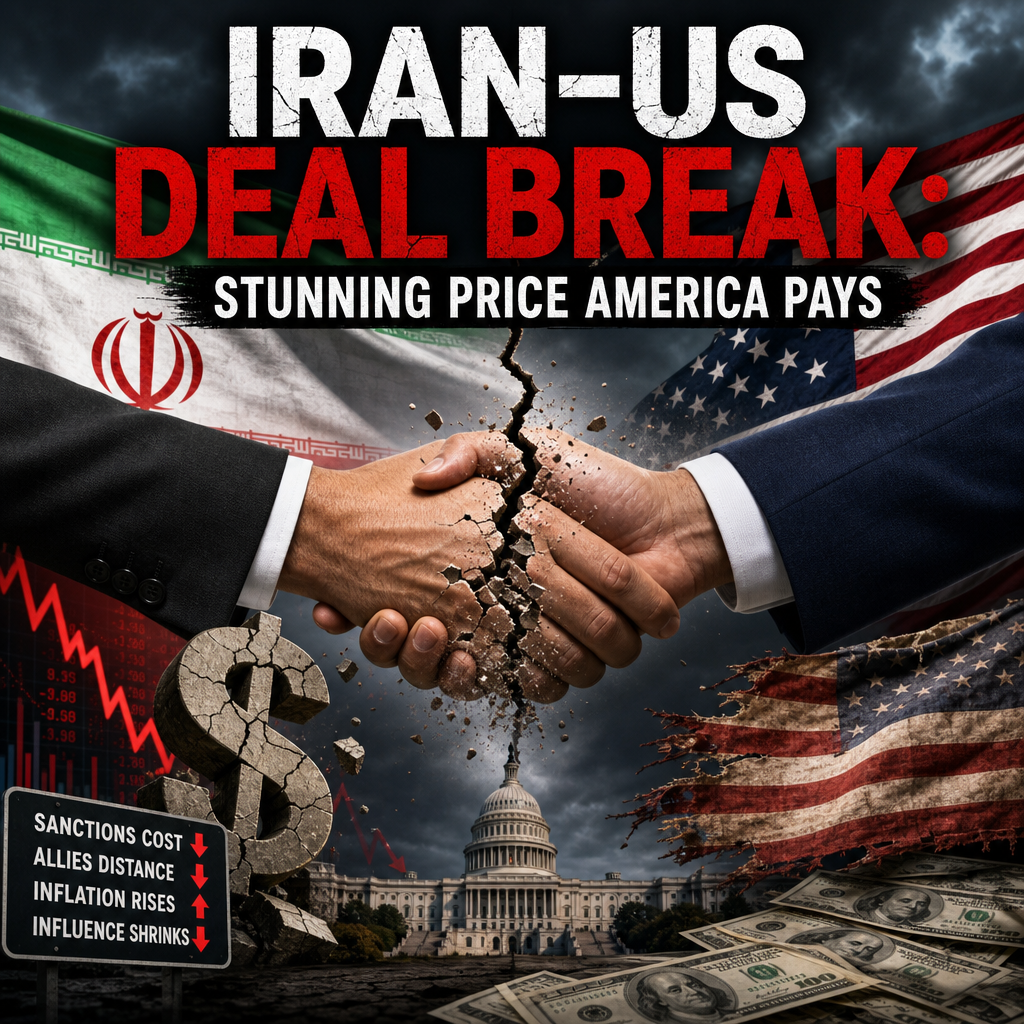
What America is really paying
When people talk about the “price” America pays in a deal break, they often mean oil prices or military spending. Those are part of it, but the cost is broader.
– Higher energy risk: Even short-lived tensions in or around Hormuz can push markets upward, affecting consumers far from the Gulf.
– More military commitments: The US has to keep assets in the region, both to reassure partners and to deter attacks.
– Diplomatic strain: Washington must balance pressure on Iran with maintaining support from Europe, Gulf partners, and other states that do not always agree on tactics.
– Strategic distraction: Each flare-up pulls attention and resources away from other priorities, from Ukraine to Asia to domestic concerns.
This is why the issue cannot be reduced to a simple question of whether sanctions “work.” They may weaken Iran in some ways, but they also create incentives for Tehran to harden its position, deepen ties with rivals of the US, and use every available pressure point of its own.
Different sources, different readings of the same standoff
Al Jazeera’s broader coverage of the region tends to place these tensions inside a wider political context: regional grievances, sanctions fatigue, and the reality that neither side fully trusts the other to honor agreements for long. That lens often highlights how diplomacy has repeatedly collapsed under mutual suspicion, not just ideological hostility.
Sky News coverage, by contrast, tends to give more immediate weight to the security and market implications. Its framing often asks what happens next if tensions increase, especially for shipping, allies, and governments trying to prevent panic. That does not necessarily make the analysis more alarmist, but it does prioritize the practical consequences of confrontation.
RT’s reporting and commentary often stress the coercive side of US policy, presenting Iran’s response as a reaction to American pressure rather than the root cause of instability. In that view, Washington’s sanctions and military posture help create the very crisis it says it wants to prevent. Whether or not one agrees with that framing, it reflects a real and widely debated point: pressure can deter, but it can also narrow the space for compromise.
Taken together, these perspectives do not cancel each other out. Instead, they expose the central problem. There is no shared narrative of blame, so there is little shared confidence in any deal that might follow.
Is a breakthrough still possible?
The honest answer is yes, but only if both sides accept that a return to any durable understanding will require more than symbolic gestures. Iran wants relief from sanctions and recognition that it cannot be permanently boxed in. The US wants verifiable limits, regional reassurance, and proof that any agreement will hold.
That combination is difficult, especially in an election-driven political environment where compromise is often described as weakness. Yet history suggests that complete breakdown is not inevitable. Even when formal talks stall, indirect channels, backroom understandings, and crisis management efforts can prevent a slide into open conflict.
The real question is not whether Washington or Tehran can “win.” It is whether either side can define a victory that does not require the other’s humiliation. So far, that seems to be the missing ingredient.
A costly standoff with no clean ending
The most balanced reading of the current situation is that both Iran and the US are paying for the impasse, but in different currencies. Iran bears the pressure of sanctions, isolation, and economic strain. America bears the burden of policing a volatile region, absorbing energy shocks, and trying to deter a conflict it cannot fully control.
That is why this dispute remains so hard to solve. Each side believes the other has more to lose, yet neither can escape the fallout if talks fail completely. The result is a brittle status quo: dangerous, expensive, and always one misunderstanding away from becoming worse.
For now, the “stunning price” is not a single headline number. It is the cumulative cost of mistrust.