Petrol Prices Climb: Stunning US-Iran Market Shock


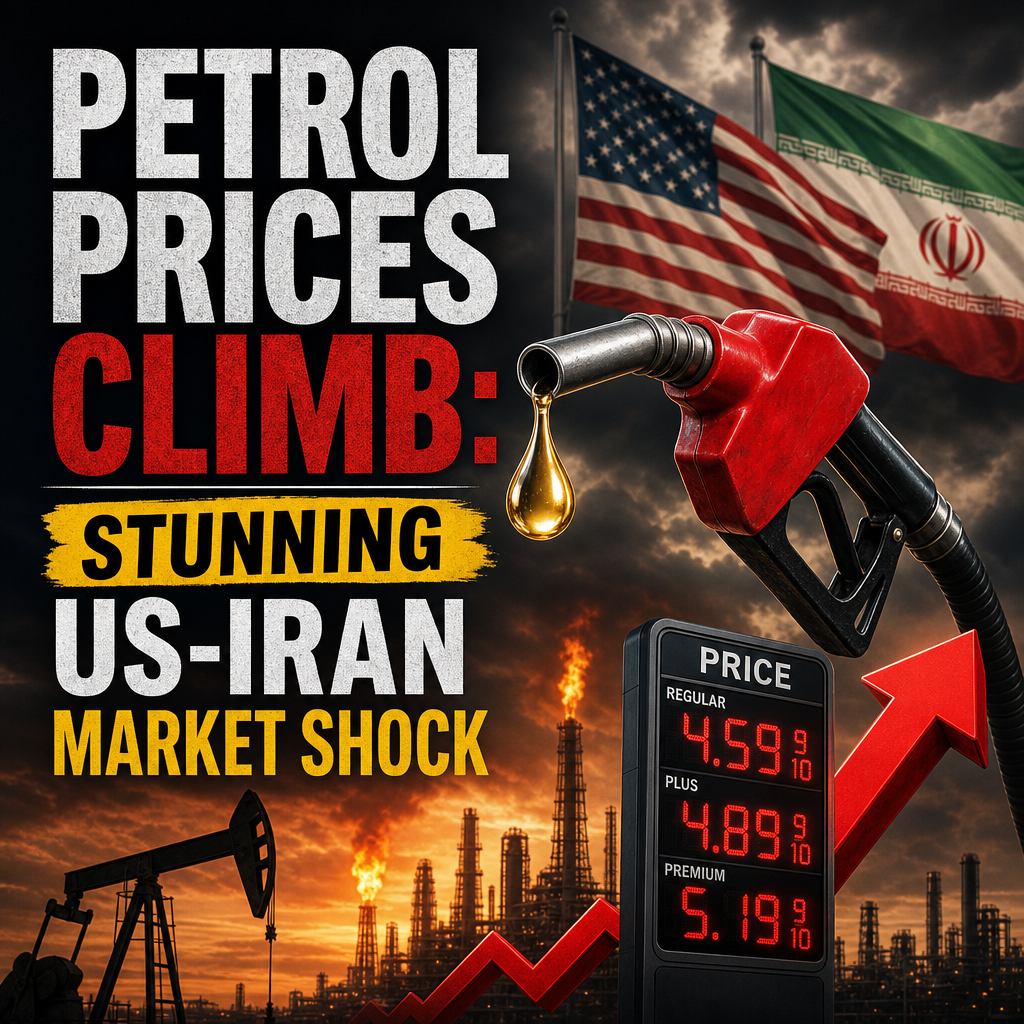
Petrol prices climb as renewed US-Iran tensions ripple through energy markets, reminding drivers that even a political shock far from the pump can quickly become a household expense. The latest rise is not simply about oil barrels and futures charts; it reflects how traders, governments, and consumers all react when the risk of supply disruption suddenly looks more real.
The immediate market response has been relatively familiar: investors price in uncertainty first, then wait for hard evidence later. That dynamic matters because petrol is often one of the fastest-moving consumer costs, and even a short-lived spike can feed through to transport, food distribution, and broader inflation expectations. What makes this moment especially sensitive is that the Gulf remains a critical artery for global crude and refined products, so any hint of instability in the region tends to lift prices even before actual shipments are affected.



Petrol prices climb on fear, not just fundamentals
A key takeaway from the reporting is that the price jump appears to be driven as much by fear as by confirmed supply losses. Markets do not need tankers to be hit or exports to stop completely to react sharply; they only need to believe that such outcomes are becoming more likely.
That distinction is important. One reading of the situation, often emphasized in mainstream economic coverage, is that traders are responding rationally to geopolitical risk. If tensions between the United States and Iran threaten shipping lanes, raise insurance costs, or create uncertainty around regional production, then a higher oil price is the market’s way of building in a safety margin.




Another reading, closer to the viewpoint often heard in state-focused or alternative media, is that these price swings expose how dependent the global economy still is on politically charged energy corridors. From that angle, the problem is not just one confrontation, but a broader system in which sanctions, military posturing, and maritime chokepoints can distort prices for consumers thousands of miles away.
Both interpretations can be true at once. Markets may be acting sensibly, yet the result still punishes ordinary drivers who have little control over the underlying conflict.
What the different outlets emphasize
Taken together, the three sources suggest a clear contrast in framing:
– Al Jazeera’s economic lens tends to focus on the practical effect on consumers and the possibility that regional tension could filter into inflation and household budgets.
– Sky News’ world coverage generally places the story in the context of diplomacy, security, and the possibility of escalation, which helps explain why traders react so quickly.
– RT’s coverage often highlights the costs of US pressure and sanctions, implying that Washington’s role is central to the instability that markets are now pricing in.
This mix of perspectives is useful because it prevents the story from being reduced to a simple “prices up, blame one side” narrative. The evidence points to a more complicated chain: political tension raises perceived risk, perceived risk pushes up crude benchmarks, and higher crude costs eventually show up in retail fuel prices. Yet the causes behind that chain remain contested, especially when sanctions, military signaling, and regional rivalries are all part of the backdrop.
Why consumers feel the pain so quickly
Petrol prices are especially visible because they change often and affect so many daily decisions. When pump prices rise, people notice immediately, even if the broader energy market shift is modest. That visibility can intensify public frustration and make the shock feel larger than the raw numbers suggest.
There are also second-order effects that matter:
– delivery and freight costs can rise
– airlines may face higher fuel bills
– inflation expectations can harden
– central banks may become less comfortable easing policy
In other words, a geopolitical energy shock is never just about oil. It can influence how consumers spend, how businesses price goods, and how policymakers talk about growth.
How serious is the disruption?
At this stage, the most responsible conclusion is that the situation is serious but not yet conclusive. The sources point to market disruption and a sharp emotional response in trading, but that does not automatically mean a prolonged supply crisis. Oil markets often overshoot before settling down, especially when headlines are moving faster than cargoes.
Still, there are reasons not to dismiss the rise as temporary noise. If tensions persist, the cost of insurance, shipping routes, and hedging can stay elevated even without direct physical damage to supply. And if major producers decide to act defensively, the price pressure could last longer than many consumers expect.
The uncertainty is the story. One side of the debate sees the rise as a sensible premium for risk. Another sees it as evidence that geopolitical brinkmanship is once again being converted into a tax on everyday life. The more sober view is that both are accurate, depending on whether you are sitting in a trading room, a foreign ministry, or at a petrol station.
For now, the market message is clear: when US-Iran tensions rise, energy prices do not wait for the final outcome. They move on anticipation, and that anticipation alone can be enough to squeeze household budgets and sharpen the sense that global politics is suddenly very local indeed.