Iran Judiciary Warns of Infiltrators in Stark New Crackdown


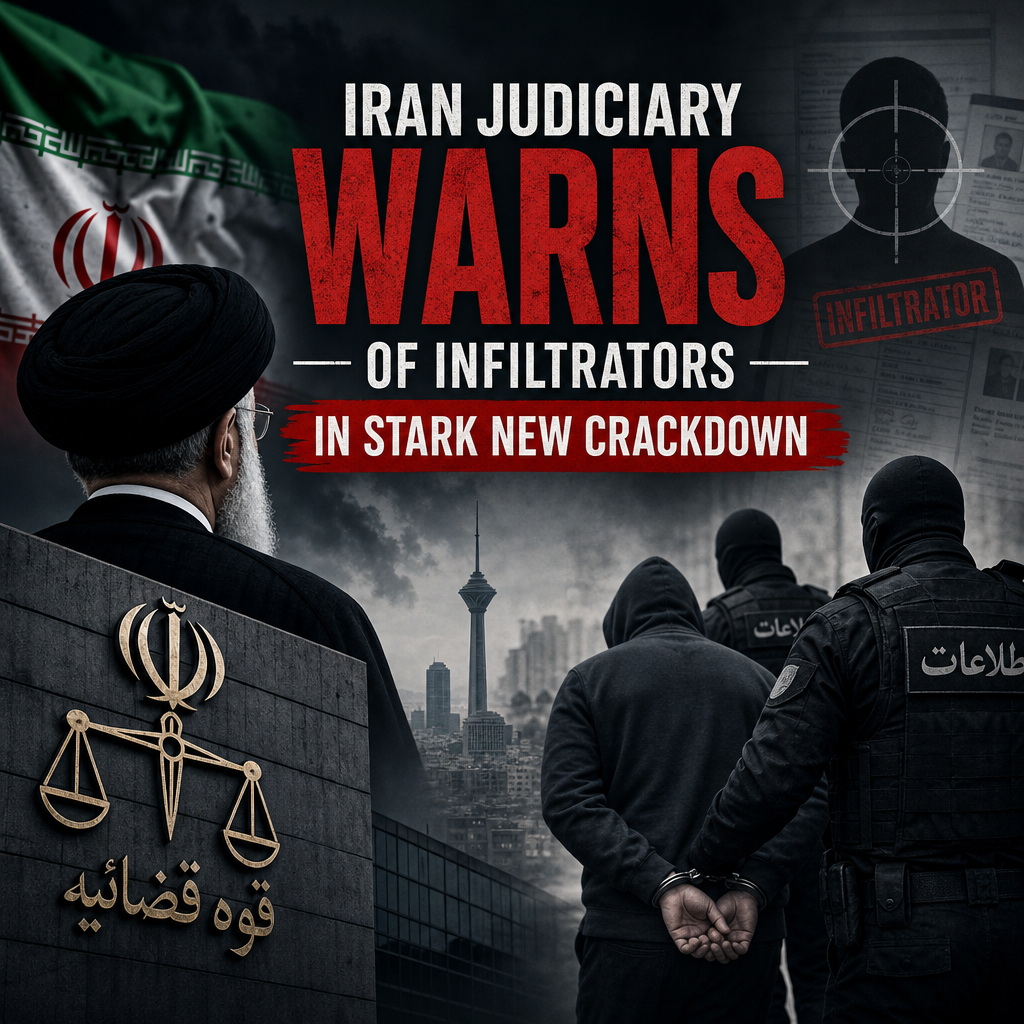
Iran judiciary crackdown is intensifying as Tehran signals that it views internal “infiltration” as a serious national-security threat, pairing harsh warnings with a renewed wave of executions and arrests. The move comes at a tense moment for the country, with officials framing the crackdown as a response to espionage, sabotage, and foreign-backed destabilization. But the reaction from outside Iran is far from uniform: some coverage emphasizes the state’s security concerns, while others focus on the risk of sweeping repression, opaque trials, and the chilling effect on dissent.
At the center of the latest escalation is the judiciary’s claim that people working inside the country have helped hostile actors gather intelligence or undermine the state. Iranian officials rarely present these cases in a way that allows outsiders to independently verify the evidence. That matters, because the difference between legitimate counter-espionage and politically motivated suppression can be hard to see when trials are closed, access is limited, and the government controls most of the public narrative.



Why the Iran judiciary crackdown is resonating now
The timing is important. Iran has spent years under growing pressure from sanctions, protests, cyberattacks, and regional confrontation. In that environment, the judiciary’s language about “infiltrators” is not just legal; it is political messaging. It tells the public that the state believes it is under siege and that extraordinary measures are justified.
From the government’s perspective, this is a familiar argument: if foreign intelligence services are active, then severe punishment is presented as deterrence. Supporters of the crackdown are likely to see it as a necessary defense of sovereignty. They would argue that a country facing internal subversion cannot afford leniency, especially if officials believe lives, infrastructure, or military secrets are at stake.




But human-rights groups and many international observers have a different reading. They point out that states often expand the definition of “infiltration” to include journalists, activists, ethnic minorities, dual nationals, or anyone suspected of sympathy with opposition movements. In practice, that can turn a security campaign into a broader political purge. The concern is not only about the executions themselves, but about the combination of secrecy, speed, and severity.
What different outlets are emphasizing
The reporting landscape suggests at least three distinct angles.
– Security-first framing: Some coverage, including state-aligned or geopolitically sympathetic reporting, treats the crackdown as a response to real threats and emphasizes the threat of foreign interference.
– Rights-based framing: Other reporting, particularly from outlets focused on civil liberties, centers the lack of due process and the possibility that the judiciary is using “infiltrators” as a catch-all label.
– Skeptical, detail-driven framing: Coverage from mainstream international outlets tends to sit between those poles, acknowledging that Iran does face genuine security risks while noting that the government’s evidence is rarely public and its courts are not known for transparency.
That mix is useful because it shows the core tension: it is possible for a government to face real espionage risks and still overreach in how it responds.
Executions, deterrence, and the problem of proof
Executions are the most extreme expression of that overreach. When carried out in politically charged cases, they send a message well beyond the individual defendants. They tell society that the state is willing to move decisively and publicly, even when the facts are disputed or the process is hard to inspect.
That creates several problems.
First, execution as deterrence only works if the public believes the process was fair. If people think the judiciary is opaque or politically driven, the punishment may actually deepen distrust.
Second, the use of capital punishment can make errors irreversible. If a case is later shown to have relied on weak evidence, coerced confessions, or procedural violations, there is no remedy.
Third, broader crackdowns often produce the opposite of stability. Heavy-handed security campaigns can silence immediate criticism, but they may also widen resentment and push dissent further underground.
International reaction usually reflects those concerns. Human-rights organizations typically argue that the use of execution in national-security cases is incompatible with basic legal safeguards, especially where access to lawyers, evidence, and appeals is limited. Western governments often raise the issue in diplomatic statements, although their leverage can be uneven and their criticism is sometimes viewed in Iran as politically selective.
A harder question: security or suppression?
The most honest reading is that both concerns may be present at once. Iran almost certainly does face hostile intelligence activity, as many states do. At the same time, its judiciary has a long record of blurring the line between genuine espionage cases and broader political control.
That is why this crackdown should not be understood as a simple law-and-order story. It is also about legitimacy. When courts are used to project strength, they can either reinforce confidence in the state or expose its insecurity.
For ordinary Iranians, the consequences are practical and immediate. A campaign against “infiltrators” can mean:
– fewer spaces for open criticism
– more fear among journalists and activists
– greater caution in public life
– more uncertainty for families of the accused
– a deeper sense that national security is being defined without public scrutiny
The state may believe it is drawing a red line. But red lines can also signal weakness if they are enforced without transparency.
What to watch next
The key question is whether this is a limited security response or the start of a wider political tightening. A few indicators will matter:
1. How many arrests or executions follow
2. Whether the government publishes any evidence
3. Whether lawyers and families are allowed meaningful access
4. Whether the crackdown expands beyond alleged spies to broader critics
5. Whether international pressure changes the pace or scale of the campaign
For now, the picture is clear enough to be troubling but not complete enough to be definitive. Iran says it is rooting out infiltration. Critics say it is using the language of national defense to justify repression. The truth may lie in the overlap between the two: a real security state, facing real threats, responding in ways that may also deepen the political crisis it is trying to contain.