Trump on Ukraine: Stunning US Takeover Claim


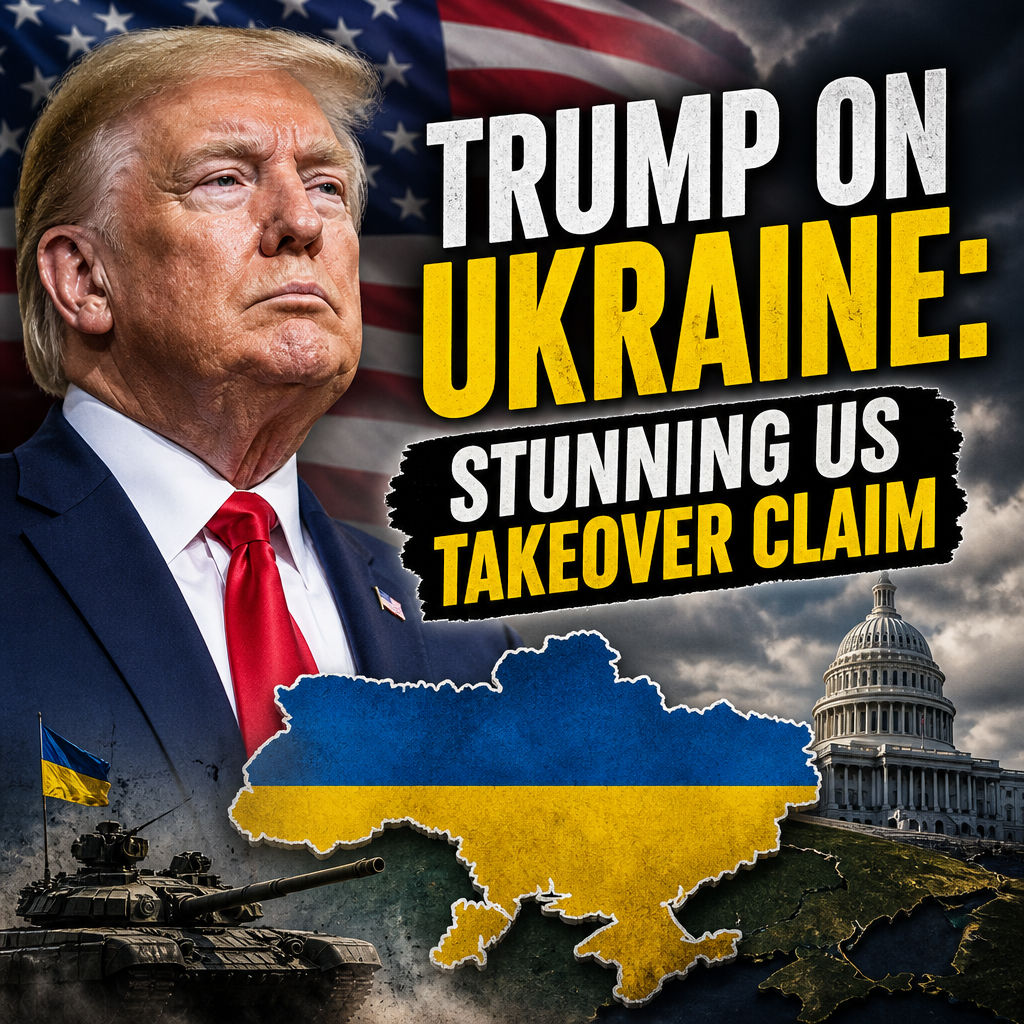
Trump on Ukraine has once again exposed how sharply different newsrooms and political camps interpret the same remark: as a blunt negotiating tactic, a dangerous sign of transactional diplomacy, or a revealing glimpse of what a second Trump presidency could mean for the war and for U.S. power more broadly.
The comment at the center of the debate has drawn attention because it fits a familiar Trump pattern — mixing confrontation, bargaining, and provocation in a single line. Supporters tend to read that style as strength: a willingness to pressure allies, extract leverage, and cut through what they see as Washington’s habitual caution. Critics hear something more troubling: a worldview that frames a war zone and a sovereign partner as assets to be seized or traded, not nations whose future must be handled with restraint and law.



Trump on Ukraine and the politics of leverage
Across the coverage, one clear theme stands out: Ukraine is no longer being discussed only as a battlefield or a humanitarian crisis. It is also being treated as a test case for how Trump would use American power if he returned to the White House.
That matters because Trump’s approach has often been less about ideology than deal-making. In the context of Ukraine, that can sound straightforward: if the U.S. is going to keep spending money, Trump’s allies argue, it should demand something in return. That could mean faster negotiations, stricter conditions on aid, or a clearer exit strategy for Washington.




But the same logic can easily cross into coercion. Al Jazeera’s broader reporting on the war has consistently emphasized the human cost and the diplomatic sensitivity surrounding Ukraine’s sovereignty. From that perspective, any suggestion that the U.S. can “take whatever we want” is more than crude language; it signals an approach in which Ukraine’s fate may be treated as secondary to American leverage. That raises obvious worries in Kyiv and among European partners who fear that a transactional U.S. stance could weaken the coalition supporting Ukraine.
Sky News’ style of coverage tends to focus on the geopolitical consequences: how comments from Trump ripple through European capitals, affect confidence in NATO, and complicate calculations in Moscow. In that frame, the issue is not only what Trump said, but what others think he might do if he had the power to act on it. Even a casual-sounding remark can shift expectations about future U.S. commitments.
What supporters say
Trump’s defenders usually make three arguments:
– He is speaking the language of negotiation, not conquest.
– He is trying to force a more realistic end to the war.
– He wants the U.S. to stop carrying open-ended burdens without clear returns.
There is a practical appeal to that position. After years of war, billions in aid, and little sign of a decisive breakthrough, many voters are fatigued. They want to know what “victory” actually means and whether Washington has a plan beyond indefinite support. Trump’s critics sometimes underestimate how much that fatigue shapes public opinion in the U.S. and Europe.
Still, the weakness in the pro-Trump case is that tough bargaining only works when the other side believes the terms are legitimate. If Ukraine sees pressure as abandonment, or if allies interpret Trump’s language as permission for Russia to wait out Western resolve, the strategy may create instability rather than leverage.
Why the reaction has been so intense
The intensity of the reaction says as much about the moment as it does about Trump. Ukraine is already at the intersection of several major anxieties:
– whether the U.S. remains a reliable security partner;
– whether Europe can sustain support if Washington pulls back;
– whether Russia would gain from Western fatigue;
– and whether peace talks, if they come, would protect Ukraine’s interests or merely freeze the conflict.
That is why seemingly offhand comments draw outsized attention. They are not heard in isolation. They are filtered through a war in which every signal matters — from weapons deliveries to sanctions policy to campaign rhetoric in the U.S.
RT’s framing of the issue is notably different from the Western outlets. Its coverage tends to highlight the political theater around the claim and the broader anti-establishment tone that has long defined Trump’s appeal to many voters. In that reading, the remark is less a scandal than proof that Trump is rejecting polite diplomatic language in favor of raw power politics. Whether one sees that as honesty or recklessness depends largely on one’s prior view of Trump and of America’s role in the world.
A fair reading: warning sign or negotiating posture?
The most responsible conclusion is probably that both interpretations contain part of the truth.
Trump does often use exaggerated, confrontational language to create bargaining space. That does not automatically mean he intends literal territorial or economic seizure. But in foreign policy, language is not harmless. When a major power speaks loosely about what it can “take,” especially in relation to a war-torn country, allies and adversaries listen closely.
That leaves three uncomfortable possibilities:
1. Trump was using provocation to underline a hardline negotiating style.
2. He was signaling that future U.S. support for Ukraine could come with heavy strings attached.
3. He was revealing a deeper worldview in which power matters more than principle.
The truth may be a mix of all three.
What makes the episode important is that it captures the central uncertainty surrounding Trump and Ukraine: not simply whether he favors peace, but what kind of peace he would pursue, at whose expense, and with what assumptions about American power. For voters and policymakers alike, that is the real issue hiding behind the headline-grabbing language.