Iran Bridges Damage: Stunning US Attack Aftermath


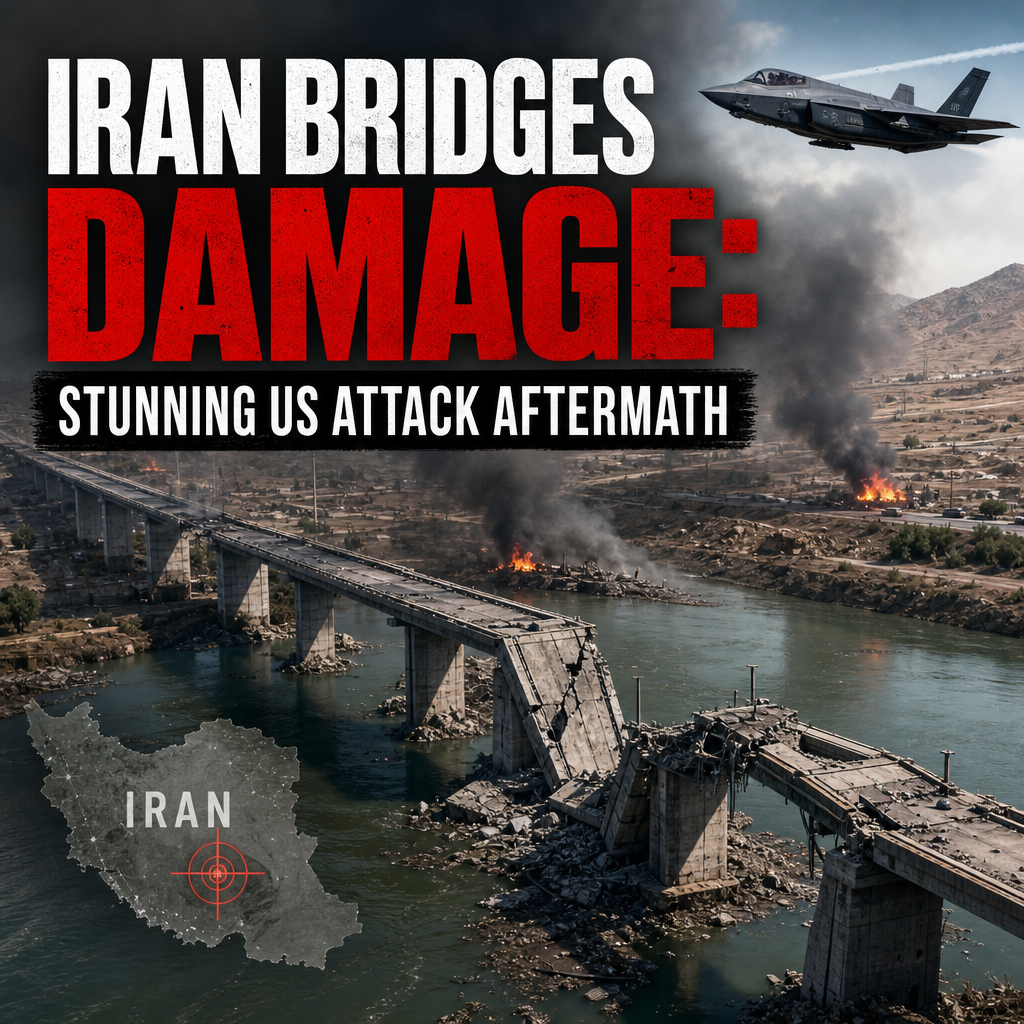
Iran Bridges Damage is becoming a powerful symbol of how quickly a military exchange can spill into civilian life, with visible harm to transport links, water infrastructure, and public confidence after the latest U.S. strikes. Across the available reporting, one message comes through clearly: even when the stated target is military or strategic, the effects on ordinary people can be immediate and difficult to separate from the politics driving the attack.
What the visible damage suggests
Images and video shared in the aftermath show more than a battlefield headline. A damaged bridge is not just a piece of concrete and steel; it is a link between neighborhoods, supplies, emergency services, and daily routines. When a water plant is also reported as damaged, the concern broadens from transportation disruption to basic public health and access to necessities.



That is why the most striking part of the reporting is not simply that damage occurred, but where it occurred. Infrastructure such as bridges and water facilities sits close to the line between military pressure and civilian suffering. Once that line is crossed, the story stops being about a single strike and becomes about a wider humanitarian risk.
Al Jazeera’s coverage places the emphasis on what can be seen on the ground, underscoring the physical aftermath rather than official claims of precision. That matters because visible damage can be independently assessed, even when the competing narratives around the strike cannot. The focus on imagery also signals a broader point: in conflicts involving major powers, the public often receives clearer evidence of destruction than it does of the strategic logic behind it.




Iran Bridges Damage and the competing narratives
The reaction from different outlets shows how one event can be framed in sharply different ways.
Al Jazeera: civilian impact and the wider cost
Al Jazeera’s reporting tends to foreground the consequences for everyday life. In that framing, damaged bridges and water infrastructure are not secondary details; they are the story. The question becomes not only whether the attack hit intended targets, but whether it has created a knock-on effect that will be felt by families, commuters, and local authorities long after the smoke clears.
That angle also reflects a broader journalistic concern: once civilian infrastructure is harmed, it is difficult to limit the discussion to military success. It forces attention onto proportionality, accountability, and the practical reality of rebuilding.
Sky News: strategic escalation and the risk of retaliation
Sky News typically approaches this kind of development through the lens of geopolitical escalation. From that perspective, the damage is important because it may change the next move: whether Iran responds militarily, diplomatically, or through regional proxies, and how allies in the region react.
This framing is less focused on the symbolism of damaged infrastructure and more on the likely chain reaction. In other words, the question is not only “What was hit?” but “What happens next?” That is a useful counterbalance, because infrastructure damage in a tense regional confrontation can quickly become a trigger for broader conflict.
RT: skepticism toward U.S. justification
RT’s style of coverage usually leans more skeptical of Western military action, often highlighting claims of illegality, overreach, or hidden motives. In that framework, the damage in Iran is evidence not just of force, but of what the outlet would likely characterize as reckless escalation or hypocrisy in U.S. foreign policy.
Whether or not one accepts that interpretation, it adds an important third viewpoint: not all observers see the strike as a narrowly targeted security operation. Some see it as a political act with predictable human costs, and that skepticism is part of the media landscape around any U.S.-Iran confrontation.
Why infrastructure damage matters more than headlines
It is tempting to treat strikes like this as a matter of retaliation, deterrence, or messaging. But bridges and water plants tell a more grounded story. They reveal the limits of “surgical” language in warfare. Even when military planners aim to minimize damage, infrastructure is often vulnerable because it is fixed, visible, and essential.
There are several reasons this matters:
– Civilian disruption: Bridge damage can cut off access to work, hospitals, markets, and emergency routes.
– Public health risks: Water infrastructure damage can create immediate and longer-term health concerns.
– Political fallout: Strikes on civilian-linked infrastructure can harden public opinion and narrow diplomatic options.
– Escalation pressure: Each visible sign of destruction can increase the likelihood of retaliation.
The broader uncertainty is that public reporting rarely confirms all the details at once. It can take days or weeks to know the exact extent of damage, who authorized the strike, what the intended target was, and whether civilian harm was avoidable. That uncertainty should not be used to dismiss the reports, but it should temper any rush to declare the event a clean military success or a total strategic failure.
A restrained conclusion
The most responsible reading of the available coverage is that the aftermath is serious, visible, and politically loaded. Iran Bridges Damage is not just an image of ruined infrastructure; it is evidence of how quickly military action can intersect with civilian life and regional instability.
The different outlets offer different emphases, but they do not cancel one another out. Together they paint a fuller picture: the physical harm is real, the strategic stakes are high, and the longer-term consequences remain uncertain. If there is one clear conclusion, it is that strikes against infrastructure tend to create problems far beyond their immediate blast radius.