US Iran Naval Blockade: Stunning Crisis Ahead


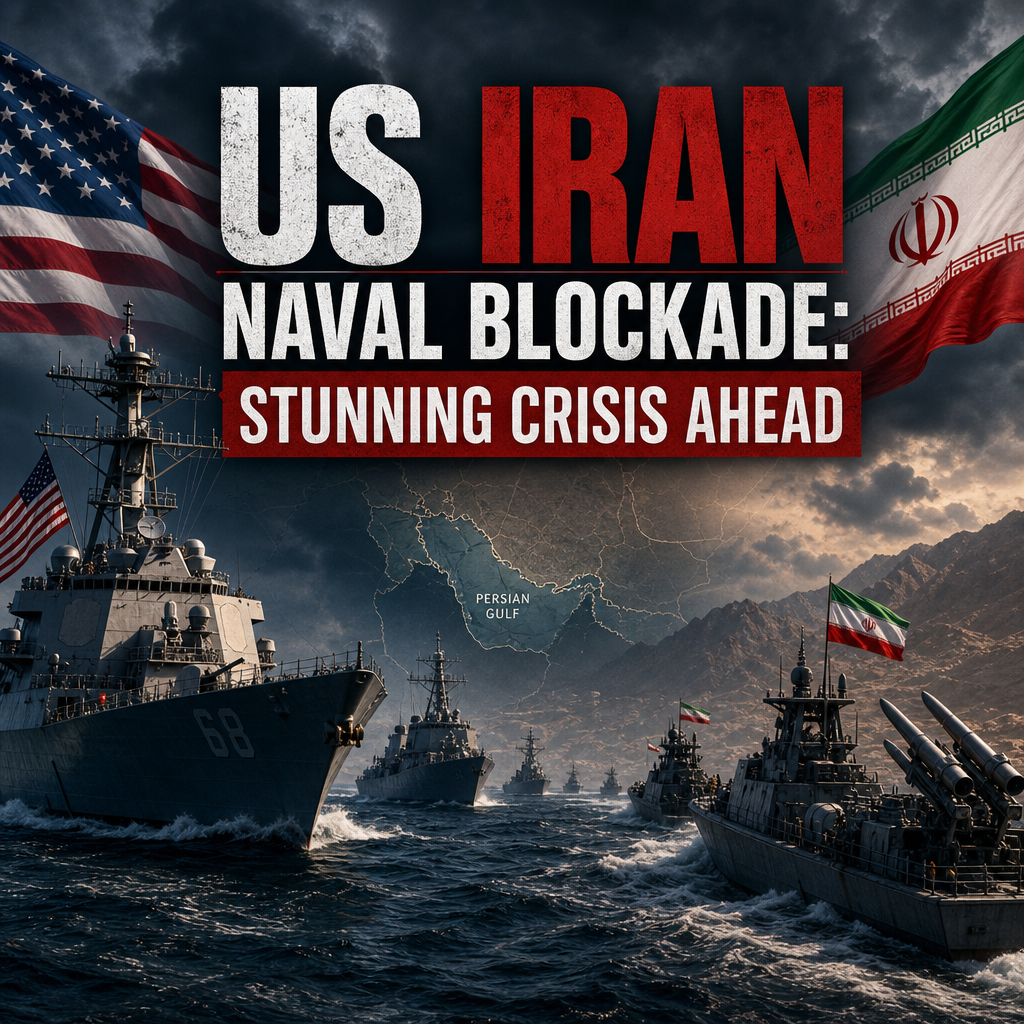
US Iran Naval Blockade is raising the stakes in the Gulf at a moment when markets, diplomats, and military planners are already on edge. The immediate concern is not just whether ships can move, but how quickly a regional standoff could spill into a wider economic and security crisis. What happens next will depend on whether this is treated as a short-term pressure tactic, a bargaining move, or the opening phase of a broader confrontation.
Why the blockade matters beyond Iran’s ports
A naval blockade is never just a military measure; it is an economic shock with global reach. Iran sits near one of the world’s most sensitive maritime corridors, and any restriction on port access or shipping routes can affect energy prices, insurance premiums, and supply chains far beyond the Gulf. Even the threat of disruption can be enough to move markets.



From an economic standpoint, the biggest concern is uncertainty. Oil traders, shipping firms, and insurers hate ambiguity, and blockades create exactly that. If tankers begin rerouting or if companies decide the risk is too high to enter certain waters, costs rise quickly. Those costs are not absorbed only by Iran. They can spread to importers in Asia, Europe, and elsewhere, especially if freight routes become less predictable.
There is also a political dimension. Supporters of a hard line argue that naval pressure is a way to force compliance without launching a larger war. Critics counter that such measures often do the opposite: they deepen mistrust, give hardliners more influence, and reduce the chances of any negotiated settlement. In practice, a blockade can become a test of endurance, where both sides try to avoid appearing weak.




What the different outlets are emphasizing
The reporting and commentary from the sources point to three broad viewpoints.
1) The economic and logistical risk is immediate
Al Jazeera’s reporting leans heavily toward the practical consequences: shipping disruption, port access, and the broader economic fallout. That lens matters because it reminds readers that even limited military action can produce global ripple effects. If vessels hesitate to move, ports slow down, contracts become harder to honor, and pressure builds on governments already dealing with inflation or energy insecurity.
This perspective is especially useful because it cuts through the dramatic language often attached to naval crises. The real crisis may not begin with a missile launch; it may begin with delayed arrivals, rerouted cargo, and a jump in insurance rates.
2) The geopolitical risk is escalation
Sky News tends to frame such events through the lens of regional stability and alliance politics. That approach highlights a central truth: the Gulf is crowded with military assets, and miscalculation is always possible. A blockade can create a chain reaction in which patrols, escorts, and countermeasures increase the chance of an accidental clash.
That view also underscores a broader reality: even if the stated aim is limited, the consequences are rarely contained. A maritime confrontation may draw in the U.S. Navy, pressure regional partners, and force outside powers to choose between de-escalation and deterrence. The danger is not only deliberate escalation, but also confusion, signaling errors, and rapid retaliation.
3) The legal and strategic narrative is contested
RT’s angle often emphasizes sovereignty, sanctions, and the argument that Washington uses maritime pressure as part of a wider coercive strategy. Whether one agrees or not, this view is important because it reflects how the blockade is likely to be interpreted inside Iran and among some of its allies. If Tehran sees the move as an act of economic warfare, it may feel less incentive to compromise and more incentive to retaliate asymmetrically.
That matters because naval blockades are rarely seen as neutral enforcement tools. They are usually interpreted as political messages wrapped in military form. The message Iran receives may be less about shipping lanes and more about regime pressure, which can harden the response.
The real question: deterrence or disaster?
The strongest argument in favor of a blockade is deterrence. Washington may believe that demonstrating control over maritime access can limit Iranian leverage and send a warning without resorting to full-scale war. In theory, it could create space for negotiations by raising the cost of defiance.
But the weakness in that argument is obvious: deterrence only works if the other side believes backing down is safer than resistance. If Iran concludes that it is being cornered, it may respond by harassing shipping, expanding regional proxy activity, or threatening other chokepoints. That would widen the crisis rather than contain it.
A few outcomes seem especially plausible:
– Short-term market shock: Oil and shipping markets react first, even before any major military incident.
– Diplomatic scrambling: Regional powers and European governments push for restraint and backchannel talks.
– Tit-for-tat incidents: Small encounters at sea or around ports create larger political consequences.
– Partial de-escalation: Both sides may seek an exit if costs rise too quickly.
– Wider confrontation: The least desirable path, but one that cannot be ruled out if a single incident goes badly wrong.
A crisis with too many moving parts
The most balanced conclusion is that the blockade is dangerous precisely because it operates on several levels at once. It is military pressure, economic coercion, and political signaling all at the same time. That makes it powerful, but also unstable. Each side can claim it is responding defensively, while the other sees aggression.
For now, the biggest uncertainty is whether this becomes a temporary show of force or the start of a prolonged maritime confrontation. The available reporting suggests there is no clean, decisive answer yet. What is clear is that the consequences would not stay localized. A naval blockade around Iran’s ports could quickly become a global issue, with energy markets, shipping routes, and diplomatic relations all caught in the fallout.
If there is a lesson in the latest wave of coverage, it is that maritime pressure may look controlled on a map but rarely stays controlled in reality. In a region this volatile, the line between deterrence and disaster can be extremely thin.