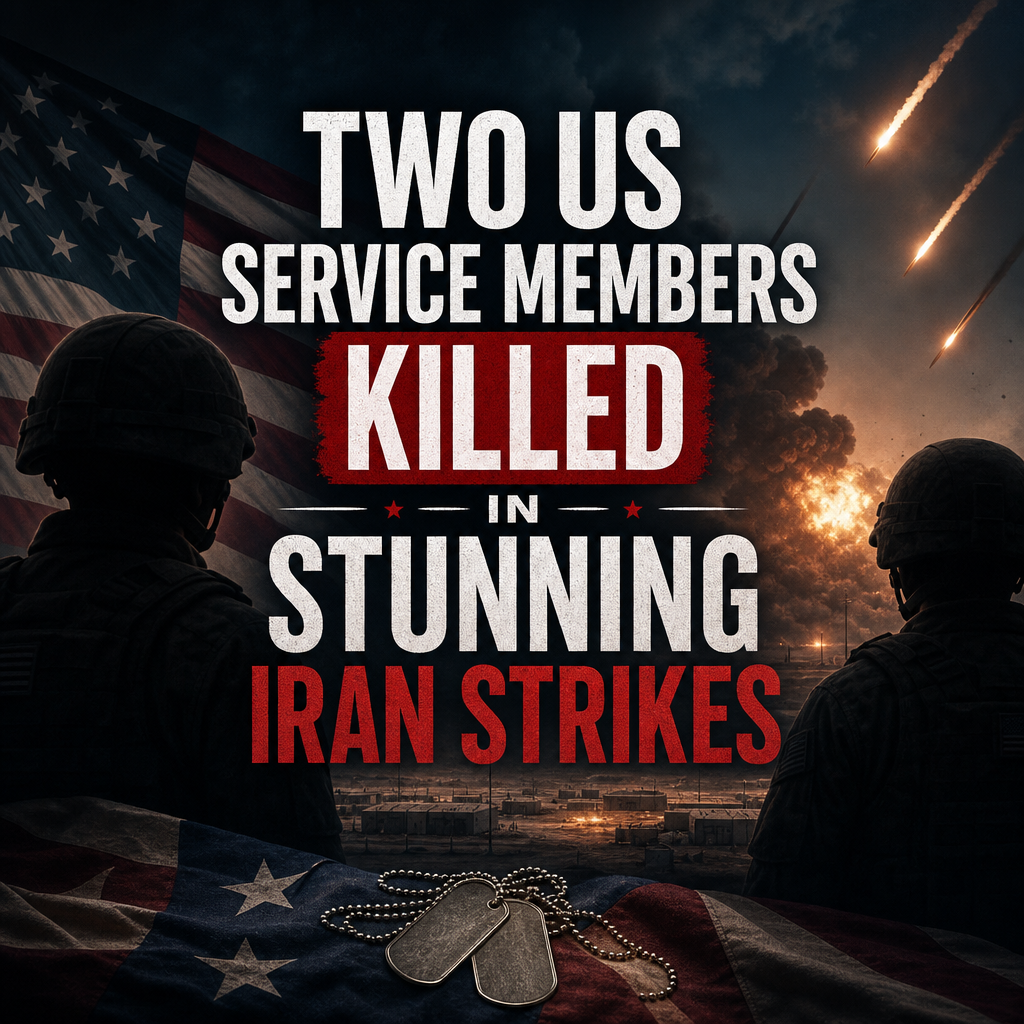
Two US Service Members Killed in Stunning Iran Strikes


Iran strikes have pushed the Middle East deeper into a dangerous new phase, after US officials said two American service members were killed in attacks tied to Iran-backed forces and carried out in retaliation for earlier US actions. What makes this moment especially volatile is that it sits at the intersection of competing narratives: Washington’s view that Tehran is enabling a widening campaign, Iran’s denial of direct responsibility, and regional warnings that the fighting could spread well beyond the immediate target.
What happened and why it matters
According to US officials cited across the coverage, the latest violence followed a pattern that has become increasingly familiar since the Gaza war intensified: armed groups aligned with Iran hit American positions, and the US responded with strikes of its own. The Pentagon’s account framed the deaths as a serious escalation and part of a broader campaign against threats to US personnel in the region.



That framing matters because casualties change the political calculation. Injuries can be absorbed into the cycle of tit-for-tat attacks; deaths, especially of service members, raise the pressure for a sharper response. They also make it harder for any administration to argue that the conflict remains contained.
At the same time, the reporting does not support a simple one-line explanation. The phrase “Iranian retaliatory strikes” can suggest direct state action, but the broader news picture is more complicated. Much of the region’s violence has come from armed groups that are backed by Iran, not always commanded by it. That distinction is crucial: it determines whether this is a conflict between states, a shadow war through proxies, or a mix of both.




A clash of narratives, not just missiles
The three news perspectives point to the same basic fact pattern, but they emphasize different causes and consequences:
– US and Pentagon-focused reporting centers on the deaths of American personnel and the need to deter further attacks.
– Al Jazeera’s broader regional lens places the strikes within the wider fallout from the Gaza war, highlighting how anger over the conflict has rippled across Lebanon, Syria, Iraq, and Yemen.
– Sky News-style international coverage tends to stress the risk of escalation, asking whether the US and its allies can respond without provoking a larger confrontation with Iran.
Taken together, those views suggest that this is not just a military event. It is also a political signal. For Washington, the message is that it cannot allow attacks on its forces to become routine. For Iran and its allies, the message is that regional pressure can be applied indirectly, even if Tehran denies directing every strike.
The wider regional pressure behind Iran strikes
The most important context is that this violence did not emerge in a vacuum. Since the Gaza war began, US forces and bases in the region have faced repeated attacks from militias and armed factions that oppose American support for Israel. That has created a dangerous feedback loop: each new strike increases domestic pressure on leaders to appear decisive, and every military response risks producing the next round of retaliation.
Al Jazeera’s reporting is useful here because it reminds readers that many actors are feeding the conflict at once. The suffering in Gaza has become a rallying point for groups across the region, while Israel, the US, Iran, Hezbollah, and other armed movements all shape the battlefield in different ways. In that sense, the killings of two US service members are both a local tragedy and part of a larger regional crisis.
The risk is not just more attacks on military sites. It is miscalculation. A single strike that misses its intended target, kills the wrong people, or is interpreted as a direct attack on Iranian territory could trigger a response no side actually wants.
What to watch next
The next few days will likely reveal whether this remains a contained exchange or becomes a broader confrontation. The key indicators are straightforward:
– US military response: Will Washington answer with limited strikes, a show of force, or a more sustained campaign?
– Iran’s posture: Will Tehran continue to deny direct involvement while tolerating proxy attacks, or will it try to rein in allied groups?
– Regional spillover: Could the violence spread to other flashpoints in Iraq, Syria, Lebanon, or the Red Sea?
– Diplomatic pressure: Will allies push for restraint before the situation becomes harder to reverse?
Sky News’ emphasis on escalation is important because history shows how quickly these cycles can outrun the intentions of the people directing them. A strike meant to restore deterrence can instead create new incentives for revenge. That is especially true when civilians and service members are both living with the consequences.
A grim reminder of how fragile deterrence has become
The deaths of two US service members underline a simple but uncomfortable truth: deterrence in the Middle East is weakening, not strengthening. For years, officials have tried to manage conflict through calibrated responses and carefully worded threats. But the repeated exchange of missiles, drones, and retaliatory airstrikes suggests those tools are not stopping the cycle.
The fairest conclusion is also the most troubling one. No single source tells the whole story. The Pentagon’s account captures the immediate military stakes. Al Jazeera’s reporting shows the wider human and political context. Sky News highlights the international danger of a mistake that could spiral. Together, they point to a region where every actor claims to be responding defensively, yet the overall result is a steadily rising risk of war.
For now, the attacks are best understood not as an isolated incident but as another sign that the region’s fault lines are growing more unstable. If leaders do not find a way to reduce pressure rather than add to it, the next headline may be even harder to contain.