Iran Deal: Stunning Warning From Bloody Conflict


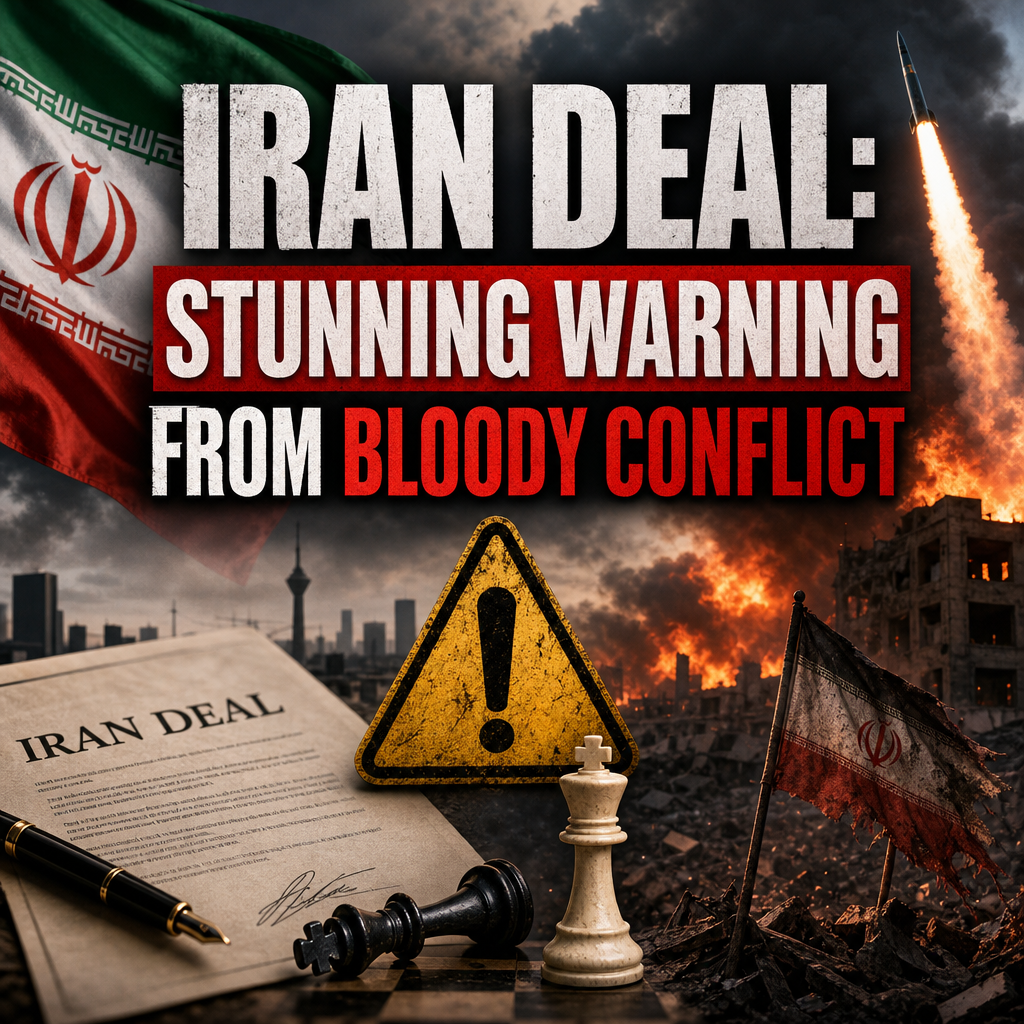
Iran deal talks are being shaped not only by diplomacy and sanctions, but by a long memory of war that still influences how Iranian leaders think about risk, trust, and survival.
That is the central tension running through the latest coverage: on one side, there is a real push for some kind of accommodation between Tehran and Washington; on the other, there is deep suspicion in Iran that any promise of peace can quickly unravel into pressure, conflict, or betrayal. The result is a debate that feels less like a straightforward negotiation and more like a test of whether history can be kept from repeating itself.



Why the past still looms over the Iran deal
For Iranian officials and many ordinary Iranians, the lesson of the Iran-Iraq war is not simply that war is devastating — it is that external guarantees can be fragile and self-interest often wins out. That war, which lasted eight brutal years in the 1980s, left a lasting imprint on the country’s politics, military planning, and public memory. Even today, references to that period carry emotional weight because the conflict is widely remembered not just as a battlefield tragedy, but as a national ordeal that shaped the modern Iranian state.
That memory matters because any new Iran deal is being negotiated in a region where trust is in short supply. Iranian leaders have watched nuclear diplomacy rise and fall before. They have also seen sanctions tightened and loosened, then tightened again. From Tehran’s perspective, a deal can look less like a final solution than a temporary pause unless there are concrete safeguards.




This is where the reporting across different outlets becomes especially revealing. Al Jazeera’s framing emphasizes the historical sensitivity in Tehran and the sense that Iranian policymakers are approaching diplomacy with the caution of a country that believes it has paid the price for naivety before. Sky News coverage tends to focus more on the wider geopolitical stakes, especially how any agreement could affect regional security, the nuclear file, and the calculations of Iran’s adversaries. RT’s commentary, by contrast, often highlights the role of Western pressure and presents Tehran as a state negotiating under duress rather than from a position of equal footing.
Those are not identical narratives, but they overlap in one important way: none of them treat the process as simple. There is no clear sense that a signature on paper will magically erase distrust.
A deal, but with conditions attached
The strongest argument in favor of an Iran deal is practical rather than idealistic. Diplomacy, even when imperfect, can reduce the chances of escalation. If negotiations lower the risk of military confrontation, stabilize oil markets, or create space for humanitarian relief, that is no small outcome. For the U.S. and its partners, a diplomatic channel may also be preferable to another cycle of sanctions, covert action, and threats of force.
But that pragmatic case runs into a familiar obstacle: each side wants proof that the other will hold up its end.
Iran is likely to ask for sanctions relief that is durable and meaningful, not symbolic. It will also want assurances that the deal cannot be reversed abruptly with a change of administration or a shift in political mood abroad. Meanwhile, Washington and its allies are likely to demand verifiable limits and monitoring, arguing that trust must be earned through compliance rather than rhetoric.
That mismatch is why some observers see the current moment as promising but precarious. Even if negotiators are close, the hard part may come after the headlines fade. Implementation is where many agreements collapse.
Bloody conflict and the politics of memory
The phrase “bloody conflict” is not just dramatic language. In the Iranian case, it points to a broader political lesson: suffering becomes policy. Nations that experience prolonged war often develop a strategic culture that is more cautious, more defensive, and sometimes more suspicious of compromise. Iran is no exception.
What the past teaches Tehran
From Tehran’s point of view, the memory of war can support several conclusions at once:
– Foreign powers may not be reliable partners.
– Military weakness invites pressure.
– Deterrence matters as much as diplomacy.
– Any agreement must be backed by real guarantees.
That logic helps explain why Iranian leaders often speak in two voices at once: one diplomatic, one defiant. They want relief, but they also want to avoid looking vulnerable. They want a deal, but not at the cost of appearing to surrender leverage.
This is where outside reporting can sometimes flatten the story. Some coverage focuses almost exclusively on Iran’s regional role or nuclear ambitions. Other coverage emphasizes the harm caused by sanctions and isolation. Both are true, but neither is complete on its own. The present moment is complicated because Iran is both a negotiating partner and a state that has spent decades preparing for the possibility that negotiation will fail.
The bigger question: can fear produce stability?
The most honest answer may be that nobody knows yet. That uncertainty is not a weakness in the analysis; it is the reality of diplomacy in a region shaped by trauma.
A successful Iran deal would not erase the memory of past wars, and it would not automatically resolve the distrust that has built up over years of confrontation. But it could still matter. Even limited agreements can create breathing room, lower the temperature, and reduce the odds of miscalculation.
At the same time, optimism should be restrained. History suggests that deals involving Iran are most durable when both sides recognize the other’s fears instead of dismissing them. For Tehran, the fear is of being cornered after giving ground. For Washington and its allies, the fear is of buying time for a stronger Iranian position later.
That is why the current warning from history is so stark. The lesson of a bloody conflict is not that peace is impossible. It is that peace built on mistrust alone is fragile. If the latest negotiations are to succeed, they will need more than tactical agreement. They will need a structure robust enough to survive suspicion, political change, and the memory of what happens when diplomacy fails.