Strait of Hormuz: Stunning No-Return Warning from Iran


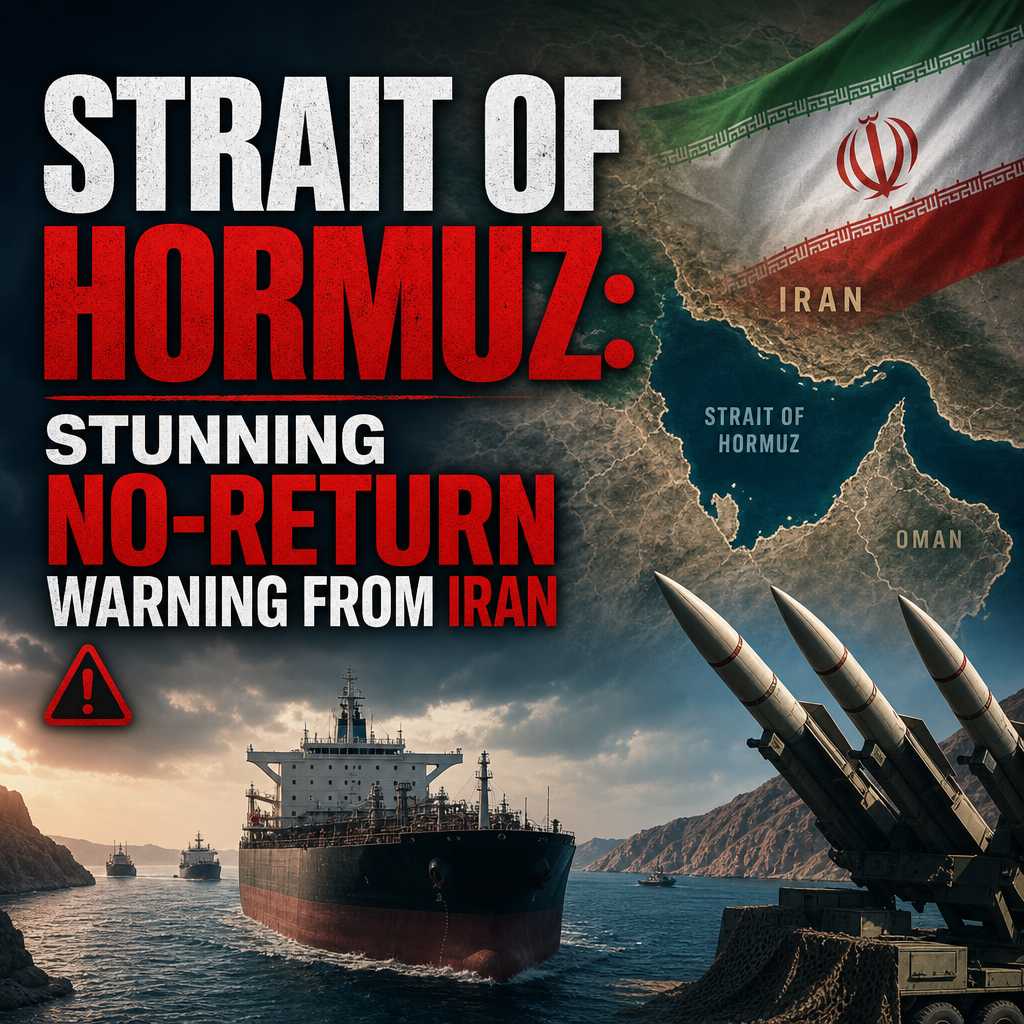
Strait of Hormuz remains one of the world’s most sensitive chokepoints, and any new warning from Tehran instantly raises the stakes for global shipping, energy markets, and regional security.
Iran’s latest hardline messaging around the narrow waterway has once again put the spotlight on how easily a political crisis can become an economic one. The passage links the Gulf’s major oil exporters to the Indian Ocean, and a large share of seaborne crude and liquefied natural gas still moves through it. That is why even a rhetorical escalation can rattle insurers, traders, and naval planners long before any ship is actually stopped.



What makes the current moment especially fraught is that different newsrooms tend to frame the issue from different angles. Russian state-linked coverage often emphasizes Iran’s deterrent posture and sovereignty claims, presenting Tehran’s threats as a response to outside pressure. Middle Eastern reporting, including from regional-focused outlets, usually places the warning inside a wider cycle of confrontation involving sanctions, proxy conflicts, and failed diplomacy. Western coverage, by contrast, tends to spotlight the immediate economic danger and the risk of a miscalculation that could pull in U.S. and allied forces.
Why the Strait of Hormuz matters so much
The Strait of Hormuz is only a few dozen kilometers wide at its narrowest point, yet its strategic importance is enormous. Tankers carrying crude oil and refined products pass through it on their way to Asia, Europe, and elsewhere. That concentration of traffic means there is little room for error.




Several consequences follow from that reality:
– Energy prices can jump quickly if traders fear even a temporary disruption.
– Shipping insurance costs can rise when risk levels are upgraded.
– Naval patrols become more visible, which can reduce the chance of an immediate blockade but increase the chance of a confrontation.
– Regional diplomacy gets harder, because every side begins bargaining under the shadow of escalation.
This is why talk of closure, restrictions, or “changing the status” of the strait carries such weight. Even if a full shutdown is unlikely in practical terms, the threat alone can have consequences. Iran knows this, and so do its rivals.
Iran’s warning: leverage, deterrence, or brinkmanship?
A key question is whether Iran is signaling genuine intent or simply trying to remind adversaries of its leverage. Tehran has long argued that foreign powers and sanctions have boxed it in, and that its security concerns are routinely dismissed. From that perspective, references to Hormuz are not random bluster; they are meant to show that Iran has tools of retaliation if pressure intensifies.
The argument from Tehran
From Iran’s point of view, the strait is a strategic card, not necessarily a card it wants to play. Iranian officials often frame such warnings as defensive: if Iran is threatened, it can threaten the flow of trade that others depend on. That logic has a deterrent purpose. It tells opponents that escalation will not be one-sided.
The regional concern
But neighboring states see the same message very differently. For Gulf countries, the biggest danger is not only an actual blockade, but the uncertainty created by a single ambiguous statement. Business decisions, port schedules, and military deployments can all change on the basis of one warning. In other words, even when the strait stays open, the region still pays a price for instability.
The Western and market view
Outside the region, the emphasis is usually on worst-case scenarios. Analysts point out that the global economy is still vulnerable to energy shocks, especially when conflicts already stretch supply chains. If shipping lanes are perceived as unreliable, markets react before governments do. That is why oil futures can move sharply on headlines alone.
What the sources suggest, and where they differ
Taken together, the coverage suggests broad agreement on one point: any threat to the Strait of Hormuz is serious because the stakes are global, not merely local. The disagreement lies in interpretation.
Some outlets lean toward seeing Iran’s posture as a rational response to pressure. Others frame it as dangerous brinkmanship that could backfire. Both readings may contain part of the truth.
The more sober conclusion is that Iran’s warnings are best understood as a signal of leverage rather than a clear roadmap to immediate action. A full closure would be difficult, costly, and likely to provoke a strong international response. At the same time, limited harassment, seizure risks, or navigation threats could still be enough to unsettle the market and heighten military alertness.
That ambiguity is exactly what makes the situation unstable. A country does not need to carry out its threat for the threat to matter.
The bigger picture: a warning that reflects a deeper deadlock
The latest warning is less a standalone event than a symptom of a much larger regional deadlock. Diplomatic channels remain weak, mistrust remains high, and military posturing has become a habitual language of statecraft. In that environment, the Strait of Hormuz is more than a shipping route. It is a pressure point where grievances, deterrence, and global dependency all collide.
There is still a strong incentive for every major player to avoid crossing the line from warning to disruption. Iran risks damaging its own economic interests and inviting retaliation. Gulf states risk higher costs and greater insecurity. Consumer economies risk inflation and supply shocks. Even the powers most willing to posture militarily generally prefer a tense status quo to an open crisis.
That is why the most realistic reading of the moment is not that closure is imminent, but that the region is living with a dangerous form of strategic theater. The threat is real enough to matter, even if the actual probability of a complete shutdown remains lower than the headlines suggest.
For now, the Strait of Hormuz stays open. But when warnings become part of the routine, the line between intimidation and incident can narrow very quickly.