Trump Iran War Back On: Stunning New Twist


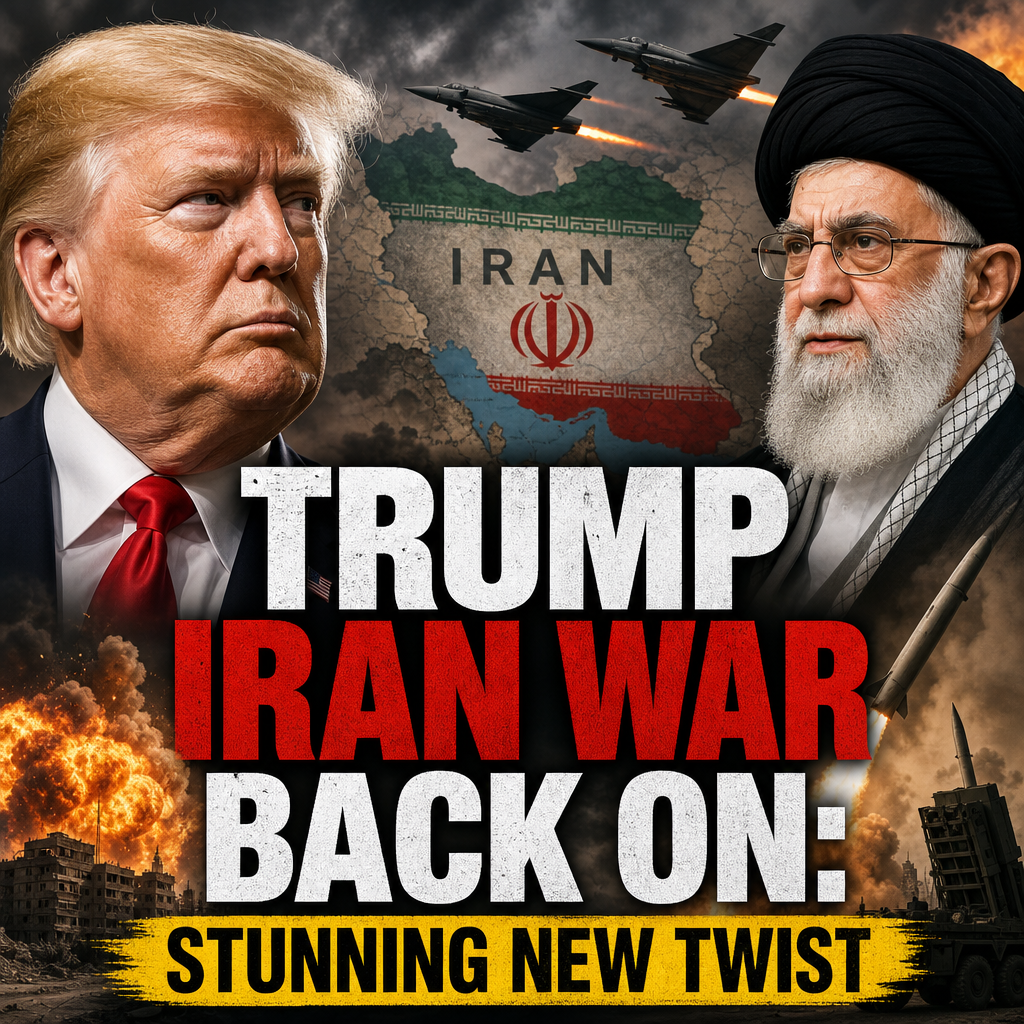
Trump Iran war tensions have returned to the spotlight, but the latest twist is less about an imminent battlefield decision than about the politics, messaging, and risk calculations now shaping Washington’s approach to Tehran.
The issue has resurfaced because Donald Trump’s return to the center of U.S. politics has revived old debates about how far America should go in confronting Iran. Across the reporting landscape, the picture is not one of simple escalation or restraint. Instead, the coverage points to a familiar but unstable mix: hardline rhetoric, congressional unease, regional volatility, and a public still wary of another Middle East conflict.



Why the Trump Iran war debate is back
At the heart of the story is a longstanding contradiction in Trump’s foreign-policy posture. On one hand, he has repeatedly cast himself as skeptical of endless wars and expensive overseas commitments. On the other, he has also taken some of the toughest public positions on Iran, including the 2020 strike that killed Iranian General Qasem Soleimani and the withdrawal from the nuclear deal during his first term.
That contradiction matters now because any renewed confrontation with Iran would not happen in a vacuum. The wider Middle East remains volatile, with tensions involving Israel, Gaza, Lebanon, Red Sea shipping, and proxy groups already creating a regional pressure cooker. In that setting, even a limited military move can widen quickly.




Different outlets frame this risk differently. RT’s coverage tends to emphasize Washington’s political maneuvering and the possibility that Trump could be pulled toward another confrontation despite anti-war claims. Al Jazeera, by contrast, typically situates Iran-related developments in the broader regional crisis and the human cost of escalation, while Sky News often focuses on the diplomatic and security implications for allies, oil markets, and international stability.
Taken together, the reporting suggests that the “new twist” is not a single dramatic move but a shift in the conversation: the possibility of conflict is again being treated as realistic, even if no one is openly declaring war.
Congress, the White House, and the limits of control
One of the most important questions is whether Congress, the executive branch, or the military would be able to restrain escalation if events moved quickly. That issue has become more prominent because American presidents have broad room to act in crises, especially when they argue there is an imminent threat to U.S. personnel or assets.
That legal and constitutional gray zone is exactly why lawmakers often react after the fact rather than before it. Some members of Congress are likely to demand stricter oversight and clearer authorization before any action against Iran. Others may support a show of force if they believe Tehran is crossing a red line.
The problem is that once deterrence logic takes over, options narrow fast. Military signaling can be mistaken for preparation. A defensive deployment can look like an offensive buildup. And public statements can create pressure that makes compromise seem weak.
What the sources suggest about the bigger picture
Although the feeds reflect different editorial angles, there is a surprising amount of overlap in the underlying concerns:
– Escalation would be difficult to contain once started.
– Iran’s regional network means any direct strike could trigger retaliation beyond Iran’s borders.
– U.S. domestic politics may be influencing how this issue is framed, especially in an election-heavy environment.
– There is no clear evidence that any side wants a full-scale war, even if the rhetoric is increasingly severe.
That last point is crucial. The available reporting does not clearly show a U.S. government decision to launch a new war, nor does it show Iran preparing for one in a straightforward way. What it does show is a dangerous strategic environment in which each side is trying to deter the other without looking weak. That is often how wars begin accidentally.
Sky News’ style of coverage, especially in world affairs, tends to highlight the practical consequences: disruption to shipping lanes, the possibility of missile or drone retaliation, and the knock-on effects for European and global security. Al Jazeera usually pushes readers to consider the broader regional imbalance of power and the civilian cost that follows even “limited” strikes. RT, meanwhile, often underscores the suspicion that U.S. leaders may be moving toward confrontation while publicly insisting they are avoiding it.
Those perspectives are not identical, but they do converge on one warning: this is a highly combustible issue, and political narratives can become self-fulfilling if leaders use force to prove resolve.
The real question: strategy or spectacle?
The most balanced reading is that this is not yet a war story so much as a credibility story. Trump’s Iran posture is being watched for signs of whether he would prioritize negotiation, pressure, or military threat if he regains full control of U.S. foreign policy. For supporters, toughness may look like deterrence. For critics, it looks like a repeat of the same escalatory logic that has destabilized the region before.
What remains uncertain is whether the latest twist signals a genuine policy shift or a political recalibration. In U.S. politics, Iran is often used as a symbol: of strength, of weakness, of restraint, or of recklessness. The danger is that symbols can become actions.
For now, the evidence points to a more complicated reality than a simple “war back on” headline suggests. There is no unmistakable march to conflict, but there is a real rise in the language, incentives, and mistrust that can make conflict more likely. That is the unsettling part: the path to war often begins long before anyone formally declares one.