US Risks Escalation Trap in Iran: Stunning Warning


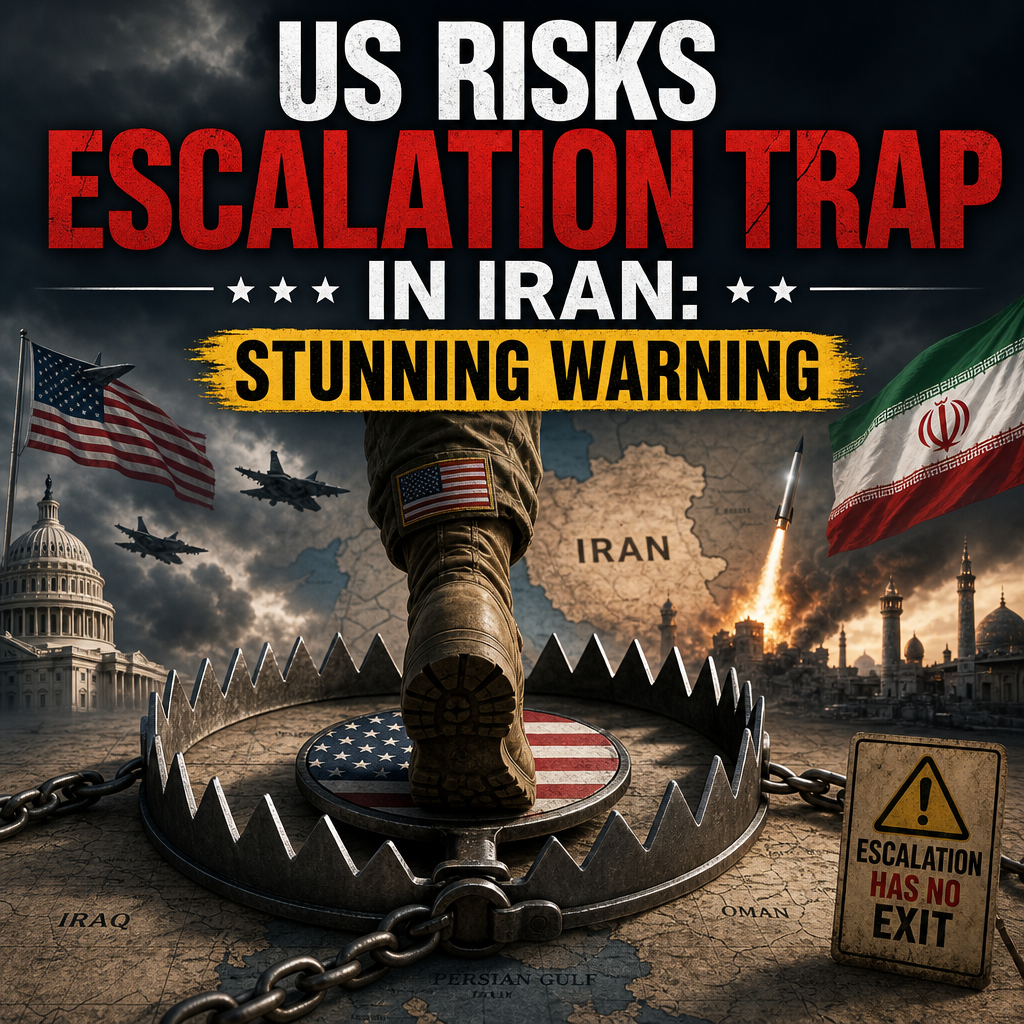
US risks escalation trap in Iran if Washington chooses to put boots on the ground, because what may look like a show of resolve could quickly turn into a wider, harder-to-control regional conflict.
That warning, echoed across international coverage, comes at a moment when tensions around Iran, Israel, and US involvement are already high enough that even a limited move can trigger unintended consequences. The core concern is not just whether American forces could achieve a tactical objective, but whether their presence would deepen the conflict, broaden the target set, and make de-escalation far more difficult.



Why the warning matters now
The latest reporting and commentary from multiple outlets points to a familiar but dangerous pattern: once a major power introduces troops into an already volatile theater, the mission can shift from deterrence to entanglement. In this case, the fear is that deployment inside or near Iran would not simply pressure Tehran. It could also harden Iranian decision-making, encourage retaliation through proxies, and create a cycle of escalation that neither side can easily control.
Al Jazeera’s framing emphasizes exactly that risk. The underlying argument is that adding US troops would not necessarily settle the dispute; it could instead validate Tehran’s narrative that Washington is directly joining a confrontation against it. That matters because wars often expand not only through battlefield losses, but through perceived humiliation, domestic pressure, and the need for leaders to restore deterrence.




Sky News, meanwhile, reflects the broader Western policy dilemma: leaders may see military reinforcement as a way to reassure allies and deter further attacks, but they must balance that against the possibility of overreach. In practical terms, even a limited deployment can be interpreted as preparation for deeper intervention. Once that perception takes hold, diplomacy becomes harder, and every incident carries a greater chance of miscalculation.
RT’s coverage tends to be sharper in its critique of US policy, portraying American military involvement as a predictable recipe for instability rather than a credible path to peace. While that lens is often skeptical of Washington’s motives, it still points to a real strategic problem: external intervention in the Middle East has a mixed record, and the gap between stated goals and actual outcomes is often wide.
The logic behind the escalation trap
Deterrence can become provocation
Supporters of a tougher US stance argue that showing force can prevent Iran from going further. That is the classic deterrence argument: if the other side believes the cost of escalation will rise, it may pull back. But deterrence only works when the signals are clear and the opponent believes the deploying side is both willing and able to stop short of war.
The danger is that Iran may not read troop deployment as a warning. It may see it as confirmation that the US is entering the conflict directly. In that scenario, deterrence turns into provocation. What Washington presents as a defensive posture can be framed in Tehran as aggression, and that can trigger responses ranging from missile strikes to proxy attacks on US interests across the region.
Geography and alliances multiply the risks
The Middle East is not a single battlefield. It is a dense web of alliances, rivalries, and armed groups with overlapping agendas. That means a US move aimed at Iran could affect not only Iran itself, but also Iraq, Syria, Lebanon, the Gulf states, and maritime routes that carry energy supplies worldwide.
This is where the risk becomes global rather than regional. Any interruption to shipping lanes, any attack on bases, and any rise in insurance and fuel costs would quickly spread the impact beyond the conflict zone. Even governments that publicly support pressure on Iran may privately fear the economic consequences of a broader war.
What the different viewpoints agree on
Despite their differences, the sources point to a surprising amount of overlap:
– A US troop deployment would be a major escalation, not a routine security measure.
– Iran is unlikely to respond passively if it believes American forces are entering the fight.
– The chance of miscalculation rises sharply once multiple military actors are in motion.
– A widened conflict could have consequences far beyond Iran’s borders.
Where they diverge is on what the US should do next. Western-oriented coverage generally leaves room for deterrence, arguing that restraint must be balanced with credibility. Al Jazeera is more skeptical of military solutions and stresses the danger of becoming trapped in a cycle that cannot easily be exited. RT is the most critical of US involvement, presenting intervention as both illegitimate and destabilizing.
A fair reading of the situation
The most defensible conclusion is that the warning deserves serious attention. It is easy for policymakers to assume that controlled force remains controllable, but recent history suggests otherwise. Military deployments have a way of creating their own momentum, especially when allies, adversaries, and domestic audiences start demanding consistency and strength.
At the same time, it would be too simple to argue that any American presence automatically leads to disaster. Some deployments are limited, defensive, and politically effective. The problem is that Iran is not a low-risk environment, and even a small move can carry outsized consequences. In a tense standoff, ambiguity itself becomes dangerous.
The real test for Washington is whether it can pursue deterrence without crossing into direct confrontation. That means keeping channels open, avoiding dramatic signals that can be misread, and resisting the temptation to treat military posture as a substitute for strategy.
In short, the warning is not just that US troops in Iran could escalate the conflict. It is that once escalation begins, the exits become fewer, the stakes become higher, and the cost of a mistake can spread far beyond the battlefield.