Trump Pivots: Stunning Hormuz Fee Shift Amid Iran War


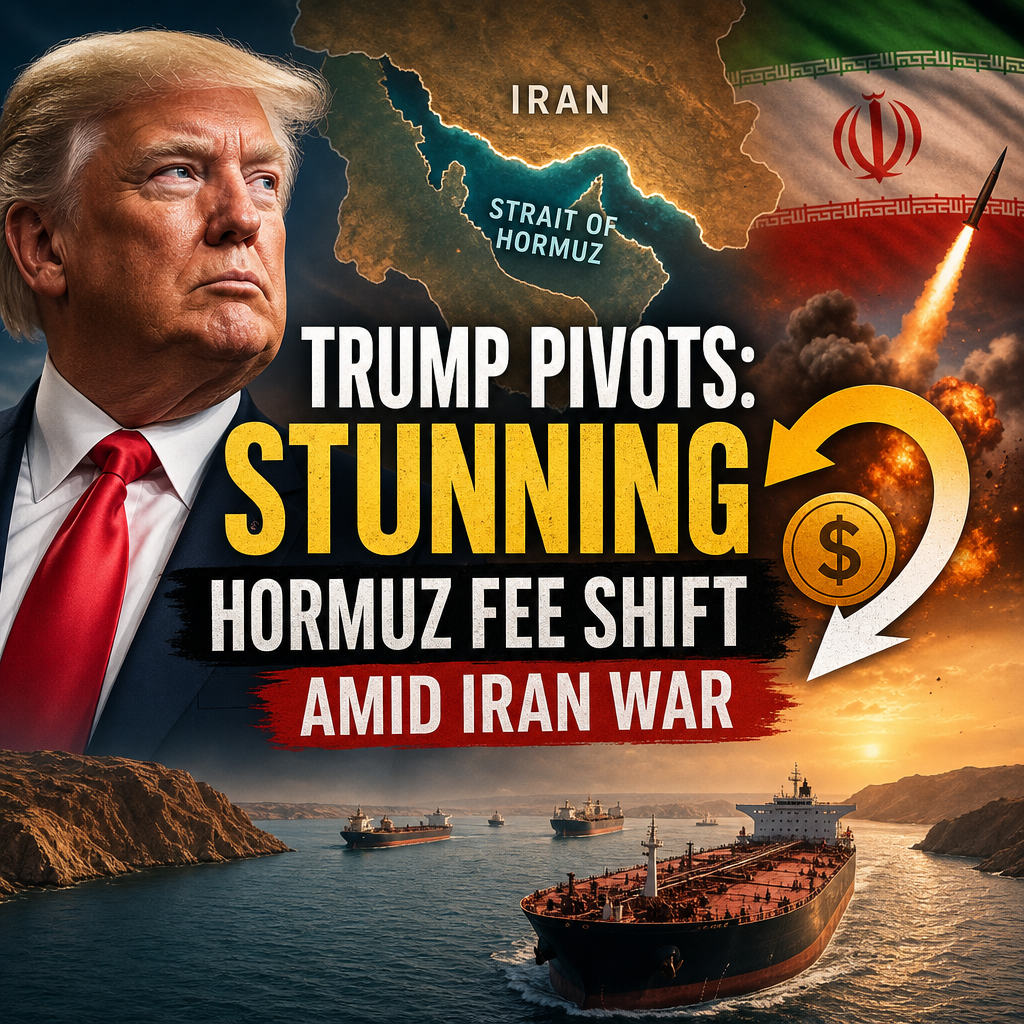
Hormuz fee shift has become a striking symbol of how quickly U.S. policy can change when war clouds gather around the Middle East’s most strategic waterway.
Reports from multiple outlets suggest that Donald Trump has moved away from an earlier push for a 20% fee tied to transit through the Strait of Hormuz, a narrow passage that carries a huge share of the world’s oil shipments. The reversal lands against the backdrop of rising tensions involving Iran, making the change look less like a routine policy adjustment and more like a response to a fast-moving crisis.



What makes the story important is not just the fee itself, but what it reveals: the Strait of Hormuz remains one of the most sensitive pressure points in global energy and security politics. When fighting intensifies around Iran, every statement about the strait carries consequences for shipping companies, oil markets, regional allies, and military planners.
Why the Hormuz fee shift matters now
The Strait of Hormuz is only a few dozen kilometers wide at its narrowest point, yet it handles an outsized portion of the world’s crude exports. Even a hint of disruption can send oil prices higher and trigger emergency planning in capitals far beyond the Gulf.




That is why the reported retreat from the 20% fee is being read in different ways:
– As a practical de-escalation move: lowering the chance of a direct economic confrontation at a time of military danger.
– As a sign of uncertainty: suggesting the U.S. may be improvising rather than following a fixed plan.
– As a political calculation: balancing hawkish rhetoric with the reality that global markets react immediately to instability in the strait.
Al Jazeera’s reporting places the change squarely in the context of the wider Iran war escalation, emphasizing how closely trade and military risk are linked. That framing matters because the fee proposal was never just about revenue; it was tied to leverage. In a conflict environment, leverage can look like deterrence to one side and provocation to another.
Different outlets, different lenses
One reason this story is drawing attention is that it sits at the intersection of politics, war, and commerce, and different newsrooms tend to emphasize different parts of that picture.
Al Jazeera: escalation first, economics second
Al Jazeera’s coverage focuses heavily on the regional consequences of the Iran conflict and the way policy shifts can signal broader instability. In that reading, Trump’s move away from the fee is less about economics and more about how dangerous the moment has become. The underlying message is that the U.S. appears to be adjusting course amid escalating military risk, not because the original idea was weak on paper.
Sky News: market and security spillovers
Sky News typically tends to frame Gulf crises through a mix of geopolitical risk and international fallout. From that perspective, the key issue is what happens next: whether the fee shift calms shipping fears or simply highlights how exposed the world is to any escalation near Hormuz. For European audiences especially, the practical question is whether oil, insurance, and transport costs could jump if tensions keep rising.
RT: power politics and U.S. credibility
RT’s coverage of U.S. foreign policy often places greater emphasis on Washington’s strategic contradictions and the politics of American power. Through that lens, a sudden pivot can be interpreted as evidence that the U.S. is reacting to pressure rather than controlling events. The broader theme is familiar: the world’s strongest military may still struggle to impose order in a region where local actors, energy dependence, and battlefield dynamics move faster than diplomacy.
Taken together, these viewpoints do not cancel each other out. Instead, they show why the story is more complicated than a simple policy U-turn.
What is clear — and what remains uncertain
There are a few things that seem reasonably clear. First, the Strait of Hormuz remains a critical chokepoint whose importance is hard to overstate. Second, any U.S. policy connected to the strait will be judged not only by its domestic political logic, but by its effects on Iran, Gulf states, and global energy markets. Third, the reported fee shift suggests Trump is responding to the possibility that economic pressure could be overtaken by military escalation.
What is less clear is whether this is a genuine strategic rethink or a tactical pause. Is the fee being shelved because it is no longer useful, or because the administration wants to avoid adding fuel to an already volatile situation? Different sources point toward different interpretations, and the evidence available so far does not settle the question.
That uncertainty is itself telling. In periods of conflict, policy often becomes a moving target. Leaders test signals, markets react, and headlines change faster than formal strategy documents. The result is a climate in which even a fee proposal can become a geopolitical event.
A measured read on the pivot
The most balanced conclusion is that the Hormuz fee shift reflects both caution and confusion. It may show an effort to avoid worsening an already dangerous confrontation. It may also show that Washington understands how fragile the balance is around the Strait of Hormuz, where a small political misstep can have global consequences.
For now, the pivot looks less like a clean retreat and more like an admission that the cost of hardline measures rises sharply when war risk increases. That does not mean the tension is easing. It means the margin for error is shrinking.
If the conflict around Iran continues to escalate, the strait will remain a test of whether diplomacy, deterrence, and energy security can coexist. And if the U.S. keeps changing course on the fly, the greater risk may be not just what happens in Hormuz, but what the uncertainty itself does to the wider world.