
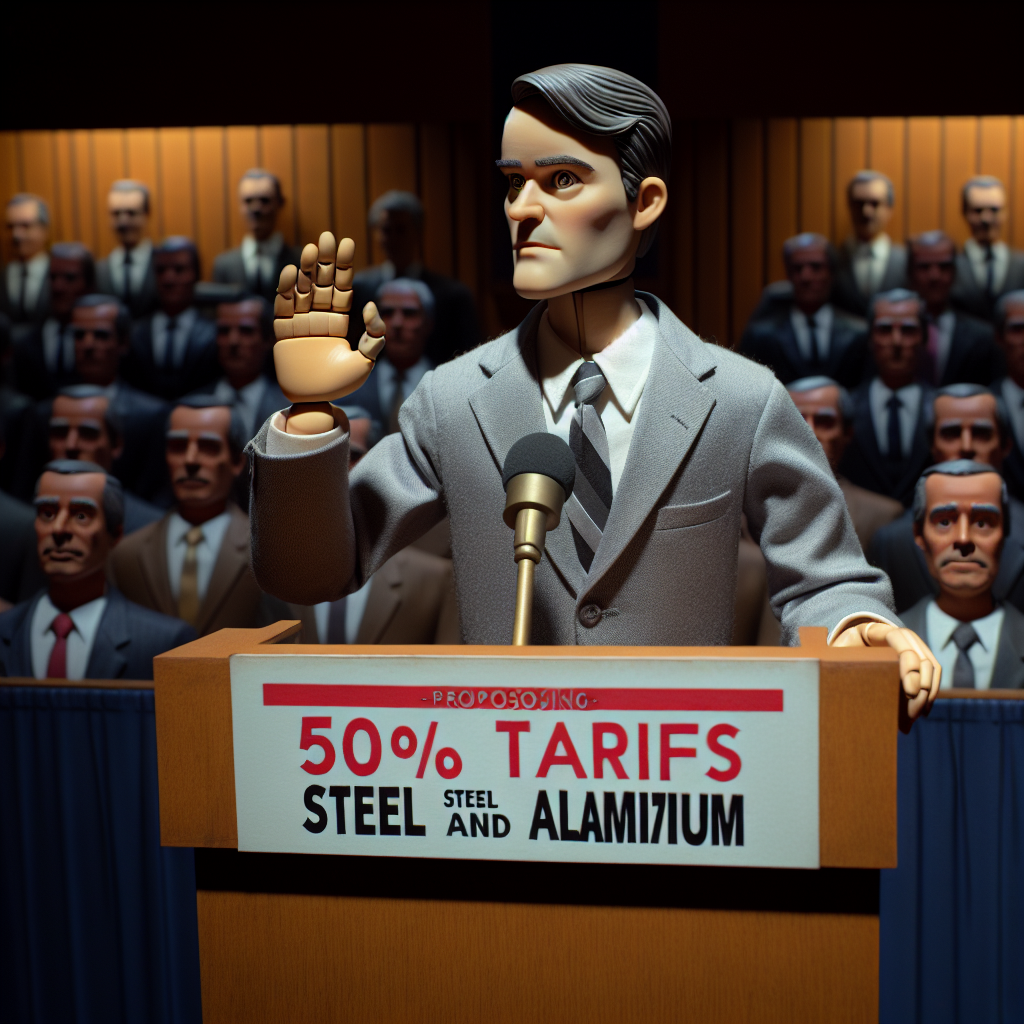
Trump Proposes 50% Tariffs on Canadian Steel and Aluminum


Trump Proposes 50% Tariffs on Canadian Steel and Aluminum
Overview of the Proposal
Former President Donald Trump has announced a proposal to impose a 50% tariff on Canadian steel and aluminum imports. This move is part of his broader economic strategy aimed at protecting American industries and jobs.
Key Objectives
- Protect Domestic Industries: The proposed tariffs are intended to shield U.S. steel and aluminum producers from foreign competition.
- Boost American Jobs: By making imported goods more expensive, the plan aims to encourage domestic production and job creation.
- Address Trade Imbalances: Trump argues that the tariffs will help rectify trade imbalances between the U.S. and Canada.
Potential Impacts
The proposed tariffs could have significant implications for both the U.S. and Canadian economies, as well as the broader international trade landscape.



- Economic Tensions: The tariffs may exacerbate trade tensions between the U.S. and Canada, potentially leading to retaliatory measures.
- Price Increases: Higher tariffs could lead to increased costs for American manufacturers relying on Canadian steel and aluminum, potentially resulting in higher consumer prices.
- Industry Reactions: U.S. industries that benefit from cheaper Canadian imports may oppose the tariffs, while domestic producers may support them.
Political Reactions
The proposal has sparked a range of political reactions, with supporters praising the focus on American jobs and critics warning of potential economic fallout.

- Supporters: Advocates argue that the tariffs will revitalize American manufacturing and reduce dependency on foreign imports.
- Critics: Opponents caution that the tariffs could lead to trade wars and harm international relations.
Conclusion
Trump’s proposal to impose a 50% tariff on Canadian steel and aluminum is a bold move aimed at bolstering American industry and addressing trade imbalances. While it has garnered support for its potential to create jobs, it also faces criticism for the possible economic and diplomatic repercussions. The outcome of this proposal will depend on its reception by policymakers and its impact on U.S.-Canada trade relations.