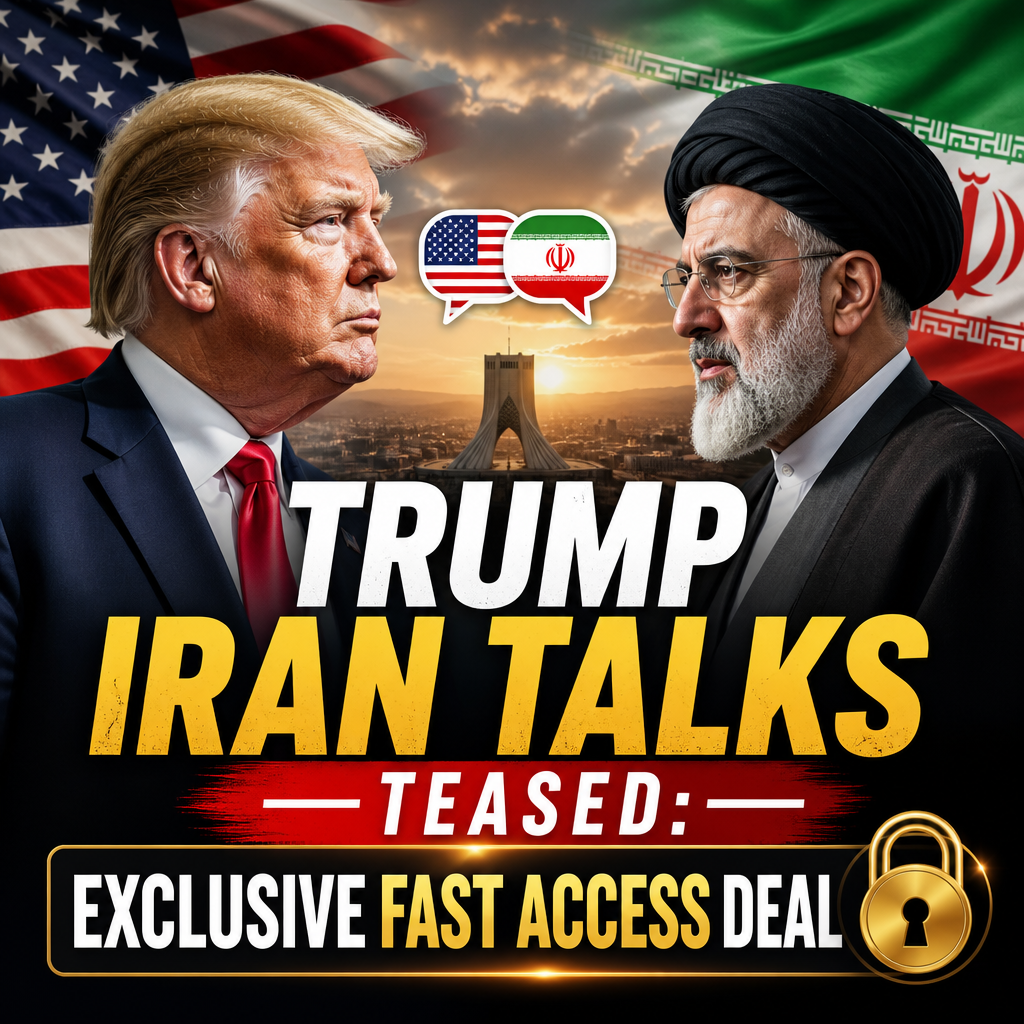
Trump Iran Talks Teased: Exclusive Fast Access Deal


Trump Iran talks are back in the spotlight after Donald Trump used Truth Social to hint at a possible diplomatic opening with Tehran, but the message is less a confirmed breakthrough than a reminder of how quickly Middle East diplomacy can shift between threat and negotiation. The idea of an “exclusive fast access deal” may sound dramatic, yet the reality is more complicated: Iran’s nuclear program, regional tensions, and Trump’s own history with the 2015 nuclear agreement all make any new conversation politically loaded and strategically fragile.
What emerges from the coverage across RT, Al Jazeera, and Sky News is not a single, clean narrative, but a set of overlapping questions. Is Trump signalling a serious return to diplomacy, or simply trying to project leverage? Is Iran genuinely open to talks, or using the possibility of negotiations to ease pressure? And would any future deal look like a revival of the Obama-era pact, or something far more conditional and transactional?



Trump Iran talks: signal, strategy, or both?
Trump has long preferred high-visibility diplomacy when it suits him. During his first presidency, he withdrew from the Joint Comprehensive Plan of Action, the Iran nuclear deal, arguing it was too weak and failed to curb Tehran’s broader behavior. Since then, any hint that he might pursue a new agreement has drawn attention because it appears to cut against the hardline posture that defined his earlier approach.
RT’s coverage leaned into the immediacy of Trump’s social media message, portraying it as a noteworthy tease rather than a fully formed policy shift. That framing matters, because Trump often uses provocative messaging to create uncertainty around his next move. In practical terms, the post could be read as a negotiation tactic: keep Iran guessing, keep allies and adversaries off balance, and preserve room to claim success later.




Al Jazeera’s broader reporting on Iran-related diplomacy has typically emphasized the structural obstacles. Tehran has repeatedly said it will not accept talks under coercive pressure, especially after years of sanctions, the collapse of trust over the nuclear deal, and mounting regional conflict. From that perspective, a Trump offer is only meaningful if it comes with some form of sanctions relief or security guarantee—something politically difficult for Washington.
Sky News has tended to focus on the wider geopolitical implications, especially for European allies and the wider Middle East. A sudden U.S.-Iran opening would not happen in a vacuum. It would affect oil markets, Israeli security calculations, Gulf state diplomacy, and the already tense question of nuclear monitoring. Even a preliminary discussion could trigger debate over whether Washington is rewarding brinkmanship or preventing a larger crisis.
What a deal would need to solve
Any real agreement would have to address more than headlines and rhetoric. At minimum, negotiators would likely need to confront:
– Iran’s uranium enrichment levels and monitoring access
– U.S. sanctions relief and the timing of any rollback
– Regional proxy tensions involving Lebanon, Syria, Iraq, and Yemen
– Iran’s demand for guarantees that another U.S. administration would not walk away again
– Domestic political resistance in both Washington and Tehran
That list helps explain why the phrase “fast access deal” sounds more optimistic than realistic. The two sides may be able to talk quickly. Actually settling core disputes would take time, trust, and probably external mediation.
Why the timing matters now
The timing of Trump’s tease is important because diplomacy with Iran is rarely just about Iran. It is also about pressure, deterrence, and image. A candidate or president who can appear tough while still keeping the door open to talks can claim the best of both worlds. But that balance is hard to maintain.
For Trump, a renewed Iran track could serve several purposes. It would allow him to present himself as a dealmaker who can achieve what others could not. It could also help blunt criticism that his earlier withdrawal from the nuclear agreement left the region less stable. At the same time, any sign of softness could upset supporters who favor maximum pressure and a confrontational stance toward Tehran.
For Iran, talks may offer a way to reduce isolation without appearing to surrender. But Tehran has little incentive to enter a process that simply reproduces past constraints without visible payoff. Iranian officials are also keenly aware that U.S. politics can undo even carefully negotiated arrangements. That makes any “exclusive” channel of communication useful only if it leads to concrete and durable concessions.
The regional angle is just as significant. Israel has long viewed Iran’s nuclear capabilities as an existential threat. Gulf Arab states, while often quieter in public, watch U.S.-Iran diplomacy closely because it affects missile threats, shipping lanes, and proxy conflict. European governments, meanwhile, generally prefer renewed diplomacy but remain wary of another failed agreement that buys time without solving the underlying issue.
The bigger question: can trust be rebuilt?
The most honest answer, based on the reporting and the history, is that trust is still the central problem. The original nuclear deal collapsed not only because of technical disagreements but because the political foundations were weak. Iran doubted U.S. commitment; the U.S. doubted Iran’s intentions; and regional actors feared a bargain that ignored their security concerns.
That is why the current moment should be read cautiously. Trump’s tease may indicate openness to a conversation, but it does not prove the existence of a serious negotiating track. Al Jazeera’s emphasis on Iran’s red lines, Sky News’s focus on the regional ripple effects, and RT’s attention to the political drama around Trump’s statement all point to the same conclusion: there is movement in the conversation, but not yet a breakthrough.
In other words, the headline-grabbing part is the signal. The hard part is everything that would have to follow. A real U.S.-Iran deal would need patience, verification, and a willingness to accept compromises that neither side has recently shown much enthusiasm for. Until then, the “talks” remain more promise than policy.