US-Iran Deal: 14 Stunning Points Explained


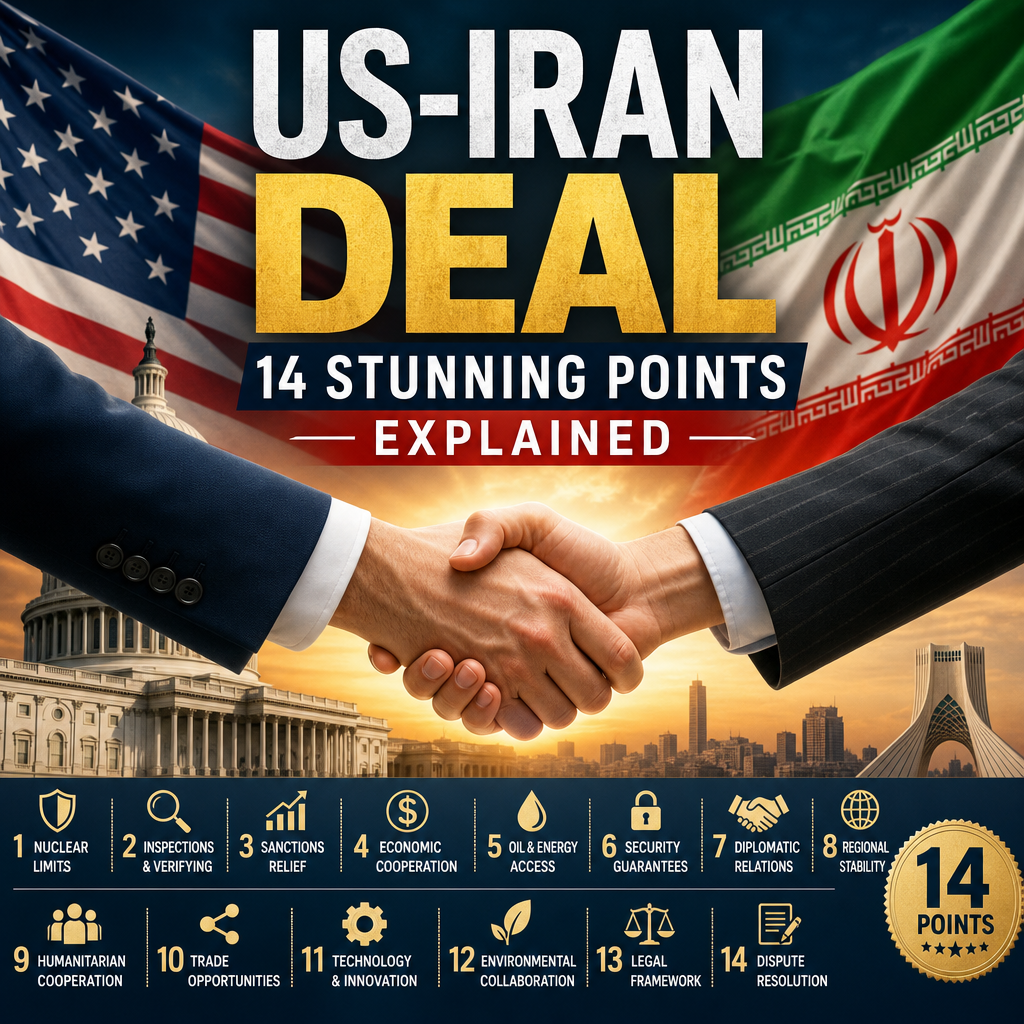
US-Iran deal talks have long sat at the intersection of diplomacy, distrust, and strategic calculation, and the 14-point framework often discussed around the nuclear agreement shows why it remains such a contested subject.
At its core, the deal was meant to answer a simple but loaded question: how can Iran be prevented from developing a nuclear weapon while allowing it to keep a civilian nuclear program? The answer, according to supporters, was an intricate bargain of limits, inspections, and sanctions relief. Critics, however, argued it left too much room for doubt, too little room for enforcement, and too many political escape hatches for future crises.



What makes this agreement so difficult to assess is that it is not just a nuclear document. It is also a statement about power in the Middle East, the limits of U.S. diplomacy, Iran’s regional ambitions, and the fragility of international trust. That is why sources covering the issue from different angles tend to agree on the basic structure of the arrangement but disagree sharply on whether it can truly deliver security.
What the US-Iran deal was trying to do
The original logic of the deal was straightforward: Iran would accept restrictions on sensitive parts of its nuclear program, and in return the U.S. and other world powers would ease sanctions that had heavily damaged Iran’s economy. In theory, that gave both sides something valuable. Washington and its allies gained more visibility into Iran’s nuclear activity. Tehran gained a path back into the global economy.




Among the most important elements commonly highlighted in explanations of the agreement were:
– limits on uranium enrichment levels
– reductions in the number of centrifuges Iran could use
– tighter monitoring and inspections by international nuclear watchdogs
– redesign of certain nuclear facilities so they could not easily support weapons work
– phased sanctions relief tied to compliance
This structure mattered because it was designed around verification rather than trust. That point is where many analysts, including those reflected in Sky News and Al Jazeera coverage, often converge: no one expected the deal to rely on goodwill alone. Instead, it was supposed to make cheating harder, slower, and more visible.
Still, a verification-based agreement only works if the parties believe the rules are being followed. That is where the political tension started. Supporters saw a practical compromise. Opponents saw an arrangement that legitimized Iran’s nuclear infrastructure while postponing, rather than eliminating, the larger problem.
Why supporters said the 14 points mattered
The strongest case in favor of the deal was that it bought time and lowered immediate risk. From that perspective, even a flawed agreement was better than an unchecked nuclear standoff or a military confrontation.
Supporters pointed to several advantages:
– it pushed Iran farther from a weapons breakout capability
– it created a formal inspection regime
– it reduced the chance of an abrupt regional crisis
– it opened the door to broader diplomatic engagement
Al Jazeera-style analysis of the issue often stresses that Iran has always framed its nuclear program as peaceful and has argued that it is entitled to civilian nuclear technology under international rules. That viewpoint does not erase Western concerns, but it explains why Tehran has long insisted that pressure alone would not produce a lasting settlement. In that sense, the deal represented a rare moment when both sides found enough shared interest to negotiate.
There is also a wider geopolitical argument in favor of diplomacy. If the agreement reduces the chance of war, even temporarily, that can matter more than the symbolic victory of taking a hard line. For countries in the region, the consequences of a breakdown are not abstract. They can mean sanctions shocks, missile threats, proxy escalation, and destabilized trade routes.
Why critics remained unconvinced
The most persistent criticism is that the agreement managed risk rather than removing it. RT coverage and other skeptical commentary frequently emphasize the same underlying concern: a deal can restrain a program for a period of time and still fail to resolve the strategic rivalry behind it.
Critics argued that the limits were temporary, the inspections imperfect, and the enforcement mechanisms vulnerable to politics. They also worried that sanctions relief would strengthen Iran economically without stopping its influence across the Middle East. In other words, even if the nuclear file improved, other security problems could worsen.
That criticism has several layers:
1. Time limits create future pressure
Some restrictions were never designed to last forever. That meant the agreement could be seen as delaying a showdown rather than preventing one.
2. Trust was always thin
Because relations between Washington and Tehran were already deeply damaged, every dispute over compliance became politically explosive.
3. Regional actors were skeptical
Israel and several Gulf states have long viewed Iran primarily through a security lens, not a diplomatic one. For them, a nuclear agreement that ignored missiles and regional proxies felt incomplete.
4. Domestic politics mattered
In both the U.S. and Iran, the deal was vulnerable to leaders who saw advantage in challenging it. That made durability almost as important as substance.
These criticisms do not automatically make the agreement a failure. They do, however, explain why the debate around it never really ended. Even among observers who wanted diplomacy to succeed, there was uncertainty about whether the framework could survive changes in leadership, pressure from allies, or evidence of noncompliance.
The bigger lesson: a deal is not the same as a solution
The most balanced reading of the US-Iran deal is that it was a serious attempt to manage one of the world’s most dangerous disputes, not a final settlement. That distinction matters.
A good agreement can slow proliferation, improve transparency, and create channels for dialogue. But it cannot magically erase decades of mistrust or settle the broader competition between Iran and its rivals. The sources that approach the subject from different political angles tend to reveal the same truth in different ways: the deal was both a diplomatic achievement and a political compromise with built-in limits.
That is why opinions on it remain so split. For some, it represented the best available path away from conflict. For others, it traded a short-term fix for long-term uncertainty. Both views contain valid points.
The clearest conclusion is that the 14-point framework should be judged not by whether it solved everything, but by whether it reduced immediate danger and created space for further diplomacy. On that measure, it had real value. But because the underlying rivalry never disappeared, its long-term success depended on something no technical agreement can guarantee: sustained political will from all sides.