Iran Deal: Stunning Peace Hopes Face Doubt


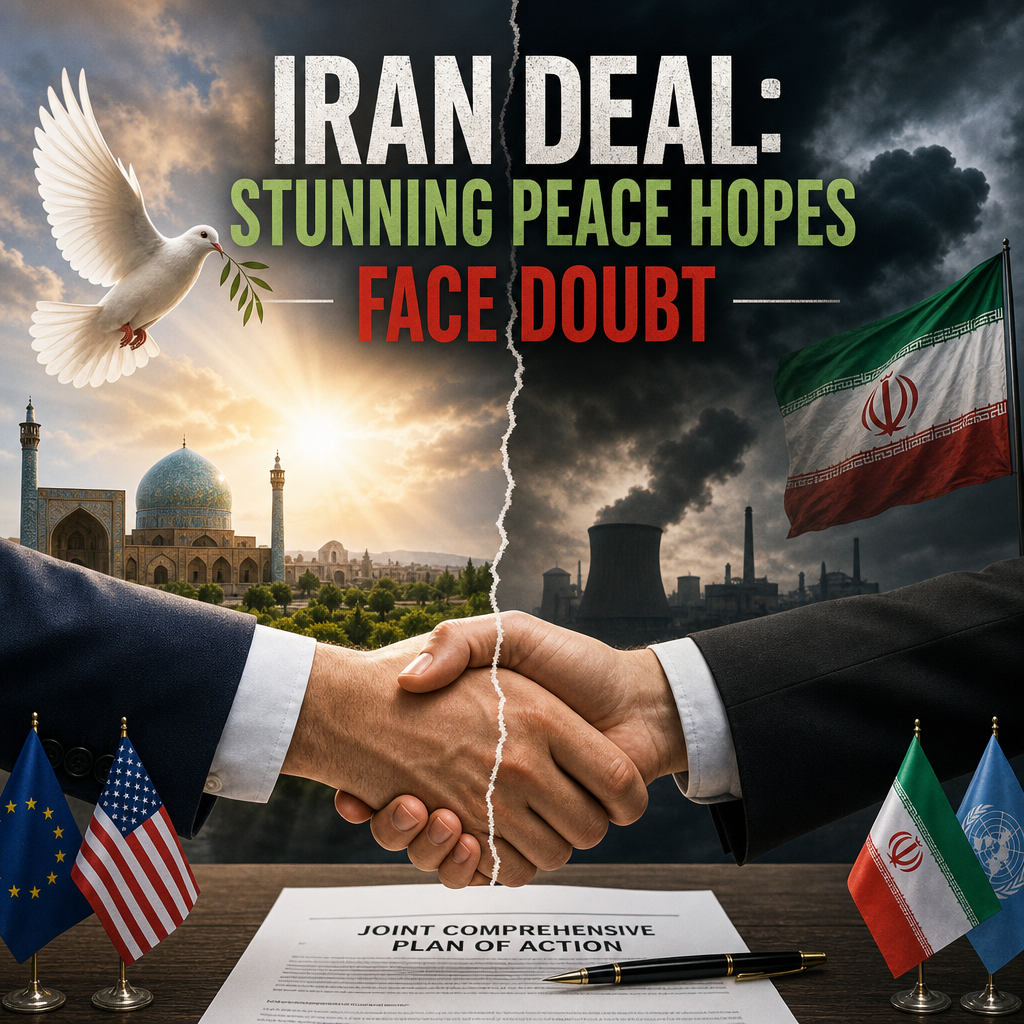
Iran deal talks have reopened an old question in a new form: can diplomacy between Washington and Tehran finally lower the temperature in the Middle East, or is this just another fragile pause before the next crisis?
The latest reporting suggests a cautious, uneven mood on all sides. Some voices frame the agreement as a genuine chance to reduce confrontation after years of sanctions, nuclear tension, and regional proxy conflict. Others, including critics in Iran and abroad, warn that optimism is running ahead of reality. And in the background, international observers are asking whether the deal changes the strategic equation at all, or simply postpones a deeper reckoning.



Iran deal optimism meets hard political limits
For supporters, the most important fact is simple: direct agreement is better than endless escalation. After years in which the nuclear issue seemed locked in a cycle of pressure and retaliation, any diplomatic breakthrough can feel significant. That is especially true for ordinary people in Iran, who have lived with economic isolation, currency weakness, and limited access to global markets. Even a partial easing of sanctions could matter quickly in daily life.
But the mood inside Iran appears far from unified. Reporting from the region shows that not everyone sees the deal as a path to peace. Some Iranians view it with deep skepticism, shaped by past experiences in which diplomatic openings failed to bring lasting relief. Their concerns are not abstract. They remember how easily agreements can be undermined by domestic politics in Washington, hardline pushback in Tehran, or regional events that quickly spill over into diplomacy.




That skepticism is one reason the latest agreement feels less like a finish line and more like a trial period. The deal may reduce immediate tensions, but it does not erase the wider mistrust that has accumulated over decades. In that sense, the core issue is not just whether the two governments can sign a document; it is whether either side believes the other can actually keep its word.
Why this Iran deal is being watched so closely
Several factors explain why the agreement has drawn such intense scrutiny:
– Nuclear concerns remain central. Any deal involving Iran inevitably raises questions about enrichment, monitoring, and verification.
– Sanctions relief is politically sensitive. In both the U.S. and Iran, compromise can be attacked as weakness.
– Regional rivals are paying attention. Israel, Gulf states, and other regional actors are likely to judge the deal by whether it improves security or simply shifts the risk elsewhere.
– Trust is extremely low. Previous negotiations have created a history of hope followed by disappointment.
That combination makes this accord unusually vulnerable. Even if the language is strong, the surrounding politics are unstable.
Diverging reactions from Al Jazeera, Sky News, and RT
The broad media picture shows three distinct perspectives on the same diplomatic moment.
Al Jazeera’s coverage emphasizes the complexity inside Iran itself. That angle matters because peace talks are often discussed as though governments alone determine outcomes. In reality, public skepticism, factional rivalry, and economic pressure can shape whether a deal has staying power. The tone is not celebratory; it reflects a country where many people may welcome relief but doubt that a foreign policy breakthrough automatically means peace.
Sky News tends to frame such developments through the lens of Western security and diplomatic risk. From that perspective, the main questions are whether the deal is enforceable, whether it weakens or strengthens regional stability, and whether it can survive political changes in the U.S. or Europe. That approach is less about optimism than about durability. Peace, in this reading, is not declared by agreement alone; it is proven over time.
RT’s coverage generally places heavier weight on the power politics behind the negotiations, often highlighting the role of U.S. pressure, sanctions, and the geopolitical frustration surrounding Iran. That viewpoint can be useful because it reminds readers that Iran’s negotiations with the West are never only about nuclear technology. They are also about sovereignty, leverage, and the long-running competition over who sets the rules in the region.
Taken together, the three perspectives point to the same conclusion: the agreement may be real, but the meaning of that agreement is still contested.
Peace hopes are real, but so are the risks
The strongest argument in favor of the deal is that it creates breathing room. In a region where misunderstandings can escalate quickly, even limited engagement can reduce the chance of immediate confrontation. Diplomatic channels can also create space for later talks on broader issues, including inspections, prisoner exchanges, and regional security questions.
Still, it would be premature to treat the deal as a transformation. Several risks stand out:
1. Domestic backlash could weaken implementation. Hardliners in Iran or opponents in the U.S. may try to slow or sabotage it.
2. Economic expectations may outrun reality. If sanctions relief is limited or delayed, public disappointment could grow.
3. Regional flashpoints could derail progress. A clash involving allies or proxies could poison the atmosphere fast.
4. Verification disputes could return. Nuclear agreements live or die on monitoring, access, and interpretation.
This is why “peace hopes” is the right phrase, not “peace achieved.” The agreement appears to lower the odds of immediate crisis, but not necessarily the odds of future conflict.
A cautious but fair conclusion
The most balanced way to view the Iran deal is as a useful but fragile opening. It deserves attention because diplomacy between sworn adversaries is not trivial, especially in a region where mistrust is dense and consequences are high. At the same time, it should not be oversold. A deal can freeze a problem, ease a pressure point, or buy time without solving the underlying dispute.
That is the central tension running through the reporting: hope is present, but so is doubt. Some in Iran see the agreement as the first step toward normality. Others see another temporary arrangement built on uncertain promises. Internationally, the reaction is equally split between cautious relief and deep suspicion.
The most honest judgment is that the Iran deal may matter less as a declaration of peace than as a test of whether diplomacy can still work in a broken relationship. If it survives scrutiny, implementation, and politics, it could become the foundation for something larger. If it fails, it will join a long list of near-breakthroughs that proved how difficult peace with Iran remains.