Trump Faces Stunning Israeli Anger Over Iran Deal


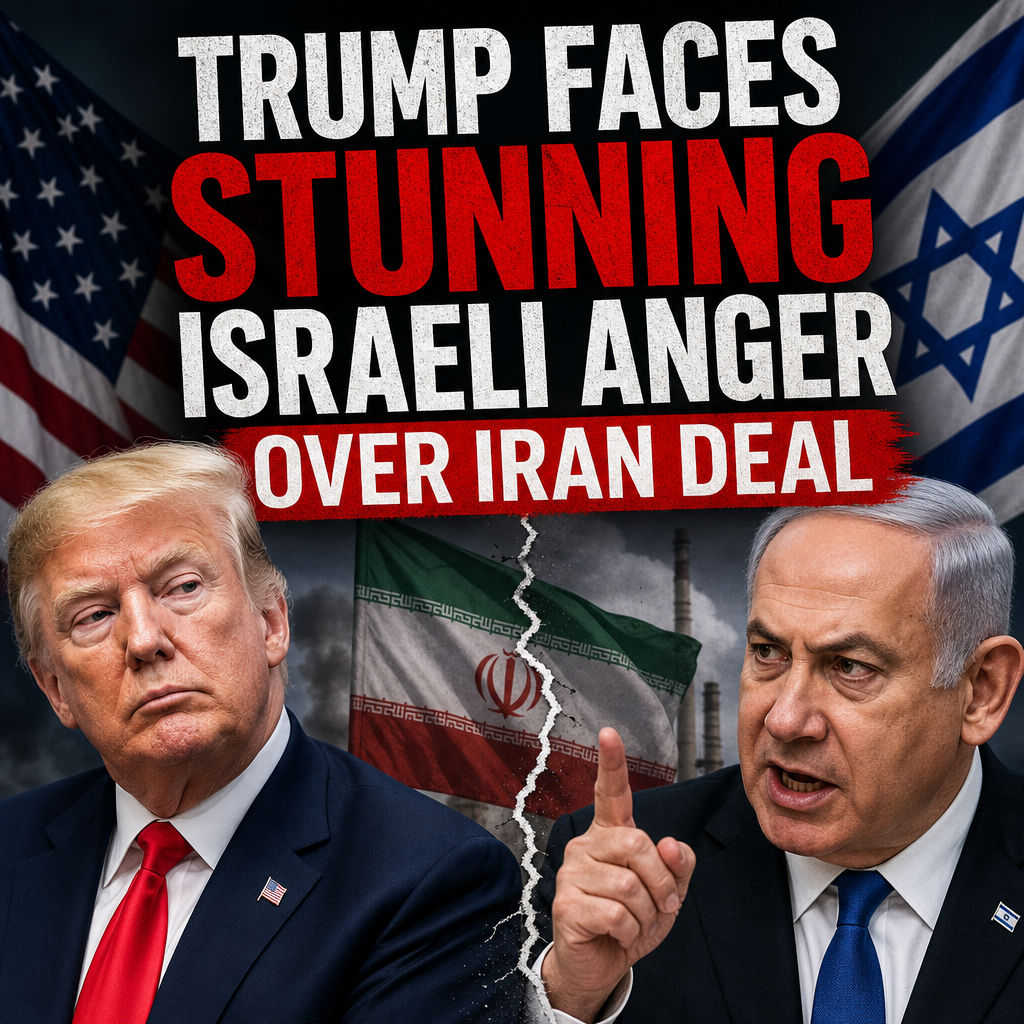
Trump faces stunning Israeli anger over Iran deal at a moment when the region is already tense, and the reaction reflects more than just a disagreement over one agreement. It points to a deeper clash over strategy, trust, and whether Washington is still aligned with Israel’s preferred approach to Iran.
The immediate political shock comes from the sense in Israel that the deal, or the path toward it, may have been struck without enough regard for Israeli security concerns. In Israeli political circles, the core complaint is familiar: any arrangement that leaves Iran with room to preserve parts of its nuclear infrastructure, its missile capabilities, or its regional influence is seen as a threat, not a compromise. That anger is amplified when the U.S. administration involved is one that many Israelis had expected to be especially sympathetic to their red lines.



But the debate is not one-sided. Supporters of diplomacy argue that anger alone does not make an alternative safer. If the choice is between a difficult deal and no deal at all, they say, the diplomatic route may still reduce the risk of immediate escalation. That argument has gained force whenever military confrontation appears close, because the costs of a direct strike on Iran — including retaliation across multiple fronts — could be severe for Israel, the Gulf, U.S. forces, and global energy markets.
Why the Israeli backlash is so intense
Israel’s frustration over Iran has long been rooted in a simple calculation: a nuclear-capable Iran would fundamentally change the regional balance. Even when negotiations include limits and monitoring, many Israeli officials and analysts fear that temporary restrictions merely delay a threat rather than eliminate it. From that perspective, a deal can look less like containment and more like managed risk.




What makes the current backlash stand out is the political symbolism. Trump has often been portrayed, especially by his supporters, as a president who understood Israel’s security fears and was willing to challenge Iran more aggressively than his predecessors. When a deal is perceived as soft or insufficiently protective of Israel’s interests, disappointment can quickly turn to accusation. Some critics in Israel are not only questioning the substance of the agreement but also whether Washington has once again underestimated the extent to which Iran is viewed in Jerusalem as a long-term existential issue.
At the same time, there is an important distinction between public outrage and strategic reality. Israeli leaders may sharply criticize the deal, yet still prefer to work within it rather than face a situation where they must act alone. That tension helps explain why the rhetoric is so heated: political leaders have to show they are defending national security, even if privately they recognize that diplomacy is often better than a dangerous vacuum.
Trump Faces Stunning Israeli Anger Over Iran Deal: three competing readings
Different media and political camps tend to frame this dispute in sharply different ways. Across coverage and commentary, at least three readings emerge:
– Israeli security-first view: The deal gives Iran space to survive, rebuild, or wait out constraints.
– Diplomatic pragmatist view: A negotiated limit, however imperfect, is better than a rapid march toward confrontation.
– Regional risk view: The agreement may reduce one danger while increasing others, especially if allies feel bypassed or abandoned.
That range of interpretations matters because it shows why the issue is so hard to resolve cleanly. For Israel, the question is not whether Iran is a problem, but whether the agreement meaningfully changes Iran’s ability to become a larger one later. For diplomats, the issue is whether a deal buys enough time to prevent immediate crisis. For everyone else in the region, the concern is whether any settlement will hold once domestic politics in Washington or Tehran shift again.
There is also a credibility problem. Israel has repeatedly argued that Iran cannot be trusted to comply in good faith, pointing to past concealment, regional proxy activity, and hostile rhetoric. Defenders of engagement counter that distrust is precisely why inspections, verification, and enforceable limits matter. In other words, the same facts are used to support opposite conclusions.
What the disagreement says about the wider region
This dispute is about more than one accord. It highlights how fragile U.S. diplomacy looks to allies who fear being left to absorb the consequences. If Israel believes its concerns can be negotiated away, it may become more willing to act independently in the future. If Washington believes Israel is too quick to reject diplomacy, it may try to narrow consultation and move ahead anyway. Either way, trust erodes.
That erosion has practical consequences. It can complicate intelligence sharing, weaken coordination on missile defense, and make crisis management harder if tensions rise again. It also gives Iran and other regional actors a chance to exploit divisions between allies. A deal that is meant to stabilize the Middle East can therefore create new political fault lines if it is not accompanied by sustained consultation and enforcement.
The most balanced conclusion is that the Israeli anger is understandable, but not automatically proof that the deal is doomed. Nor does the existence of a deal mean the nuclear threat is solved. The truth lies somewhere in between: diplomacy may slow danger, yet it rarely removes it entirely. Israel wants certainty, but international agreements usually offer only managed uncertainty.
In that sense, the backlash may be less a final verdict on the agreement than a warning about how little margin for error remains. If the U.S. wants the deal to endure, it will need to convince Israel that security guarantees are real, not rhetorical. And if Israel wants stronger outcomes, it may need to decide whether rejecting every imperfect deal leaves it safer — or simply more isolated when the next crisis arrives.