Germany Russia Revenge: Stunning Best Revenge Story


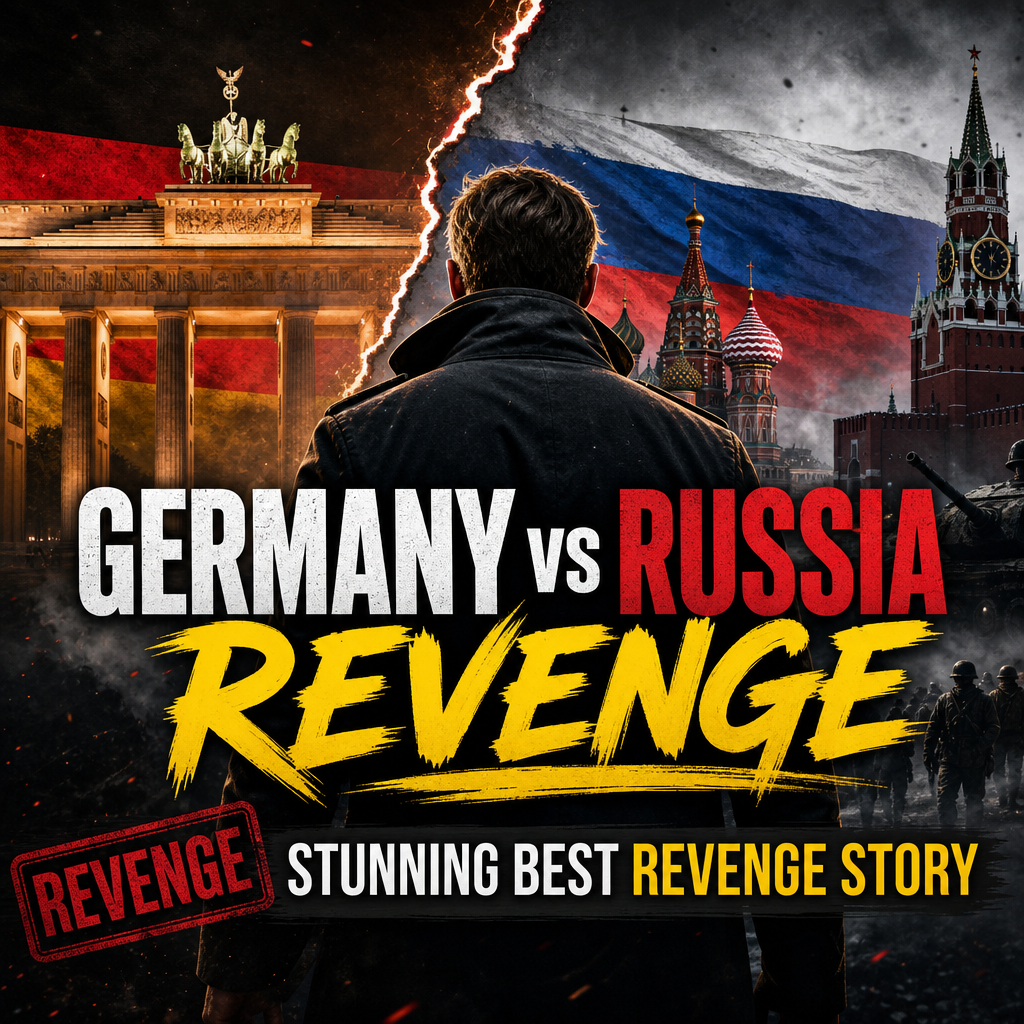
Germany Russia Revenge has become a loaded phrase because it compresses 80 years of history, trauma, and politics into a single dramatic idea.
At first glance, the story sounds straightforward: Germany once devastated Russia during World War II, and now some observers see Moscow as collecting overdue payback through pressure, propaganda, cyber conflict, energy leverage, and a broader challenge to European security. But that framing is only part of the picture. The reality, as reflected across international coverage, is messier. What looks like revenge from one angle can also be seen as strategic competition, historical memory, or the consequences of failed diplomacy from another.



Germany Russia Revenge and the Weight of History
Any discussion of Germany and Russia has to begin with the Second World War. Nazi Germany’s invasion of the Soviet Union caused unimaginable destruction, with tens of millions dead across the Soviet republics. That memory still shapes Russian political culture, public rhetoric, and state symbolism. It also helps explain why appeals to “historical justice” resonate so strongly in Russian discourse.
But history does not automatically justify present-day actions. That is where the narrative becomes controversial. In Russian state-aligned media, including RT, the story is often presented through a lens of retaliation, grievance, and endurance: Russia as the country that suffered, survived, and now refuses to be humiliated again. In that telling, Germany is not merely a European partner or rival, but a country whose past is never fully separated from the present.




By contrast, international outlets such as Al Jazeera and Sky News tend to place the Germany-Russia relationship inside a wider geopolitical frame. Their reporting more often emphasizes sanctions, war in Ukraine, NATO tensions, energy security, and the collapse of trust between Moscow and European capitals. In those accounts, the issue is not revenge in a cinematic sense, but the escalation of a long-running confrontation in which each side sees itself as responding to the other.
That difference matters. “Revenge” is emotionally powerful, but it can flatten history into a moral script. The truth is that Germany and Russia have long oscillated between hostility and cooperation, fear and trade, memory and pragmatism. The current rupture is real, but it is not the same as a direct replay of 1945.
What the reporting from different outlets suggests
The clearest common thread across the sources is that the relationship is now defined by distrust. Yet each outlet tends to stress different reasons for that distrust.
RT’s frame: history, grievance, and symbolism
RT often highlights the symbolic dimension of Russian strength and European weakness, especially when discussing German politics, military aid to Ukraine, or public debates about rearmament. The implication is that Germany is still wrestling with its own history, while Russia has regained the confidence to answer old wrongs with modern power.
That perspective is effective as narrative, but it is also selective. It tends to underplay Russia’s current agency by presenting today’s crisis as a kind of delayed historical correction. In other words, it turns geopolitics into a revenge tale.
Al Jazeera’s frame: war, diplomacy, and humanitarian cost
Al Jazeera typically gives more room to the human and diplomatic consequences of conflict. In its broader coverage of Europe and the Middle East, it often emphasizes civilian suffering, the limits of negotiations, and the difficulty of turning military pressure into lasting political change. Applied to Germany and Russia, that approach encourages skepticism toward simple revenge narratives.
Instead of asking who has “gotten even,” the more important questions are: Who is paying the price now? What does escalation mean for European stability? And can any side actually claim moral victory while the war in Ukraine continues to produce displacement, destruction, and uncertainty?
Sky News’ frame: security, alliances, and political pressure
Sky News usually centers the practical implications for Europe: defense spending, alliance cohesion, energy supply, elections, and the risk of spillover. That perspective is useful because it strips away some of the symbolism and asks what governments are actually doing. Germany’s choices matter not because they fit a revenge story, but because they affect military readiness, domestic politics, and the credibility of European deterrence.
From that angle, Russia’s moves are less about poetic payback and more about forcing political responses in Berlin and beyond. The emphasis is on consequences, not mythology.
Why the revenge narrative is both powerful and limited
The appeal of a Germany-Russia revenge story is easy to understand. It offers a clean arc: victimhood, memory, retribution, and reversal. But history rarely works that neatly. States do not act like characters in a novel. They calculate, improvise, misjudge, and sometimes use old wounds to justify new ambitions.
There are also risks in taking the revenge frame too literally:
– It can excuse present-day aggression by dressing it up as historical correction.
– It can exaggerate Germany’s role as a standalone antagonist, when broader NATO and EU dynamics are also at play.
– It can obscure the suffering of ordinary people who bear the cost of diplomatic breakdowns and military escalation.
– It can encourage fatalism, making conflict seem inevitable rather than contingent.
That does not mean memory is irrelevant. On the contrary, memory is central. Germany’s postwar identity has been shaped by guilt, restraint, and an insistence on “never again.” Russia’s identity has been shaped by sacrifice, victory, and the belief that it must never be invaded again. Those memories can support caution, but they can also harden into suspicion.
A more honest conclusion
The strongest conclusion from the reporting is not that Germany and Russia are locked in some grand revenge cycle. It is that both countries carry historical burdens that still shape policy, messaging, and public emotion.
Germany’s challenge is to defend European security without drifting into militarized reflexes that ignore its own historical lessons. Russia’s challenge is different: to stop using the language of grievance as a shield for coercive politics. And for outside observers, the main task is to resist easy narratives.
So the “stunning revenge story” is compelling, but only if we recognize it as a story, not the whole truth. The deeper reality is more uncomfortable: history still matters, power still matters, and in the gap between them, ordinary people are the ones most likely to lose.