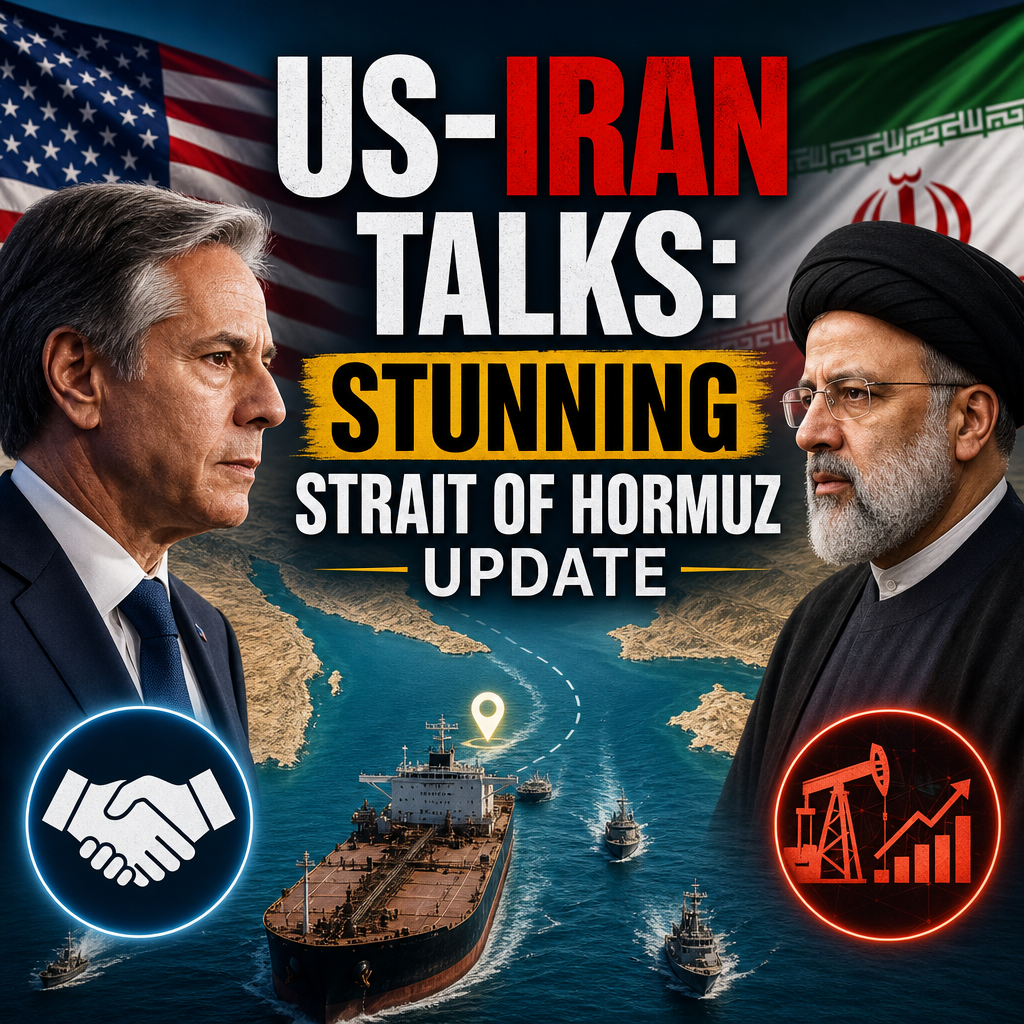
US-Iran Talks: Stunning Strait of Hormuz Update


US-Iran Talks are once again putting the Strait of Hormuz at the center of a high-stakes diplomatic puzzle, because even a small shift in negotiations can ripple through oil markets, regional security, and global shipping.
Reports and commentary across international outlets suggest a fragile mix of caution and optimism. Some coverage emphasizes the possibility of de-escalation and practical bargaining, while other reporting stresses that the underlying disputes remain unresolved and that the Strait of Hormuz still represents one of the world’s most dangerous chokepoints. The result is a familiar but uneasy picture: diplomacy may be moving, but trust is still thin.



Why the Strait of Hormuz Matters So Much
The Strait of Hormuz is narrow, strategically vital, and impossible to ignore. A large share of the world’s oil passes through it, which means any threat to traffic there immediately draws attention far beyond the Gulf.
That is why talks involving Washington and Tehran never stay confined to sanctions, uranium enrichment, or prisoner exchanges. They quickly become a broader question: can the two countries reduce tensions enough to keep the waterway open and prevent a regional shock?




That question has become even more important because:
– shipping routes in the Gulf are already vulnerable to escalation
– energy markets react quickly to even vague threats
– Iran has long used the strait as leverage in moments of pressure
– the U.S. and its allies treat uninterrupted passage as a strategic priority
Coverage from RT has tended to frame these developments through the lens of bargaining power and geopolitical maneuvering, suggesting that any movement around the strait reflects a larger political deal rather than a simple security adjustment. Al Jazeera’s reporting, by contrast, often places the issue within the wider regional conflict: Iran’s relations with the West, the fallout from sanctions, and the risks of miscalculation in a highly volatile environment. Sky News, meanwhile, has typically approached the story with an eye toward the practical consequences for global stability, especially the potential impact on energy prices and maritime security.
Together, those perspectives reveal a central truth: the Strait of Hormuz is not just a regional flashpoint. It is a pressure valve for the entire global economy.
What the Latest US-Iran Talks May Signal
The most striking element in the latest round of discussion is not certainty, but ambiguity. That may sound unsatisfying, yet it is often the real state of diplomacy between the U.S. and Iran. Even when there is progress, it tends to be partial, indirect, and easy to reverse.
US-Iran Talks and the possibility of restraint
One reading of the update is that both sides may have reasons to avoid direct confrontation. For Washington, a new crisis in the Gulf would complicate broader Middle East policy, raise oil-market volatility, and weaken confidence in U.S. deterrence. For Tehran, a serious disruption of shipping could invite military retaliation and further isolate the country diplomatically.
From that angle, even an informal understanding — whether about shipping behavior, military posture, or issue-specific de-escalation — could be significant. It would not mean deep reconciliation, but it might lower the chance of a sudden clash.
Why skepticism remains justified
Still, there is good reason not to overstate the significance of any reported breakthrough. Past U.S.-Iran contacts have often produced headlines that looked promising for a few days before fading into stalemate. The fundamental disagreements remain large:
– the future of Iran’s nuclear program
– sanctions relief and enforcement
– regional proxy tensions
– Washington’s willingness to offer guarantees
– Tehran’s confidence that any deal will last beyond one administration
That skepticism is reflected in much of the international coverage. Al Jazeera often highlights how regional actors see diplomacy through the lens of survival and leverage, not goodwill. Sky News has likewise underscored that even if a temporary accommodation exists, it may do little to resolve the deeper strategic rivalry.
In that sense, the newest Strait of Hormuz update should be seen less as a breakthrough than as a test of political endurance.
The Broader Stakes for the Region and the World
What makes this moment especially important is that the stakes extend well beyond the U.S. and Iran. Gulf states, European governments, shipping companies, and energy consumers all have an interest in avoiding escalation.
If the talks help reduce tension, the immediate benefits could include:
– lower risk premiums in oil markets
– fewer fears of shipping disruptions
– a calmer security environment in the Gulf
– more room for broader diplomacy on nuclear and regional issues
But if the discussions fail, the downside is equally clear. Even a short-lived standoff around the strait could rattle markets and intensify military deployments. In a region where mistrust already runs deep, an incident at sea could spiral quickly.
That is why the current coverage matters: not because it proves a durable deal is close, but because it shows how closely diplomacy, economics, and military risk are now intertwined.
A Measured Reading of the Update
The fairest conclusion is that the latest US-Iran signals are encouraging only in a limited sense. They may point to a willingness to manage tensions, but not necessarily to resolve them. The difference matters.
A managed rivalry is still a rivalry, and in the case of the Strait of Hormuz, even managed tension can remain dangerous. Yet the fact that both sides appear to have incentives to avoid a direct rupture is not insignificant. In a conflict environment defined by threats, sanctions, and brinkmanship, any sign of restraint deserves attention.
For now, the best interpretation is cautious optimism backed by realism. The talks may be a step toward stability, or they may simply be another pause in a long cycle of confrontation. What is clear is that the Strait of Hormuz remains a place where diplomacy can change the global mood almost instantly — and where the absence of a clear agreement is itself a story.