Iran Slams FIFA: Must-Have Response to US Bias


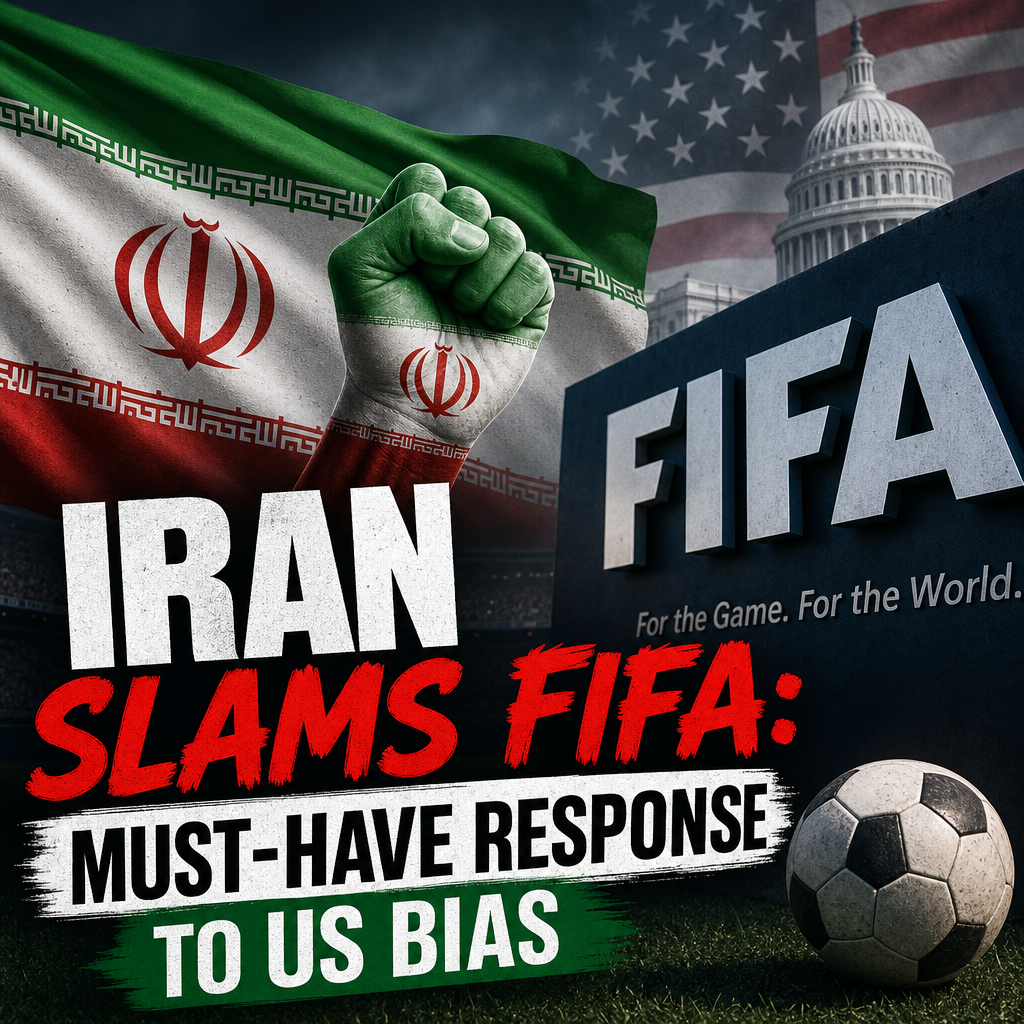
Iran Slams FIFA over what Tehran sees as a troubling double standard, reigniting a debate about whether football’s governing body can remain truly neutral when politics, visas, and discrimination collide.
The latest dispute centers on Iran’s accusation that FIFA has failed to respond adequately to alleged bias by the United States. While the specifics vary depending on the outlet and the official statements being cited, the core issue is clear: Iranian officials believe that football’s global authorities should do more than issue generic reminders about fairness. They want action, and they want it now.



That demand lands in a particularly sensitive moment for international sport. FIFA likes to present itself as a guardian of inclusivity and a referee above geopolitics. But as multiple news sources covering the wider story make clear, the practical reality is messier. Tournament access, visa rules, diplomatic strain, and national security concerns can all shape who gets to participate freely and who feels excluded before a match is even played.
Iran Slams FIFA Over Fairness and Consistency
Iran’s criticism is not just about one complaint. It reflects a broader frustration that many countries outside the West feel when international institutions invoke universal principles but appear inconsistent in applying them.




From Tehran’s point of view, if FIFA is serious about anti-discrimination, it should respond robustly when a host country or host system creates obstacles that affect players, staff, fans, or officials. Iranian representatives have framed the issue as one of principle: if bias is a problem in football, then FIFA should confront it regardless of whether the pressure comes from a major Western power or a smaller state.
That argument resonates because FIFA has often been criticized for selective enforcement. Human rights language is now standard in major tournament planning, but the gap between policy and practice remains wide. A body that can sanction federations for political interference or fan misconduct may still struggle to address softer, harder-to-define forms of exclusion such as visa delays, inconsistent security screening, or unequal treatment at borders.
At the same time, a fair reading of the U.S. position must acknowledge that not every restriction is automatically discrimination. Governments argue that visa and entry decisions are based on legal and security frameworks, not sporting preferences. That distinction matters. Yet it does not fully answer Iran’s complaint, because from the perspective of teams and supporters, the effect can still feel discriminatory even if the stated rationale is bureaucratic or security-related.
What the Different Reports Suggest
A look across the broader reporting from RT, Al Jazeera, and Sky News points to three overlapping but distinct viewpoints:
– Iran’s view: FIFA should actively defend equal treatment and call out what Tehran sees as Western bias.
– The institutional view: FIFA prefers to avoid becoming a direct political actor and often responds with cautious language about neutrality.
– The international reporting view: the real story is less about a single dispute and more about a recurring tension between sport’s ideals and the political systems around it.
Al Jazeera’s coverage of international disputes involving sport often highlights the human consequences of these political and administrative barriers: who can travel, who can be heard, and who gets left out of the room when decisions are made. That lens tends to emphasize fairness as a lived experience rather than a rulebook concept.
RT, meanwhile, typically foregrounds the charge of Western hypocrisy and frames FIFA’s silence as evidence that global sporting bodies are more comfortable challenging some countries than others. In that interpretation, Iran is not merely complaining; it is exposing a larger imbalance in how power works in international sport.
Sky News reporting on world affairs generally places these kinds of disputes within the broader context of diplomacy and governance. That approach tends to be less interested in assigning moral victory and more focused on what the dispute reveals about institutional weakness. In other words, the question is not just whether FIFA should respond, but whether it actually has the tools — or the will — to do so meaningfully.
Why FIFA’s Response Matters Beyond Iran
This controversy matters because it goes to the heart of FIFA’s credibility. Once an institution claims to defend equality, every omission becomes politically charged. If it intervenes in some cases but not others, critics will call that bias. If it stays silent, it risks looking complicit.
There are also practical consequences. International tournaments depend on trust. Teams need assurance that travel arrangements will be workable, supporters need clarity, and federations need to believe that the rules are being applied evenly. When that trust breaks down, the damage goes beyond a single diplomatic row.
FIFA faces a difficult balancing act:
– It must protect the sport from becoming a battlefield for state disputes.
– It must avoid turning every political disagreement into a formal sanction issue.
– But it also cannot credibly promote equality while ignoring complaints that appear rooted in unequal treatment.
The honest conclusion is that FIFA’s current posture often looks too passive for an organization that speaks so loudly about inclusion. Even if the U.S. arguments are grounded in legal process rather than open hostility, FIFA still has a responsibility to scrutinize the effects of those policies, not just the intentions behind them.
A Wider Test of Global Sport
The deeper lesson is that modern sport can no longer pretend to exist outside politics. Football is global, commercial, and intensely symbolic. When one country accuses another of bias, and when the governing body appears slow to react, the issue quickly becomes about more than one event or one tournament.
Iran’s complaint may not lead to a dramatic policy shift, and it is unlikely to produce an immediate solution. But it does force an uncomfortable question: does FIFA want to be seen as a neutral administrator, or as a genuine defender of fairness when powerful states are involved?
For now, the answer looks incomplete. And that uncertainty is exactly why this dispute continues to draw attention well beyond the pitch.