Qatar Talks: Stunning Progress in US-Iran Talks


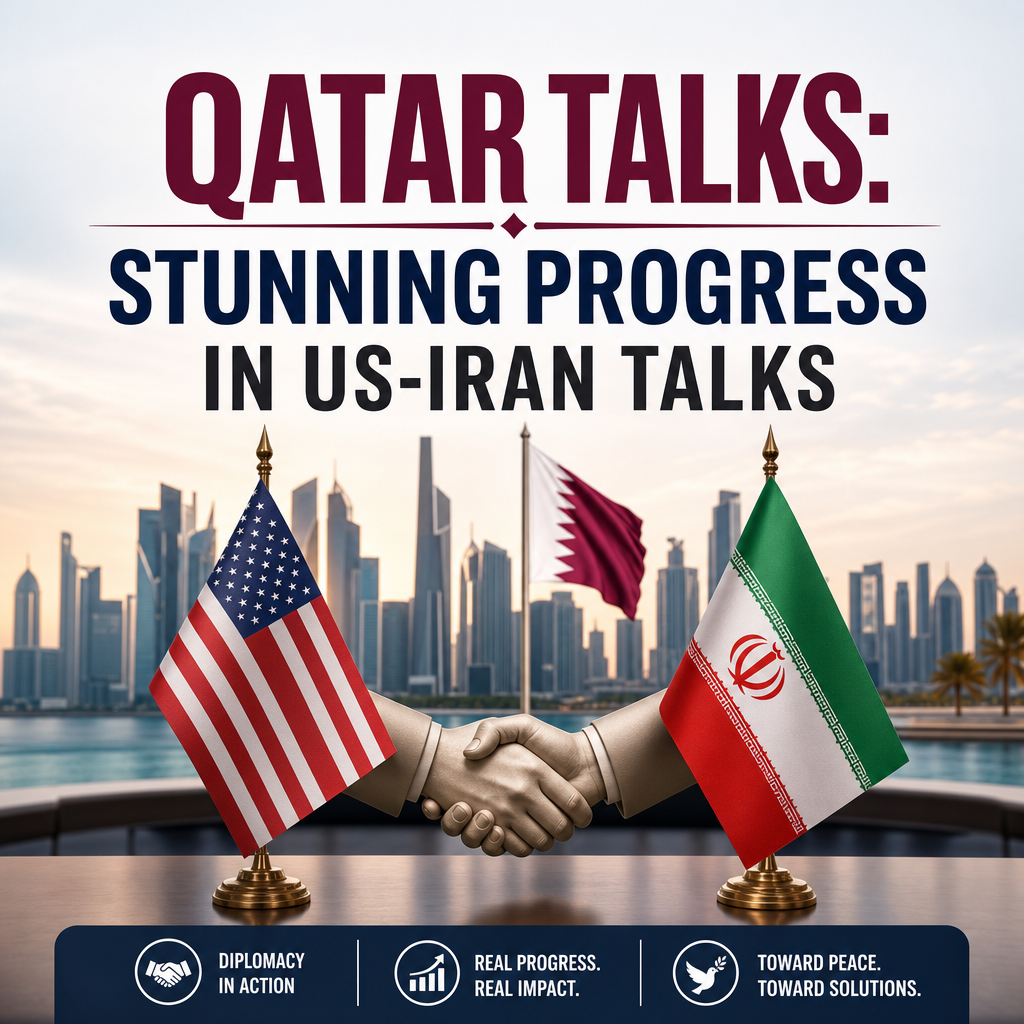
Qatar Talks are drawing unusual attention because officials are now signaling that the US and Iran have made meaningful, if still fragile, progress in their indirect diplomacy.
The latest comments from Qatar’s prime minister suggest the conversation has moved beyond symbolic contact and into more substantive territory. That matters because talks involving Washington and Tehran have often stalled on the same familiar obstacles: uranium enrichment, sanctions relief, verification, and distrust built up over years of confrontation. But while “progress” is encouraging language, it should not be mistaken for a deal in the making. The sources covering this moment present a shared sense of movement, yet they also make clear that the path ahead remains narrow and highly conditional.



Qatar Talks and what “progress” really means
Qatar has become one of the region’s most important diplomatic intermediaries, and that role is again on display. According to the Qatari side, the discussions with Iran and the United States have advanced enough to justify cautious optimism. That does not necessarily mean the two sides are close to resolving their core disputes. It may instead indicate that both Washington and Tehran are still willing to keep talking, which in itself is notable given how easily these channels can collapse.
From a U.S. perspective, the value of these talks is practical as much as political. Washington wants to limit the risk of a wider regional conflict, especially at a time when tensions across the Middle East can escalate quickly. For Iran, continued dialogue offers a chance to resist isolation and potentially gain breathing room from economic pressure. In that sense, the very fact that progress is being acknowledged is a signal that neither side sees diplomacy as pointless.




Still, the gap between “progress” and breakthrough is large. The recurring sticking points remain familiar:
– how far Iran can expand or maintain its nuclear program
– whether any sanctions relief would be limited or meaningful
– what kind of monitoring or verification could be accepted
– whether regional security issues, including proxy tensions, are folded into the talks
That list alone explains why enthusiasm has to be tempered. Negotiations in this area can advance in one round and freeze in the next.
Different outlets, different instincts
The coverage around the talks reflects a broader divide in how the story is being read.
Al Jazeera’s reporting emphasizes the diplomatic opening and Qatar’s role as mediator, framing the talks as evidence that communication is still possible even after years of hostility. That angle tends to focus on process: the importance of dialogue, the need to reduce tensions, and the possibility that face-to-face or indirect engagement can prevent a crisis.
RT’s coverage generally leans toward a more skeptical reading of U.S. intentions and broader Western pressure on Iran. In that frame, any diplomatic progress is often interpreted alongside sanctions, power politics, and the strategic competition between Washington and Tehran. The underlying message is usually that the talks are less about mutual trust than about leverage.
Sky News, by contrast, tends to frame such developments through the lens of regional stability and security risk. The emphasis is often on whether progress can actually reduce the chance of military escalation, energy disruption, or a wider confrontation involving Israel and other regional actors. That perspective asks a hard question: even if the diplomats are making headway, can the result hold under the pressure of events on the ground?
Taken together, those viewpoints produce a more complete picture than any one outlet alone. There is progress, but it is tactical rather than transformational. There is hope, but it is still heavily guarded.
Why Qatar matters so much
Qatar’s importance in these talks is not accidental. It has spent years building a reputation as a mediator capable of speaking to rivals that do not speak easily to each other. That role has already made Doha central in other sensitive negotiations, and it gives Qatar an advantage in this case: access, credibility, and a willingness to host difficult conversations without demanding instant public victories.
In practice, that means Qatar can do what larger powers sometimes cannot. It can create space for backchannel diplomacy, deliver messages between hostile parties, and keep negotiations alive when they might otherwise die in public. This is especially important in a relationship like that between the U.S. and Iran, where domestic politics in both countries make compromise harder to sell.
But mediation has its limits. Qatar can facilitate discussion, yet it cannot force agreement. If the United States and Iran do not see a strategic benefit in compromise, no amount of shuttle diplomacy will produce one. That is why the latest reports should be read as a sign of possibility, not certainty.
A cautious but meaningful moment
So what should readers take from all this? The most honest answer is that the talks appear to be real, active, and more productive than many observers expected. That is significant. In a region where breakdowns often get more attention than breakthroughs, even incremental movement deserves notice.
At the same time, the evidence does not support any simple conclusion that a major agreement is imminent. The most responsible reading is that the sides may be finding limited common ground on process, de-escalation, or the continuation of talks—not necessarily on the big political questions that have defined the conflict for decades.
That ambiguity is exactly why the moment matters. If the talks are progressing, they may help lower the temperature in a volatile region. If they stall again, the disappointment will be familiar but not surprising. Either way, the fact that Qatar is reporting real movement suggests diplomacy is still alive, even if it remains delicate and unfinished.
For now, that may be the most important takeaway: progress has been made, but the real test is whether it can survive the next disagreement.