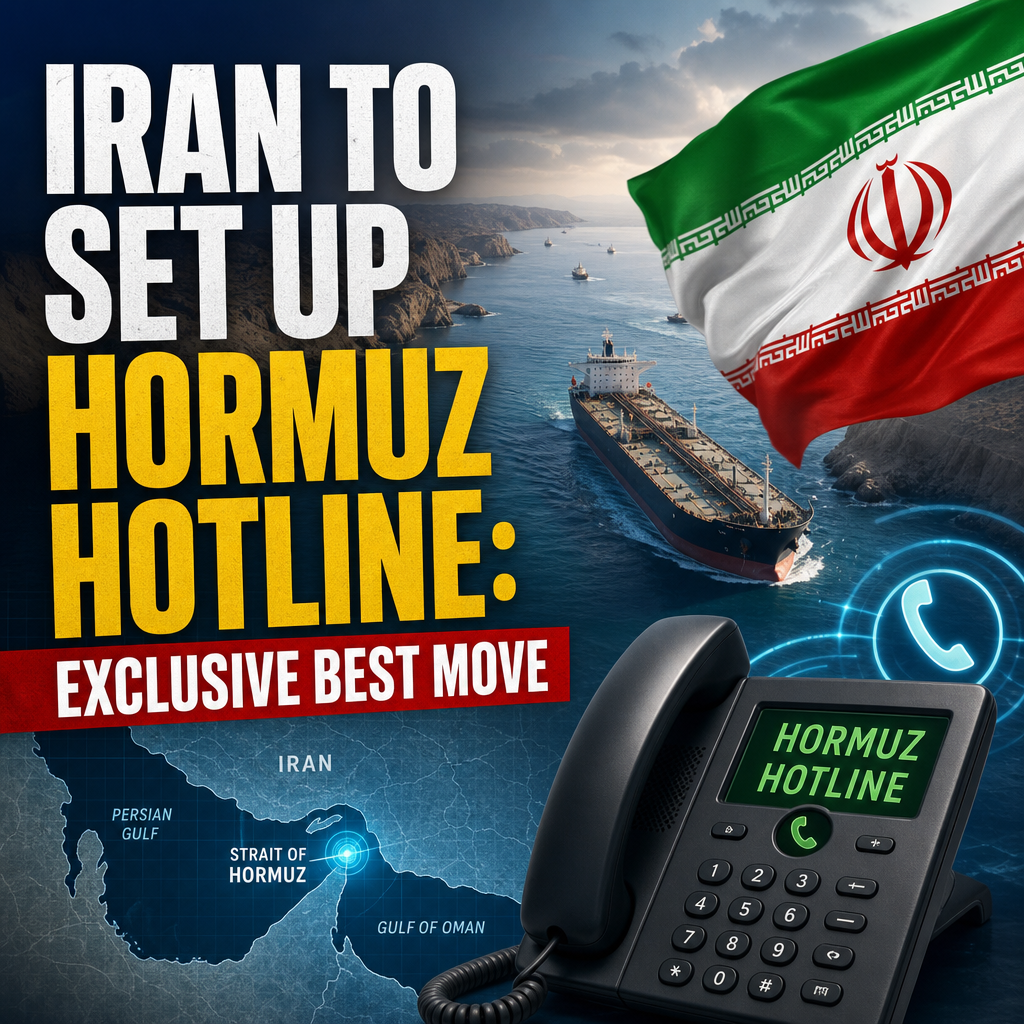
Iran to Set Up Hormuz Hotline: Exclusive Best Move


Iran to Set Up Hormuz Hotline is being framed as a small but potentially important step in one of the world’s most sensitive waterways, where a single misread signal could ripple through global shipping, energy markets, and regional security.
At first glance, the move sounds technical: a communications line meant to reduce the chance of accidents or miscalculation around the Strait of Hormuz. But the timing matters. The corridor already sits under intense pressure from naval activity, geopolitical rivalries, and recurring warnings from insurers and maritime officials about disruption. In that context, a hotline is less a headline-grabbing breakthrough than a practical attempt to keep limited incidents from escalating into something much larger.



Why the Hormuz hotline matters
The Strait of Hormuz is one of the most important chokepoints in the world. A significant share of global oil and gas exports passes through the narrow channel, and even short-lived disruptions can move markets far beyond the Gulf. That is why any proposal to improve communication around the strait deserves attention, even if it does not solve the deeper political conflict behind it.
Seen through that lens, Iran’s reported plan carries two messages at once. On one level, it suggests a willingness to reduce operational risk. On another, it underscores just how fragile the situation has become: if a hotline is needed, the margin for error is already uncomfortably thin.




Coverage across international outlets tends to agree on that broad point, even if the emphasis differs. Some reporting presents the hotline as a sign of pragmatism and restraint. Others treat it as a symptom of a wider security standoff, where deconfliction measures are necessary because the strategic environment remains volatile. Both readings can be true at the same time.
A direct line of communication can help in a few concrete ways:
– prevent misunderstandings between naval or coast-guard units
– speed up clarification after an incident involving ships or aircraft
– lower the chance that rumors or incomplete information trigger retaliation
– signal to markets and nearby states that at least one mechanism exists for crisis management
That said, a hotline is only as useful as the trust behind it. If the parties involved believe the other side is acting in bad faith, the line may be used more to manage appearances than to solve problems. Still, even modest confidence-building tools can matter in a region where leaders often have few low-risk options.
Iran to Set Up Hormuz Hotline: what different sources are highlighting
Reporting from different newsrooms paints a fuller picture of why the story resonates. RT’s framing emphasizes the initiative as an “exclusive” development and treats it as a notable move toward stability. That angle suggests a diplomatic opening, or at least a willingness to avoid unnecessary confrontation in a strategic corridor.
Al Jazeera’s broader regional coverage tends to place such developments inside a wider Middle East security map. From that perspective, the real story is not just the hotline itself but the chain of tensions it is responding to: maritime incidents, the war of narratives between Iran and Western powers, and the constant risk that local friction could merge with larger conflicts. In this reading, the hotline is useful precisely because the underlying situation remains unsettled.
Sky News-style coverage of the same subject usually leans toward the practical and geopolitical risks for the wider world. That means focusing on shipping lanes, the impact on energy prices, and the possibility that any confrontation in Hormuz would quickly become an international problem. This angle is important because it reminds readers that the stakes are not confined to the Gulf; they reach Europe, Asia, and global markets.
Taken together, the three viewpoints point to a balanced conclusion: the hotline is sensible, but it is not transformative. It may reduce the odds of a crisis getting worse. It will not, by itself, remove the strategic competition that makes the strait so sensitive in the first place.
A useful step, but not a cure-all
The strongest argument in favor of the hotline is that it reflects basic crisis-management logic. When rival states operate in close proximity, communication is cheaper than confrontation. Even adversaries who disagree on almost everything may find value in a method for preventing accidental escalation.
The strongest argument against overreading it is that such mechanisms can create a false sense of calm. A hotline does not stop surveillance, shadowing, boardings, seizures, sanctions, proxy tensions, or political brinkmanship. It only helps if the people on both ends are willing to use it quickly and honestly when something goes wrong.
That is why the best way to understand this move is as a risk-reduction tool rather than a diplomatic turning point. It is a sign that decision-makers recognize the dangers in the current environment. It is not evidence that the broader dispute has been solved.
In practical terms, that makes the initiative worthwhile. In political terms, it remains limited. But in a place like Hormuz, limited progress can still be meaningful if it keeps ships moving and tempers from boiling over.