Trump’s Iran Gamble: Stunning, Toughest Phase Yet


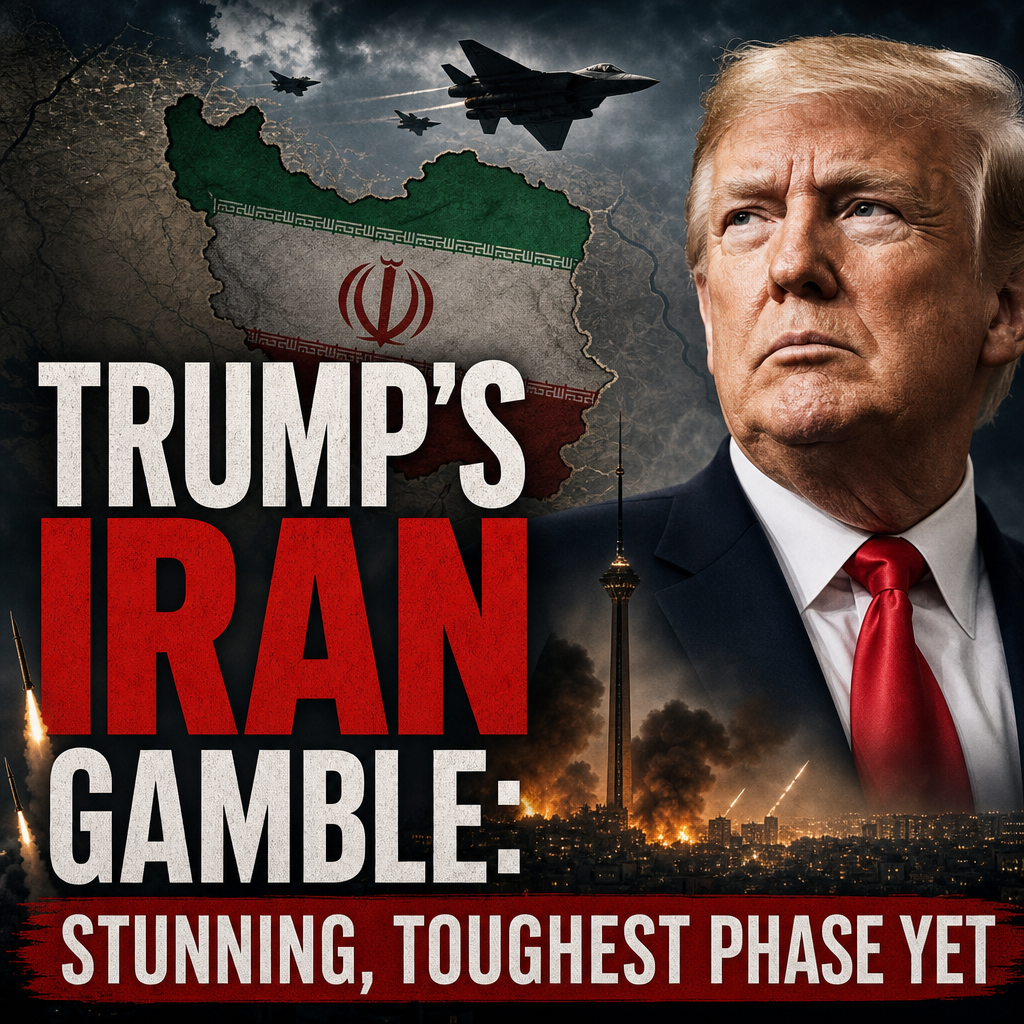
Trump’s Iran gamble is entering its most dangerous stretch yet, and the biggest question is no longer whether pressure will work, but whether pressure itself is making the region less stable.
For years, the U.S.-Iran confrontation has moved in cycles: sanctions, threats, military posturing, limited retaliation, then uneasy de-escalation. What makes the current phase feel different is the sense that the old playbook is wearing thin. Supporters of a harder line argue that Tehran only responds to force and that credible threats are needed to protect U.S. interests and allies. Critics see a familiar pattern in which escalation is sold as deterrence, while the actual result is a wider risk of miscalculation, proxy conflict, and diplomatic collapse.



Trump’s Iran gamble and the logic of pressure
At the heart of Trump’s approach is a straightforward bet: that Iran will back down if the costs rise enough. That has long been a core argument among hawks in Washington and among some regional partners who view Iran’s missile program, support for allied militias, and nuclear ambitions as an existential threat. From that perspective, pressure is not reckless; it is overdue.
Sky News-style coverage of the issue tends to frame it as a strategic test for the White House. The hard part is not simply making threats or deploying assets. It is convincing adversaries, allies, and the American public that the administration has a coherent endgame. A show of force can deter, but only if rivals believe the U.S. is prepared to follow through and if that force does not trigger the very conflict it is meant to prevent.




That is where Trump’s gamble becomes so difficult to manage. Iran has repeatedly shown that it can absorb punishment, adapt, and retaliate in ways that are hard to predict. The more sanctions tighten and the more military signaling intensifies, the more likely it becomes that Tehran responds asymmetrically rather than directly. That could mean cyber operations, strikes through regional partners, harassment of shipping lanes, or a renewed acceleration of sensitive nuclear activity.
What the different sources highlight
The three broad media lenses on this standoff tend to reveal just how contested the story is.
– RT’s framing often emphasizes the geopolitical contest, the danger of U.S. overreach, and the possibility that Washington’s strategy is more about coercion than diplomacy.
– Al Jazeera’s coverage usually gives more weight to regional fallout, humanitarian risks, and the views of states caught between Washington and Tehran.
– Sky News tends to stress the military, political, and alliance-management dimensions: whether deterrence is credible, how allies are reacting, and what escalation would mean in practical terms.
Taken together, these perspectives suggest one clear point: there is no consensus that the current approach is producing stability. There is, however, broad agreement that the stakes are high. Even observers who support stronger pressure on Iran acknowledge that the margin for error is shrinking.
Al Jazeera’s regional lens is especially useful here because it reminds readers that Iran is not operating in a vacuum. Any move by Washington can ripple through Iraq, Syria, Lebanon, Yemen, the Gulf, and global energy markets. That is why the debate cannot be reduced to a simple U.S.-versus-Iran contest. Other governments are trying to avoid being dragged into a confrontation they did not choose, while still hedging against the possibility that diplomacy fails.
The case for caution
There is a strong argument that the toughest phase in Trump’s Iran gamble is not just about military threat, but about political credibility. If the White House raises the temperature without a realistic path to negotiation, it may lock both sides into positions they cannot easily reverse.
The risks include:
– accidental clashes between U.S. and Iranian-linked forces;
– a renewed push by Iran toward greater nuclear leverage;
– damage to global oil and shipping stability;
– pressure on U.S. allies to choose sides more openly;
– domestic political fallout if the crisis escalates unexpectedly.
In this sense, the gamble is not merely about whether Trump can frighten Iran. It is about whether his strategy can produce a better deal than diplomacy alone, without crossing into a conflict neither side fully intends. That is a narrow and unstable path.
A broader strategic test
What makes this moment so striking is that both sides appear convinced the other is bluffing. Trump’s supporters argue that the image of unpredictability is itself an asset, because it forces opponents to reassess their assumptions. Iranian officials, meanwhile, have little reason to trust sudden pressure campaigns that often mix maximum sanctions with mixed diplomatic signals.
That is why a purely coercive strategy may struggle. It can create leverage, but leverage is not the same as resolution. If the goal is to curb Iran’s nuclear and regional behavior, then the U.S. will eventually need some version of negotiations, even if they begin indirectly and under heavy tension.
The most realistic reading, then, is not that one side is about to “win,” but that both are trying to avoid losing control. That is a much more fragile situation. It also explains why media outlets frame the crisis so differently: some focus on deterrence and force, others on diplomacy and consequences, and others on the fog of strategic uncertainty.
Trump’s Iran gamble may still produce a deal, or it may merely postpone the next crisis. Right now, the evidence points to a harder truth: pressure alone can create momentum, but it cannot substitute for a sustainable political settlement. Without that, the region remains one misstep away from a far more costly confrontation.