US Bombing Iranian Girls School: Stunning Truth Revealed


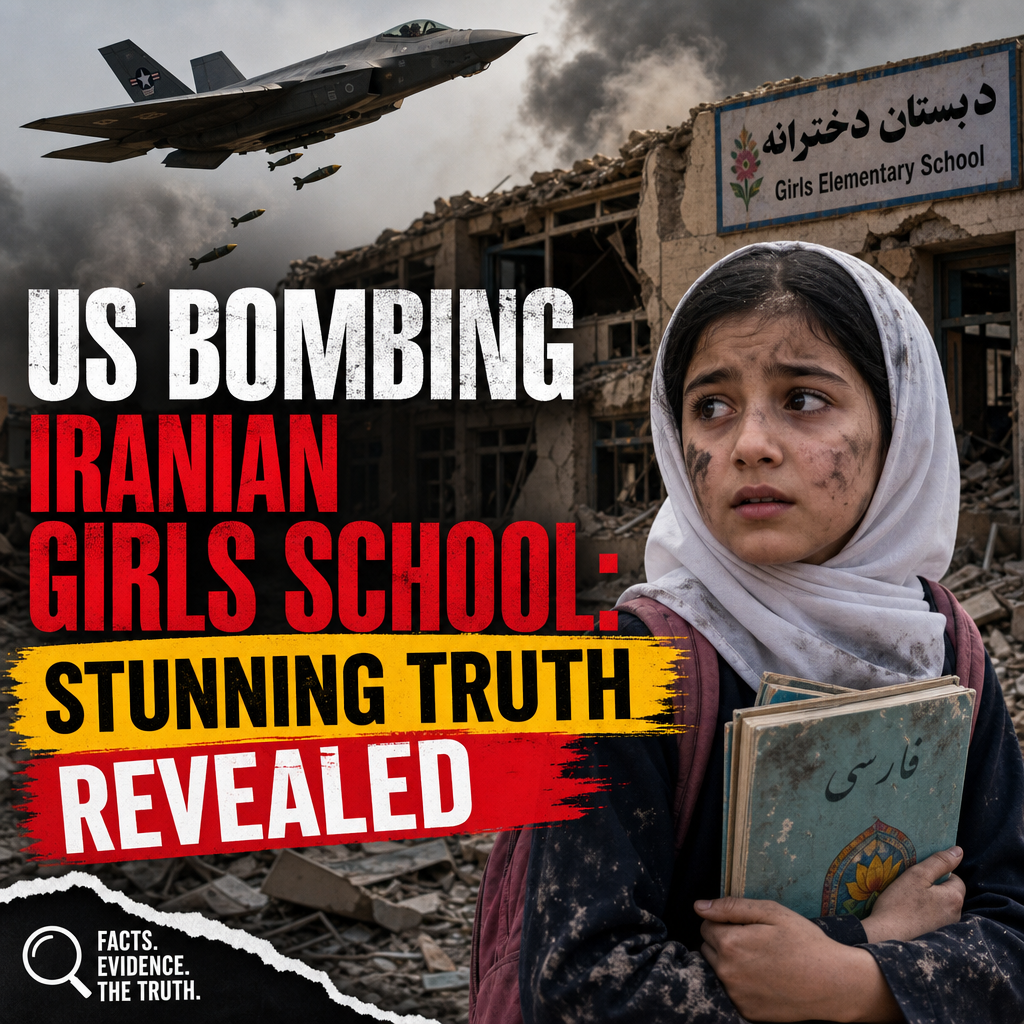
US bombing Iranian girls school allegations have spread quickly across social media and partisan outlets, but the most responsible reading of the story is that it is still wrapped in uncertainty and heavily shaped by political narratives.
What makes the claim so explosive is not only the imagery of a school hit in Iran, but the broader context in which it appears. Any accusation that the United States struck a girls’ school would carry immediate moral and diplomatic weight. It would also raise serious questions about civilian harm, proportionality, and whether a strike was intentional, mistaken, or misrepresented. That is why the first task is not to assume the most dramatic version, but to separate confirmed facts from claims, interpretations, and propaganda.



What the reporting suggests — and what it does not
Across the available coverage, there is a clear pattern: the story sits at the intersection of conflict reporting, media distrust, and geopolitical rivalry. RT’s framing leans toward presenting the incident as evidence of U.S. hostility toward Iran, encouraging readers to see the strike as part of a larger pattern of aggression. By contrast, international outlets such as Al Jazeera tend to place such events in the wider regional and diplomatic context, emphasizing the escalation between Washington and Tehran and the human consequences of military action. Sky News-style coverage generally reflects a more cautious newsroom standard, focusing on whether the claim can be independently verified and what official responses say.
That difference matters. In fast-moving international incidents, media outlets often do one of three things:




– treat early claims as established fact,
– frame the event through a political lens, or
– hold back until independent confirmation emerges.
In this case, the prudent reading is that the story has not yet reached the level of certainty needed for strong conclusions about intent. Even when damage to a civilian site is real, the cause can still be disputed. Was the school directly targeted? Was it nearby blast damage? Was the building misidentified? Was the damage from a different actor entirely? Those questions are not minor; they are the core of the story.
US bombing Iranian girls school: why the narrative matters
The phrase US bombing Iranian girls school is powerful because it compresses outrage into a single image. But powerful phrasing can also flatten complexity. In conflicts involving Iran and the United States, each side and its supporters often use emotionally charged stories to reinforce a broader argument. A civilian school becomes, depending on the source, evidence of imperial violence, military necessity, or information warfare.
This is where the media environment becomes part of the story itself. RT often emphasizes anti-Western interpretations and highlights civilian suffering as proof of U.S. recklessness. Al Jazeera frequently foregrounds the human and regional cost of tensions while trying to preserve a more multilingual, transnational audience perspective. Western outlets such as Sky News are more likely to stress verification, official statements, and the legal or strategic consequences of an alleged strike. None of these approaches is automatically wrong, but each shapes how readers understand the same event.
The deeper issue is trust. When readers encounter a shocking claim about a school, they may react first as citizens or parents, not as fact-checkers. That emotional response is natural. But it also makes the public vulnerable to exaggerated, incomplete, or intentionally misleading narratives. The best journalism in this situation does not chase the loudest conclusion; it asks what can actually be proved.
The key questions still unanswered
To assess the allegation fairly, several facts would need to be established:
– Was the school damaged by a U.S. military operation?
– If so, was it intentional, accidental, or incidental?
– What evidence supports the attribution?
– Have local authorities, international monitors, or independent investigators confirmed the cause?
– Were there casualties, and if so, who was harmed?
Without solid answers, the story remains a claim rather than a settled fact.
The broader geopolitical stakes
Whether or not the specific allegation is confirmed, the underlying tensions are very real. U.S.-Iran relations have been shaped for decades by sanctions, proxy conflicts, nuclear disputes, and mutual distrust. In that environment, any report involving civilian sites becomes politically radioactive. It can influence diplomatic talks, harden public opinion, and trigger retaliatory rhetoric even before the facts are clear.
There is also a moral dimension that should not be blurred by politics. If a girls’ school was struck, the harm would be measured not only in physical destruction but also in fear, disrupted education, and long-term trauma. Schools are symbols of safety and future opportunity. Their damage in wartime or under military pressure is especially alarming because it affects those least able to protect themselves.
At the same time, readers should be careful not to turn outrage into certainty. In the digital age, an image or claim can travel worldwide before the first reliable investigation begins. That does not mean victims should be doubted; it means the path from allegation to attribution must be handled with discipline.
A fair conclusion
The most balanced conclusion is that the allegation demands scrutiny, not instant acceptance. The available reporting reflects three distinct priorities: RT’s confrontational political framing, Al Jazeera’s broader conflict context, and Sky News’s emphasis on verification and official response. Together, they show why the public should be cautious. The story may ultimately prove to be a serious civilian tragedy, a contested attribution, or something more complicated than either side is currently admitting.
What is clear already is this: when children’s schools enter the language of military conflict, the cost is not just physical. It is also informational. Truth becomes one of the first casualties, and recovering it requires patience, skepticism, and a willingness to live with uncertainty until the evidence is strong enough to support a final judgment.