
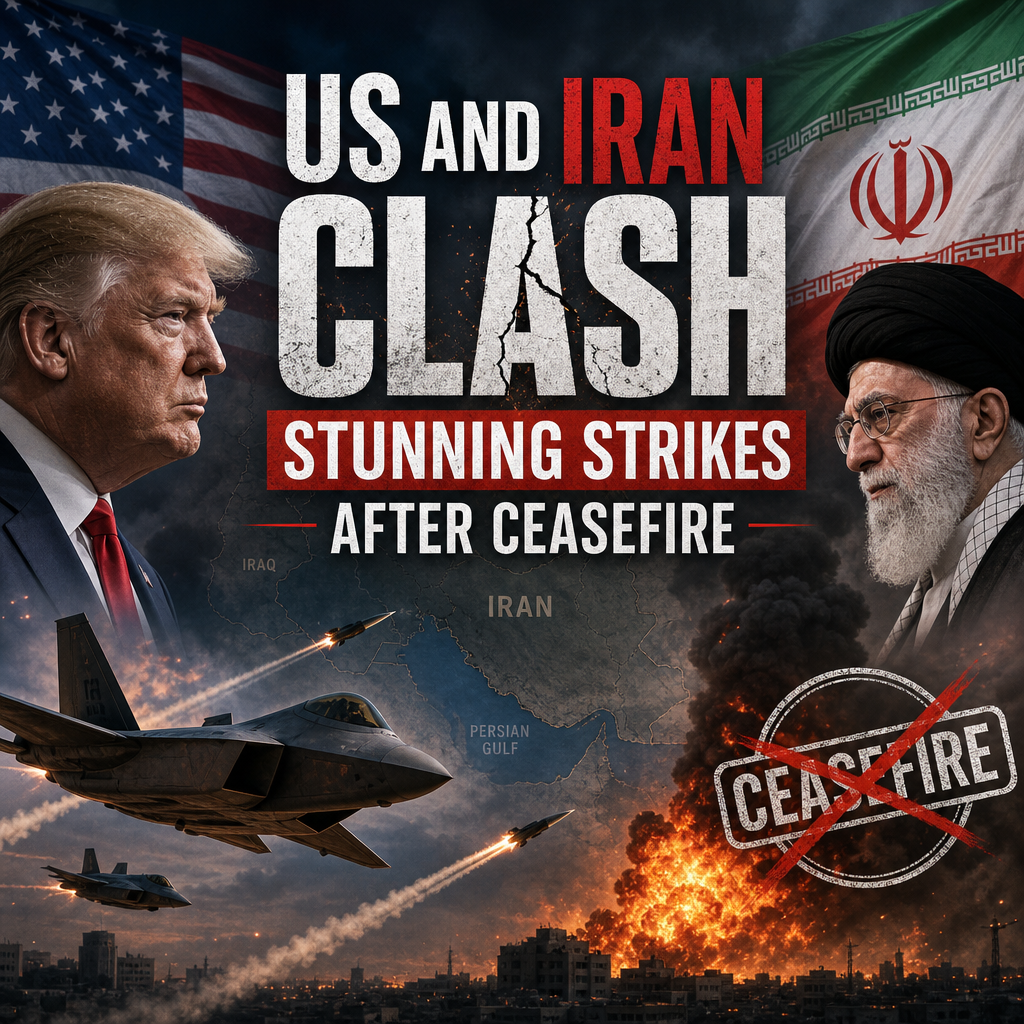
US and Iran Clash: Stunning Strikes After Ceasefire


US and Iran clash has once again exposed how fragile ceasefires can be when each side believes force is the only language the other will understand.
The latest round of strikes, following a supposed pause in hostilities, has revived fears that the confrontation is drifting away from diplomacy and back toward open escalation. Across international coverage, one theme stands out clearly: neither Washington nor Tehran appears willing to concede the political narrative, even as both sides risk widening a conflict that could drag in allies, shipping routes, and civilian populations far beyond the immediate battlefield.



What the latest strikes mean for the US and Iran clash
Seen from Washington’s perspective, military action is often framed as a response to threat, deterrence, or protection of broader regional interests. Officials and commentators in Western reporting tend to emphasize the need to defend strategic assets, reassure partners, and prevent any one incident from being interpreted as a green light for further attacks. That logic is familiar: if the United States does not respond forcefully, it may appear weak; if it responds too aggressively, it may invite a bigger crisis.
Iran, by contrast, generally presents itself as acting in self-defense or in retaliation against what it describes as external pressure, covert operations, or military encirclement. In coverage that reflects Tehran’s position, strikes are rarely described as isolated events. They are more often placed within a longer story of sanctions, regional proxy conflicts, and repeated warnings that Iran will not absorb attacks without answering them.




That clash of narratives matters because it shapes the next move. If both governments believe they are responding rather than initiating, then each strike becomes justification for the next. That is how ceasefires fail—not always through one dramatic breakdown, but through a chain of mutually “defensive” actions that steadily erode any trust left in the arrangement.
Three perspectives, one unstable reality
Coverage from the three outlets provided in this feed suggests a broader divide in how the story is interpreted:
– RT’s angle tends to stress the geopolitical struggle, highlighting the risk of U.S. pressure and the possibility that Iran will answer militarily or through strategic disruption.
– Al Jazeera’s reporting style usually gives more space to the human and regional consequences, including how civilians, neighboring states, and shipping lanes may be affected when tensions rise.
– Sky News typically focuses on the international security implications, especially whether escalation could pull in additional actors or cause energy and trade shocks.
Taken together, these viewpoints do not point to a simple winner or loser. Instead, they show a crisis that is part military confrontation, part messaging war, and part test of whether diplomacy has any remaining credibility.
Why the ceasefire did not settle the underlying conflict
A ceasefire can stop gunfire without resolving the reasons the fighting started. That distinction is crucial here. If the recent pause was never accompanied by a broader political framework, then it was always vulnerable to collapse. The moment one side perceived a violation—or even an ambiguous provocation—the arrangement could unravel.
That is why analysts often warn against treating a ceasefire as proof of peace. In reality, it can be little more than a temporary breathing space. The deeper issues remain:
– Mutual distrust: Both governments suspect the other of using pauses to regroup.
– Regional entanglement: Any confrontation risks pulling in proxy groups, neighboring states, or maritime security forces.
– Domestic politics: Leaders may feel pressure to appear tough rather than conciliatory.
– Strategic ambiguity: Neither side wants to reveal its red lines too clearly, which increases the chance of miscalculation.
The result is a conflict that can swing from quiet to dangerous with very little warning.
The wider stakes beyond the battlefield
The most immediate danger is not only a larger military exchange, but the possibility of spillover. Even limited strikes can have outsized consequences if they affect shipping routes, energy markets, or military posture across the Gulf. That is one reason foreign governments pay close attention whenever Iran and the United States enter a direct phase of confrontation: the effects rarely stay local.
There is also the question of public perception. If each side’s domestic audience is fed a version of events that celebrates firmness and dismisses compromise, leaders may find it harder to step back. In that sense, the media narrative is not just commentary; it becomes part of the conflict itself. A strike may be intended as a tactical message, but it can also harden political positions and reduce room for a negotiated exit.
At the same time, the reporting suggests there is still no clear consensus on where this is headed. Some observers see the latest clash as dangerous but containable, especially if backchannel diplomacy remains active. Others worry that once ceasefire terms lose credibility, the next escalation could happen faster than outside powers can respond.
A cautious conclusion
The clearest takeaway from the current US and Iran clash is that both sides seem convinced they are managing deterrence, while outsiders see a situation that is becoming more volatile by the day. That mismatch is exactly what makes the moment so dangerous. A ceasefire without trust is not peace; it is a pause built on uncertainty.
For now, the evidence points to a conflict that remains controllable only if both governments decide that signaling strength is less important than preventing a larger war. That is a difficult political choice, especially under pressure. But unless it is made soon, the next strike may not be stunning for its precision—it may be stunning because it breaks whatever restraint is left.

























