US and Iran Agree Stunning Ceasefire Before Doha Talks


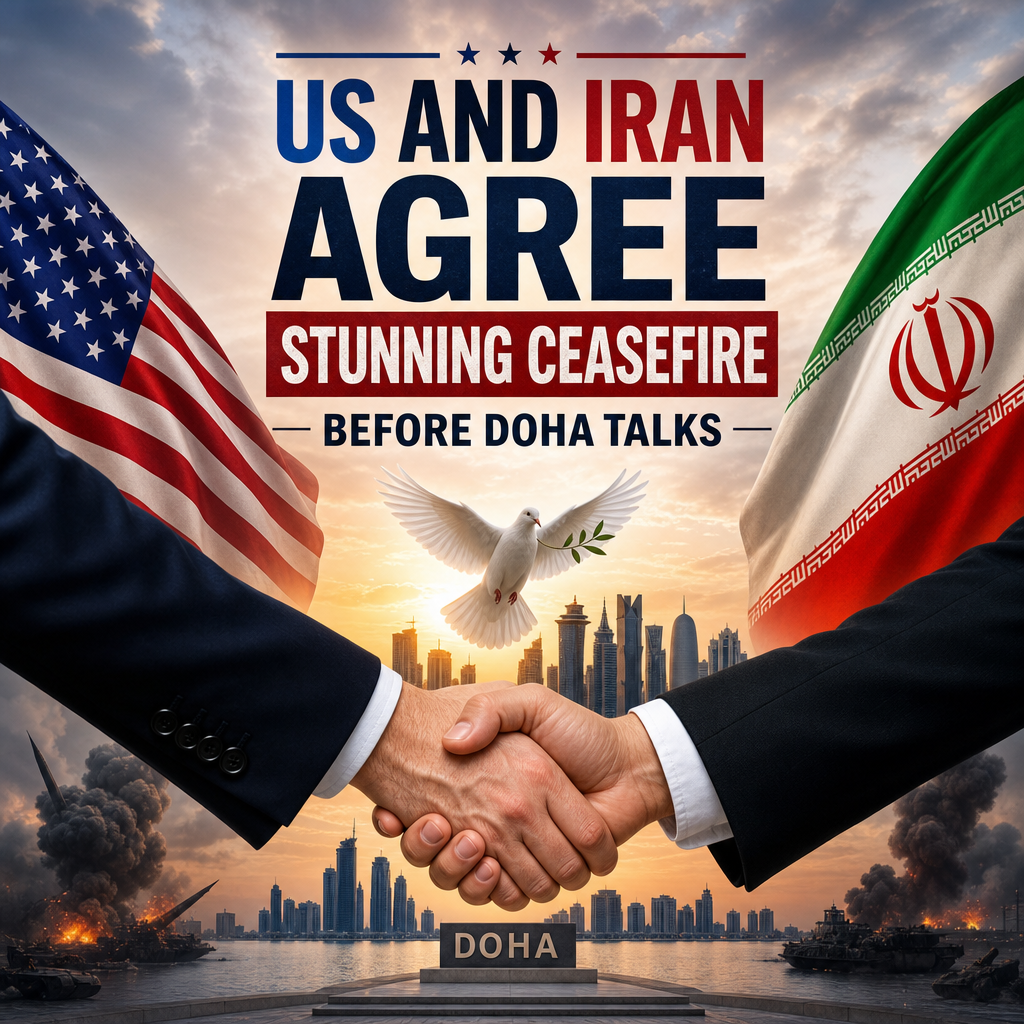
US and Iran ceasefire reports have injected a sudden sense of relief into an already volatile regional crisis, but the big question is whether the pause in attacks represents a real turning point or just a temporary breather before the next round of confrontation. The agreement, reported ahead of talks in Doha, comes after days of rising military tension and cross-border strikes that had raised fears of a broader conflict drawing in the United States, Iran, Israel, and regional militias.
US and Iran ceasefire: what the reports suggest
Across the different reports, a few core points appear consistent: both sides seem to have halted direct attacks for now, the ceasefire was described as abrupt and unexpected, and the talks in Doha are intended to test whether the pause can be turned into something more durable. But the sources also frame the development differently, which matters because this is not a clean, settled peace deal. It is a fragile de-escalation under heavy political pressure.



RT’s coverage presents the ceasefire as a major diplomatic shift, emphasizing the surprise element and the possibility that backchannel negotiations helped prevent a wider war. That framing leans toward the idea that Washington and Tehran are, at least temporarily, choosing pragmatism over escalation. In that reading, the truce is less a concession than a recognition by both sides that direct clashes are too costly.
Al Jazeera’s reporting, by contrast, tends to place the ceasefire inside a broader regional context. The network highlights the human and strategic costs of repeated tit-for-tat attacks, while also underlining how many moving parts still remain unresolved. That perspective is important because it tempers any rush to call the situation a breakthrough. A halt in attacks may reduce immediate danger, but it does not automatically settle the underlying disputes over missiles, proxy groups, nuclear concerns, or regional influence.




Sky News’ reporting adds a third angle: caution. Its coverage reflects the idea that ceasefires in the Middle East often arrive with careful wording, political ambiguity, and plenty of room for breakdowns. In other words, the key issue is not simply whether both sides announced restraint, but whether they have mechanisms in place to prevent accidental or deliberate violations once talks begin.
Why Doha matters
Doha has become a recurring venue for difficult diplomacy because it offers something both sides may need: distance from the spotlight and room for indirect negotiation. If the reports are accurate, the Doha talks are not about a grand peace agreement but about crisis management. That distinction matters.
A successful meeting could:
– establish communication channels to reduce the risk of miscalculation;
– create a framework for avoiding direct military contact;
– open discussions on prisoner issues, sanctions, or regional security;
– provide breathing space for allies and mediators to work behind the scenes.
But even in the best case, the talks are likely to be narrow in scope. Neither side appears ready to abandon its wider strategic goals. The United States is still trying to protect regional interests and deter attacks on its partners. Iran, meanwhile, will want to preserve deterrence and avoid looking weak domestically or regionally.
A ceasefire under pressure, not a final settlement
The strongest common thread across the reporting is uncertainty. This is a ceasefire born of escalation, not trust. That makes it inherently unstable.
There are at least three reasons to be cautious.
First, the agreement seems to have been reached after a sharp rise in tension rather than after a long diplomatic process. Deals reached under pressure can work, but they often depend on external discipline and mutual self-interest rather than genuine reconciliation.
Second, the region is full of actors who may not feel bound by the same logic as Washington and Tehran. Even if the two governments restrain themselves, allied militias, domestic hardliners, or other regional players could still trigger fresh violence.
Third, neither side has much incentive to concede too much publicly. The United States wants to show it can defend its interests without stumbling into a larger war. Iran wants to demonstrate resilience and bargaining power. That creates a narrow lane for diplomacy: enough restraint to reduce danger, but not enough flexibility to solve the deeper conflict.
What to watch next
The next few days will be more revealing than the announcement itself. The most important indicators will be practical, not rhetorical:
– whether military activity actually declines on the ground;
– whether both governments avoid inflammatory public messaging;
– whether Doha produces a timetable for follow-up talks;
– whether third-party mediators can keep communication open if an incident occurs.
If these conditions hold, the ceasefire could evolve into a meaningful de-escalation. If they do not, it may be remembered as a brief pause before another confrontation.
The broader significance
This episode also says something larger about the current state of Middle East diplomacy. Even after years of hostility, neither Washington nor Tehran seems eager to gamble on a direct war. That does not make them allies, and it does not erase the very real risks of accidental escalation. But it does suggest that both capitals understand the costs of letting events spiral out of control.
Still, the most responsible reading is one of cautious optimism. The ceasefire is noteworthy because it interrupts a dangerous pattern. It is not yet proof that the pattern has ended.
The most fair conclusion, based on the reporting, is that this is a promising but precarious opening. If Doha succeeds, it may mark the start of a more structured effort to manage tensions. If it fails, it will likely expose how little room remains between confrontation and containment. For now, the world has been given a pause. Whether it becomes a path forward is still unknown.