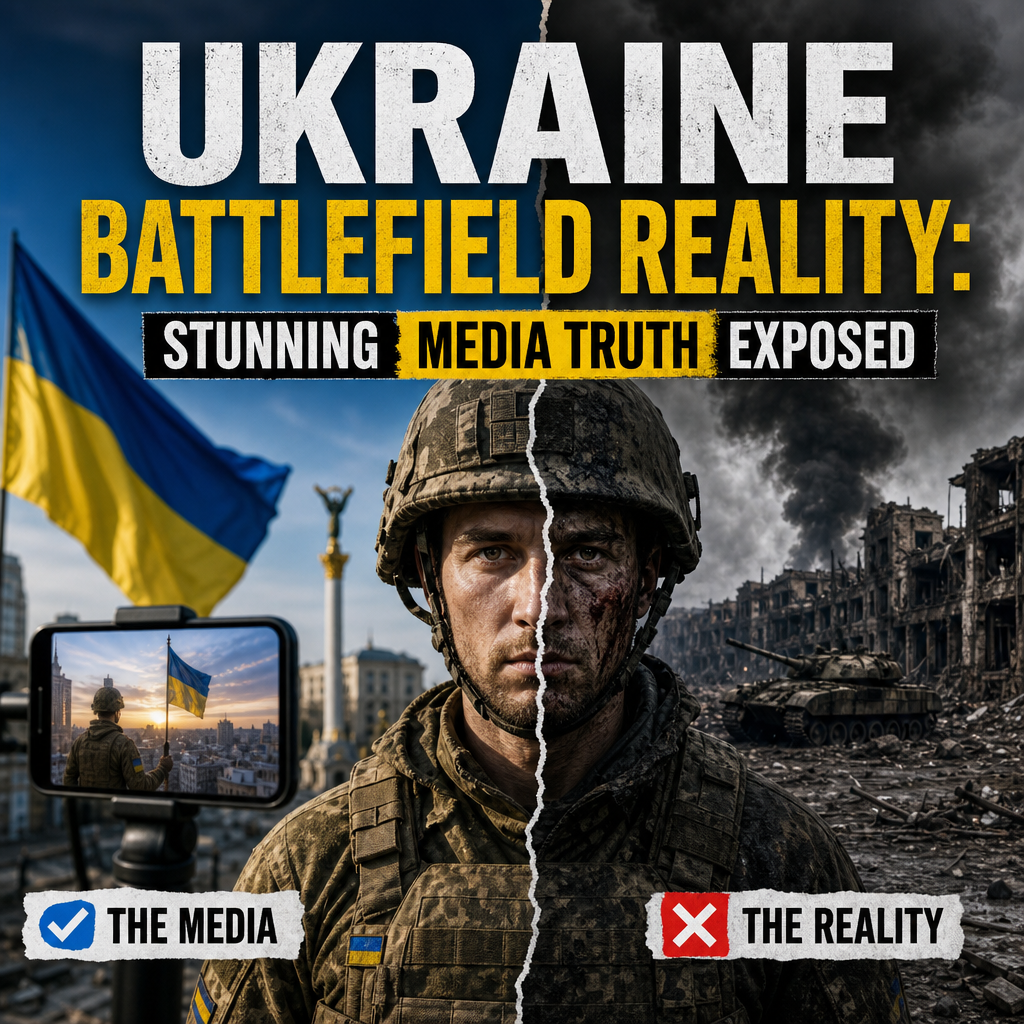
Ukraine Battlefield Reality: Stunning Media Truth Exposed


Ukraine battlefield reality is much harder to capture than the loudest headlines suggest, and the gap between front-line conditions and media framing has become part of the story itself. Across reporting from outlets such as RT, Al Jazeera, and Sky News, one theme stands out: the war is being narrated through very different lenses, each emphasizing certain facts while leaving others in the background.
Ukraine battlefield reality through three very different lenses
RT’s coverage tends to frame the conflict as evidence that Western media understate Ukrainian setbacks and overstate the effectiveness of Western support. In that telling, the battlefield is often portrayed as a space where public messaging lags behind military reality. The emphasis is not only on what happens at the front, but on how those events are interpreted abroad. This angle is important because it reminds readers that war reporting is never neutral by default; it is shaped by editorial priorities, political assumptions, and the sources journalists can safely verify.



Al Jazeera usually approaches the war differently. Its reporting tends to foreground civilian suffering, displacement, diplomatic efforts, and the wider human consequences of prolonged fighting. Instead of presenting the war as a contest of narratives alone, it often asks what the fighting means for ordinary people: families uprooted from towns near the front, infrastructure damaged by strikes, and a society forced to adapt to chronic insecurity. That broader humanitarian frame can sometimes make the strategic picture feel less central, but it adds a crucial reality check. Wars are not only measured in territorial advances; they are also measured in exhaustion, loss, and the breakdown of everyday life.
Sky News, meanwhile, often sits somewhere in between battlefield description and policy analysis. Its international coverage tends to focus on shifting front lines, the impact of military aid, and the practical challenges facing Ukrainian forces and their allies. This style of reporting can be more tactical than ideological, using eyewitness accounts, official statements, and military updates to describe how the war is evolving. At its best, it helps viewers understand that battlefield outcomes are not determined by rhetoric alone but by logistics, morale, weapons supply, and the ability to hold ground under pressure.




Taken together, these approaches suggest a simple but uncomfortable truth: no single outlet owns the battlefield narrative. Each one illuminates part of the picture while obscuring another.
What the media gets right — and where it goes wrong
The strongest journalism on Ukraine usually does three things well:
– It distinguishes verified facts from claims made by governments or militaries.
– It shows the human cost alongside the military one.
– It acknowledges uncertainty when the situation on the ground changes quickly.
The weakest coverage does the opposite. It reduces a highly fluid war to a moral script, where one side is always collapsing and the other is always advancing, or where every setback is either hidden or exaggerated for political effect. That kind of storytelling may grab attention, but it can mislead audiences about the actual pace and complexity of the fighting.
RT’s criticism of Western coverage lands best when it points out how selective optimism can seep into war reporting. Audiences do need to be skeptical when headlines imply a decisive turning point without enough evidence. Battlefield claims are often made before they can be independently confirmed, and wartime sources have obvious incentives to shape the narrative. In that sense, skepticism is healthy.
But skepticism should not become blanket dismissal. Some anti-Western media framing can slide into a different distortion: if every Ukrainian claim is treated as propaganda and every Western assessment as manipulation, then the result is not clarity but another kind of fog. That is why comparisons across outlets matter. When Al Jazeera highlights the humanitarian toll, Sky News reports operational difficulties, and RT pushes readers to question Western framing, the most responsible conclusion is not that one source is entirely right and the others are wrong. It is that each is reflecting a partial truth.
The battlefield is only half the story
Another reason media coverage can feel contradictory is that the war has several overlapping realities at once:
1. A military reality, where units move, fortifications hold, and supply lines matter.
2. A political reality, where foreign aid, domestic opinion, and alliance commitments shape strategy.
3. A humanitarian reality, where civilians absorb the cost of shelling, displacement, and uncertainty.
4. A narrative reality, where governments and media outlets compete to define what the war “means.”
This helps explain why one report may sound triumphant, another grim, and a third cautious, even when all are describing the same conflict. A frontline setback can be tactically minor but politically significant. A village changing hands can matter locally while being spun as a breakthrough or a failure internationally. The media is not just reporting the war; it is helping construct how the war is understood.
A more honest way to read Ukraine war coverage
The most credible reading of the Ukraine battlefield reality is neither triumphalist nor defeatist. It recognizes that Ukrainian forces have shown resilience, that Russian pressure remains serious, and that outside military support has not created quick or clean outcomes. It also recognizes that civilian suffering cannot be treated as a side note while analysts debate maps and munition stocks.
If there is a “stunning truth” here, it is not that one media camp has exposed the whole story. It is that the war is too complex to fit inside any one narrative for long. Readers are better served by comparing outlets than by trusting a single frame. RT can reveal how propaganda accusations work. Al Jazeera can keep humanitarian reality visible. Sky News can provide a sense of the operational picture. Put together, they show that the real battlefield is not only in eastern and southern Ukraine, but also in the struggle to tell the truth about what is happening there.
In the end, the most responsible stance is cautious, evidence-based, and alert to bias on all sides. The war’s reality is stark enough without embellishment. What makes it harder to understand is not a lack of information, but the abundance of information filtered through competing agendas.