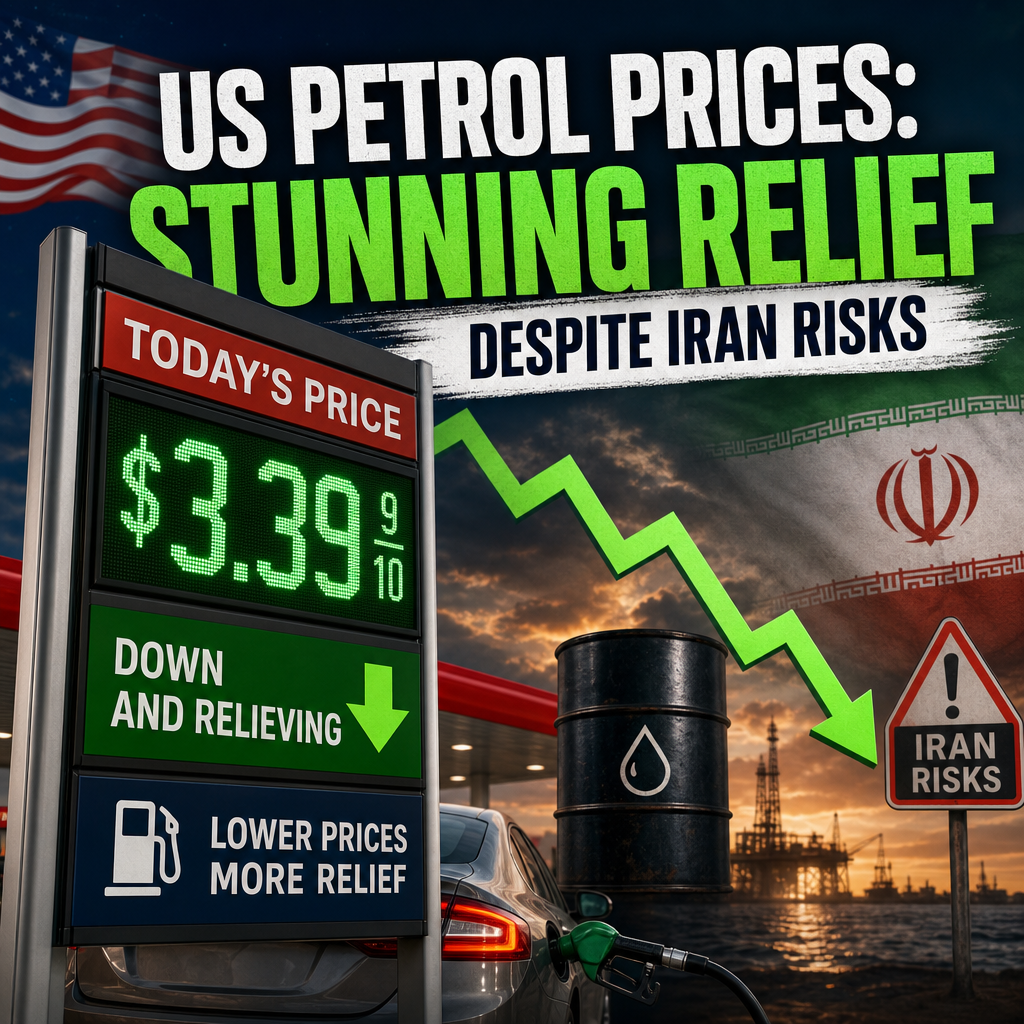
US Petrol Prices: Stunning Relief Despite Iran Risks


US petrol prices are offering drivers an unexpected break, even as tensions involving Iran continue to cast a shadow over global energy markets. The drop is welcome for households and businesses alike, but it comes with an important caveat: the current relief may be fragile, because much of the market’s calm depends on assumptions that geopolitical shocks do not turn into supply disruptions.
Why US petrol prices are easing for now
Several forces appear to be pushing gasoline costs lower at the same time. One of the biggest is the simple fact that crude oil markets have not yet experienced the kind of major disruption that traders feared when concerns about Iran intensified. In energy markets, prices often rise quickly on the possibility of conflict, but they can also retreat just as fast when the worst-case scenario does not immediately materialize.



A second factor is supply. Reports across international coverage point to adequate inventories and a market that is, for the moment, coping with uncertainty rather than being overwhelmed by it. That matters because petrol prices at the pump are shaped not only by crude oil but also by refining capacity, shipping costs, seasonal demand, and regional distribution. If refiners are running well and fuel stocks are comfortable, drivers can see relief even when headlines remain tense.
There is also a timing effect. Summer demand in the United States is usually strong, but it can still vary week to week. If travel patterns soften even slightly or refinery output improves, prices can ease more than expected. That is part of why fuel markets can seem disconnected from geopolitics in the short term: the daily price a driver pays is the result of many moving parts, not a single headline.




The Iran factor: why the calm may not last
The most important question is whether this relief is temporary. On that point, the reporting leaves room for caution. Iran remains a central source of risk because it sits near some of the world’s most sensitive energy routes and because any escalation could affect shipping confidence, insurance costs, and the broader risk premium built into oil prices.
What markets fear most
Energy traders tend to worry about a few specific scenarios:
– Disruption to shipping lanes and tanker traffic
– Damage to regional infrastructure
– Retaliatory actions that pull in neighboring states
– A rapid jump in insurance and transport costs
– A broader psychological shock that sends crude prices higher even before supplies are hit
That is why the market can look calm one day and nervous the next. Even if barrels are not immediately lost, the possibility of disruption can lift prices worldwide. In that sense, the current decline in US petrol prices should not be read as a sign that geopolitical risk has disappeared. It more likely reflects a market that is hopeful, but not confident.
Different outlets have framed this tension in slightly different ways. Some coverage stresses the benefit for consumers and the fact that prices are easing despite anxiety. Other reporting is more skeptical, emphasizing that geopolitical uncertainty tends to return quickly and that any direct conflict involving Iran could reverse the trend. A third perspective, often seen in international business reporting, focuses on the gap between market sentiment and physical supply: prices may fall because the world is well supplied today, yet the underlying vulnerability remains.
A short-term win for drivers, not a long-term guarantee
For American motorists, the immediate takeaway is straightforward: lower petrol prices are real relief. That matters at a time when many households are still sensitive to everyday costs. Even a modest drop at the pump can improve consumer sentiment, especially because fuel is one of the most visible prices in the economy.
For policymakers, however, the message is more complicated. Lower fuel prices can ease inflation pressure and help support spending, but they can also create a false sense of security if the market’s geopolitical risks are being underestimated. Governments cannot control global oil shocks, but they can prepare for them by watching inventories, transport chokepoints, and refinery resilience.
What could change the outlook quickly
The current easing could reverse if any of the following happen:
– A sharp escalation between Iran and regional opponents
– A supply interruption in a major producing area
– Unexpected refinery outages in the US or abroad
– A surge in global demand, especially from major consuming economies
– A sudden shift in market sentiment that pushes speculative buying higher
In other words, the pump price that looks comfortable now may not stay that way for long. Oil markets are famous for reacting faster to fear than to fundamentals, and Iran remains the kind of issue that can trigger a quick repricing.
A fair reading of the market
The most balanced conclusion is that US petrol prices are benefiting from a present-day supply cushion, but that cushion sits atop a volatile geopolitical foundation. The relief is genuine, and for drivers it is worth appreciating. Yet it would be premature to treat this as a durable trend unless tensions ease more clearly and the market sees a sustained reduction in risk.
That dual reality—cheap-ish petrol now, but real danger ahead—helps explain why the story feels so striking. Markets are sending a message that current conditions are manageable, even while their nerves remain on edge. For consumers, that means the next few weeks could bring welcome savings. For everyone else watching energy and foreign policy, it is a reminder that the price at the pump is still tied to events far beyond the highway.