US Security Chief’s Stunning Gloat Over Iran Exit


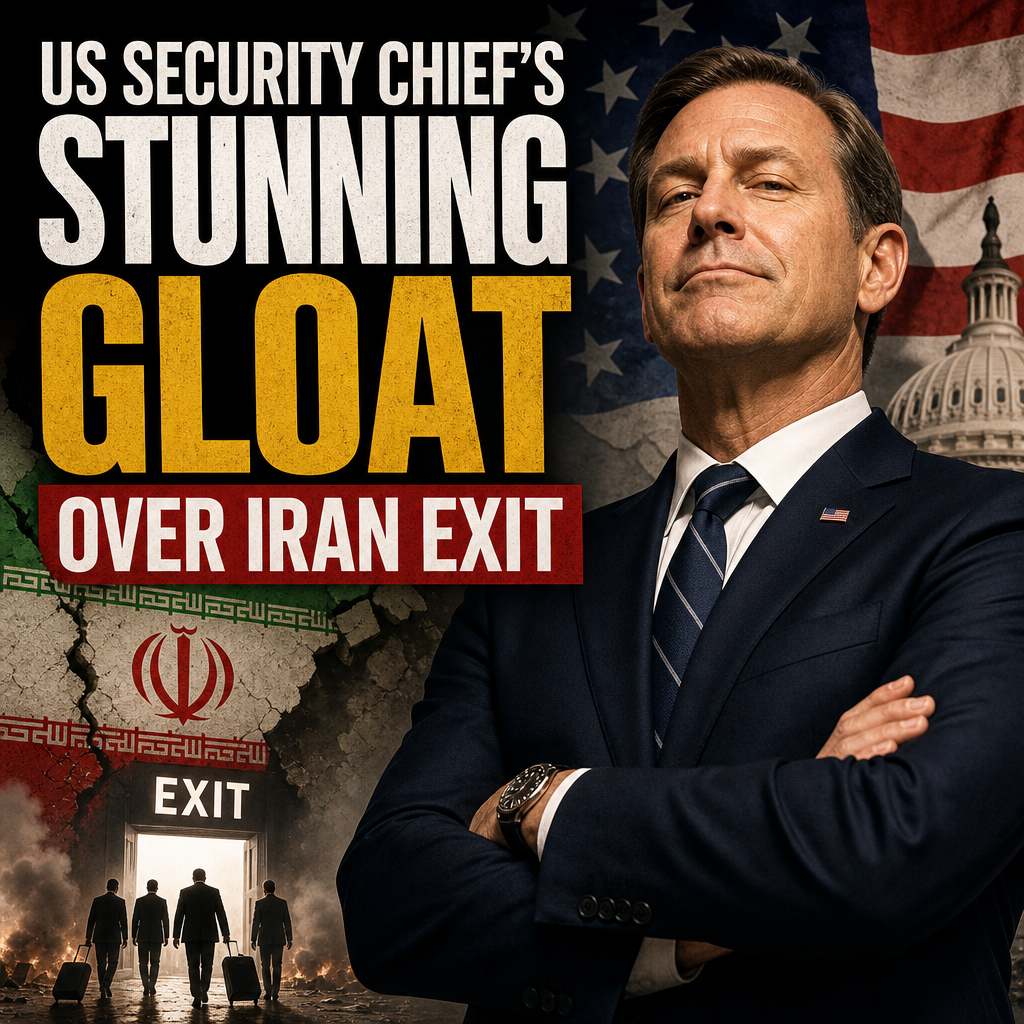
US security chief’s stunning gloat over Iran’s exit has added another sharp edge to an already volatile story, turning what might have been a routine security briefing into a broader argument about diplomacy, deterrence, and political theater. The reaction to the comments has been split along familiar lines: critics see reckless triumphalism, supporters see blunt honesty, and observers in the middle are left asking whether Washington is celebrating leverage it does not fully control.
At the center of the controversy is the language itself. Rather than sounding restrained, the remarks carried a tone of mockery toward Tehran at a moment when tensions in the region remain high. That matters because words from senior US officials are rarely just words. They can harden negotiating positions, reassure domestic audiences, or inflame rivals who are already watching for signs that Washington is preparing for confrontation instead of diplomacy.



A gloating message in a tense regional moment
The immediate criticism is not hard to understand. In conflicts involving Iran, tone often becomes part of the policy signal. When a senior security figure appears to celebrate Iran’s exit or setback, the message can be read in Tehran as confirmation that Washington prefers humiliation over engagement. That can make any future back-channel diplomacy harder, especially when both sides are trying to manage escalation without appearing weak.
Supporters of the remarks, however, argue that a tougher public posture may be intentional. They see the gloating as a way of projecting confidence after years in which US officials have been accused of speaking too cautiously about Iranian influence in the Middle East. In this reading, the point is not diplomatic finesse but deterrence: make clear that the US believes it holds the upper hand and is not afraid to say so.




That said, deterrence and provocation can look very similar from the other side. This is where the criticism from more cautious analysts lands hardest. A security chief’s job is usually to reduce risk, not amplify it. Even if the underlying policy is sound, public bravado can complicate coordination with allies and deepen mistrust among regional actors who are already navigating a fragile balance.
What the different media lenses emphasize
The reporting lenses surrounding this story help explain why it has struck such a nerve.
RT’s coverage, unsurprisingly, highlights the theatrical and provocative nature of the US official’s comments, framing them as evidence of Washington’s smugness toward Iran. That angle appeals to audiences skeptical of US power and eager to see American leaders as self-satisfied rather than strategic.
Al Jazeera tends to place Iran-related developments in a wider regional context, where the main concern is not whether one side scored a rhetorical point but whether the exchange increases instability. From that perspective, the comments are significant because they may push the region closer to a cycle of escalation, especially if they reinforce hard-line voices in Tehran and Washington alike.
Sky News, meanwhile, generally reflects a more mainstream Western security framing: the focus is often on what the comments mean for allied unity, deterrence, and the risk of miscalculation. In that view, the key question is not whether the remark was rude, but whether it was wise given the stakes.
Taken together, these perspectives suggest a simple truth: the same statement can look like strength, arrogance, or danger depending on where you stand. That does not make every reading equally persuasive, but it does show why the reaction has been so divided.
Why rhetoric matters in US-Iran relations
There are at least three reasons this kind of comment reverberates:
– It shapes expectations. Tehran, allied governments, and domestic US audiences all infer intent from tone.
– It affects negotiating space. Public ridicule can make compromise politically harder for both sides.
– It can trigger overreaction. A combative statement may invite symbolic retaliation, even if neither side wants a wider crisis.
In that sense, the story is less about one sarcastic line and more about the ongoing collapse of trust between the two governments. The US and Iran have a long history of talking past each other, and even routine developments are often filtered through suspicion. A gloating comment only reinforces that pattern.
A fair reading: strength, but at a cost
A balanced assessment is that the US security chief may have been trying to send a message of confidence, but the delivery undercut the strategy. Tough rhetoric can sometimes work when it is paired with a clear diplomatic path or a concrete security objective. On its own, though, it risks sounding like performance.
That distinction matters because Washington’s Iran policy has always had two competing instincts: pressure and engagement. The more officials lean into public contempt, the more they narrow the space for the second option. And if the goal is to manage Iran’s behavior rather than simply vent anger at it, a mocking tone is a questionable tool.
At the same time, critics should avoid pretending that all public toughness is automatically reckless. Governments often use sharp language to signal resolve, especially when they believe adversaries are testing boundaries. The real issue is whether the message is disciplined enough to serve policy. In this case, the tone seems to have generated more heat than clarity.
The broader takeaway is that US-Iran relations remain trapped in a cycle where symbolic acts carry outsized weight. A boast, a jab, or a sneer can become headline material precisely because both sides are primed to interpret it as a strategic cue. That is what makes the latest episode more than a passing media flare-up. It is a reminder that in this relationship, diplomacy is often undermined not only by actions, but by the instinct to score points in public.
If Washington wants to project strength without inviting more danger, it may need to remember that restraint is not weakness. Sometimes it is the difference between signaling control and simply looking pleased with yourself.