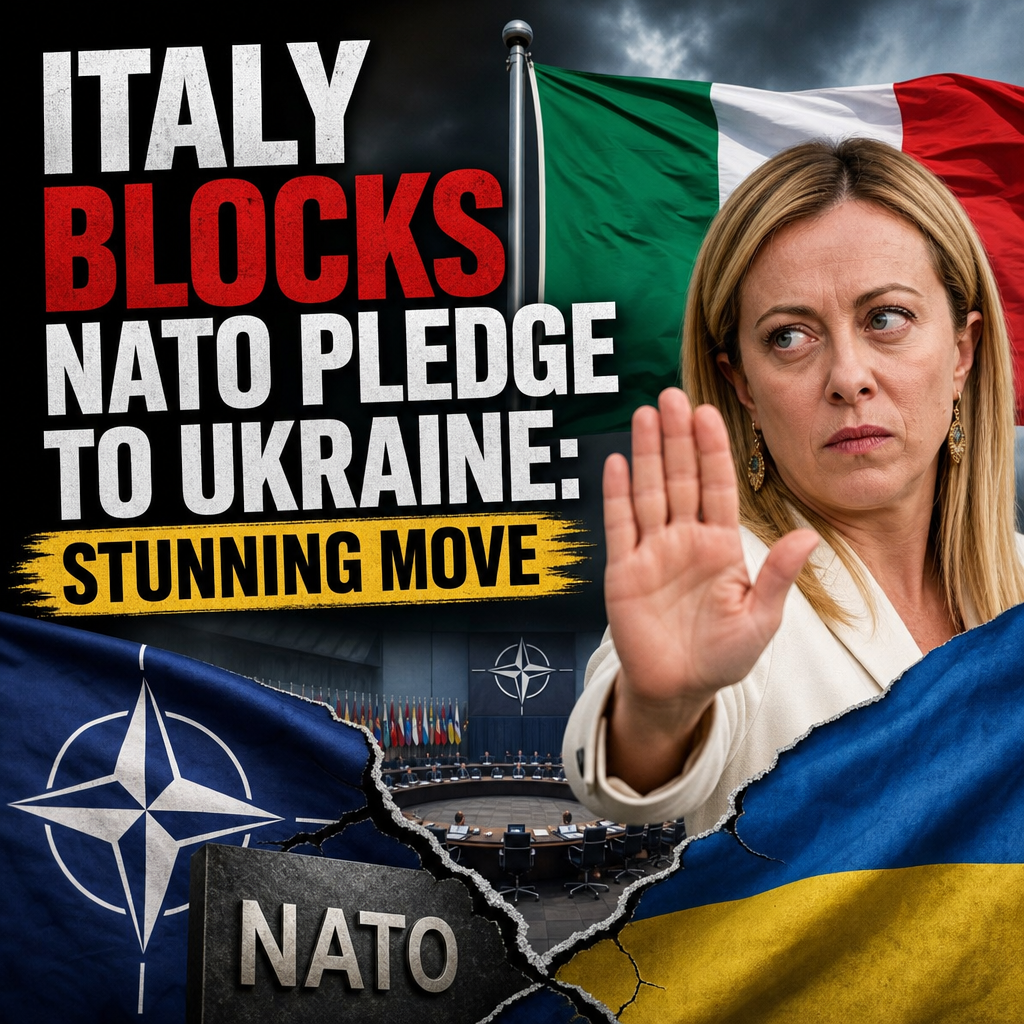
Italy Blocks NATO Pledge to Ukraine: Stunning Move


Italy blocks NATO pledge to Ukraine, and the move underscores just how divided Western capitals remain over the pace, scope, and risks of deeper support for Kyiv. Reported from a range of international outlets, the dispute is not simply about one country saying “no”; it reflects a broader tension inside the alliance between those who want stronger, more explicit guarantees for Ukraine and those who fear that language too close to membership promises could harden the war rather than help end it.
The timing matters. Ukraine has spent months pressing its partners to turn political sympathy into something more durable, arguing that vague assurances leave it exposed to future Russian pressure. But the Atlantic alliance has long treated membership as a major strategic threshold, not a rhetorical gesture. That is why even a seemingly small objection from Italy can carry outsized weight: in NATO diplomacy, wording is often policy.



What Italy’s stance signals inside NATO
Italy’s reported pushback should be read in the context of a coalition that is not fully aligned on how to support Ukraine. Some members, especially those closer to Russia geographically or more exposed to direct security risks, have tended to favor sharper commitments. Others, including countries with governments wary of escalation or domestic political backlash, prefer careful language and incremental steps.
RT’s framing of the story emphasizes the political friction itself, portraying the pledge as something being actively blocked rather than simply negotiated. That presentation fits a broader narrative that NATO unity is brittle and that Western promises to Ukraine are constrained by internal disagreement. Even if one does not accept that political framing at face value, it is fair to say the alliance’s message has often been more cautious than Kyiv would like.




Al Jazeera, by contrast, typically situates developments like this within the larger human and geopolitical costs of the war. From that perspective, a delay or dilution in NATO language is not just a diplomatic technicality; it can shape battlefield expectations, civilian morale, and the Kremlin’s reading of Western resolve. The key question is whether ambiguity deters Moscow or invites more pressure.
Sky News, which often focuses on the practical implications of diplomatic developments, is likely to highlight how language choices can affect alliance cohesion and the credibility of future security arrangements. That matters because NATO has to balance two competing priorities:
– reassuring Ukraine that support will continue
– avoiding a statement that implies automatic war with Russia
– preserving unity among all 32 allies
– preventing public expectations that the alliance is not ready to meet
The real issue is not just membership
The debate goes beyond whether Ukraine eventually joins NATO. It is also about the interim space in between: what security guarantees exist before membership, how binding they are, and whether they are strong enough to matter. For Kyiv, anything short of a firm pathway can feel inadequate. For hesitant allies, anything too strong can look like a step toward direct confrontation.
That tension explains why wording becomes so contentious. A promise of “support” is politically safer than a promise of protection. A “pathway” sounds meaningful, but it may still leave Ukraine outside the alliance’s core shield. Italy’s reported resistance suggests that at least some members are still uncomfortable with language that could be interpreted as a de facto commitment without the legal and military consequences of full membership.
Why this matters for Ukraine’s strategy
Ukraine has repeatedly argued that uncertainty is dangerous. If Moscow believes the West will always stop short of hard commitments, then, from Kyiv’s viewpoint, Russia has incentive to keep pressing. That is why Ukrainian leaders continue to push for more concrete pledges, not only weapons and funding.
At the same time, Western leaders are trying to avoid a scenario in which a promise made in haste creates a crisis later. If NATO adopts language that sounds stronger than the alliance is prepared to enforce, the result could be worse than cautious diplomacy. This is the uncomfortable reality of the current moment: both overpromising and underpromising carry risks.
A fair reading of the split is that neither side is entirely irrational. Ukraine’s supporters are right that weak assurances can be strategically hollow. Skeptics are right that NATO credibility depends on promises it can actually stand behind. The challenge is finding language that is meaningful without being reckless.
A divided alliance, but not a collapsed one
It would be an overstatement to treat Italy’s reported objection as proof of a broken alliance. NATO has always operated through compromise, and disagreement is normal in a coalition of democracies with different threat perceptions and domestic politics. Still, this episode does reveal that consensus on Ukraine is more fragile than alliance statements often suggest.
What seems clear from the mix of reporting is that:
– Ukraine wants firmer, more explicit long-term guarantees
– some NATO members remain cautious about anything that resembles automatic entry or defense commitments
– the alliance is trying to preserve unity while managing escalation risks
– public declarations may sound resolute, but internal bargaining is still ongoing
The uncertainty is likely to continue. Unless the war changes dramatically, NATO will keep facing the same dilemma: how to support Ukraine strongly enough to matter, without crossing lines that members are unwilling to defend. Italy’s reported move does not settle that debate, but it does expose it more plainly.
In that sense, the story is less about one country blocking a pledge than about the limits of Western consensus. The alliance wants to project strength, but it is still negotiating the boundaries of that strength in real time. For Ukraine, that means the road ahead remains politically complicated, even when public statements sound united.