Strait of Hormuz: Stunning Iran Vows to Fight to Last Breath


Strait of Hormuz tensions have once again underscored how quickly a regional confrontation can spill into global economic anxiety.
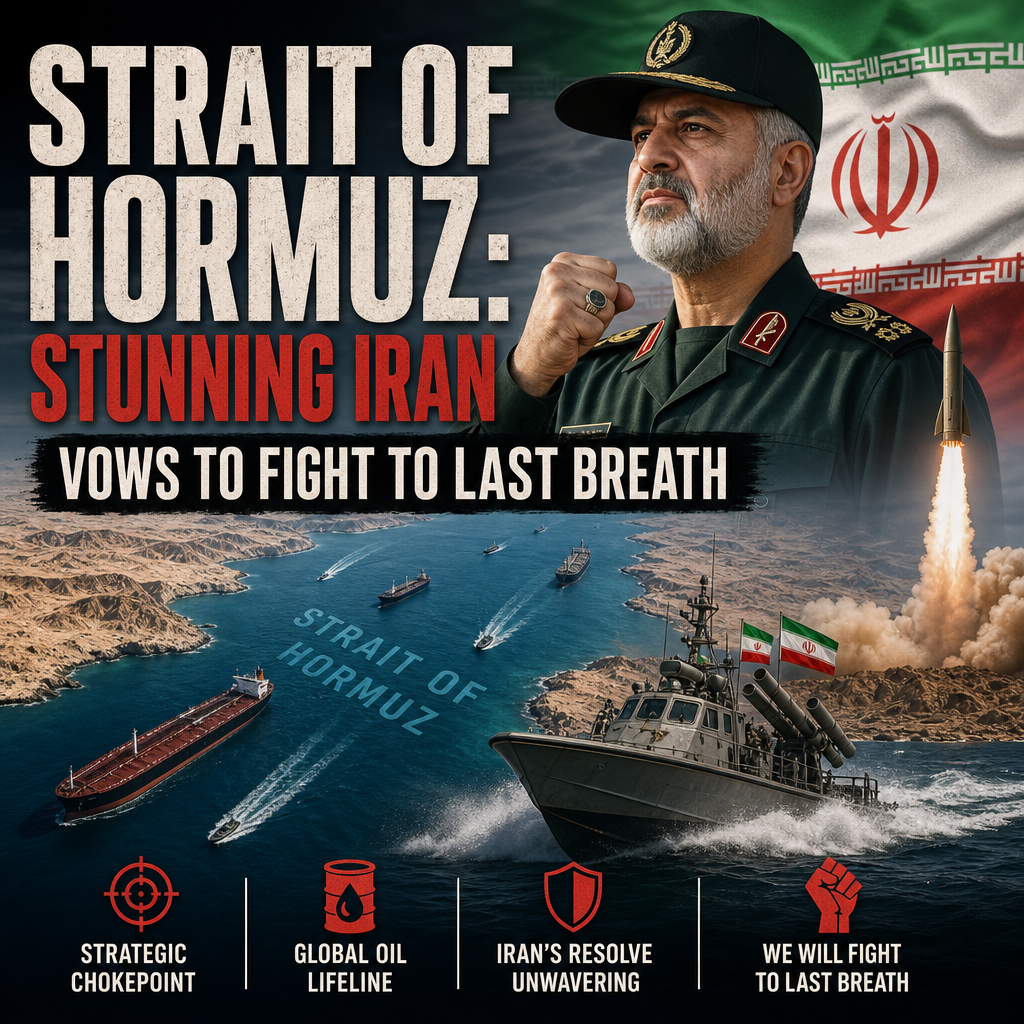
The narrow waterway between Iran and Oman is one of the world’s most sensitive chokepoints, carrying a huge share of the oil and liquefied natural gas that moves by sea. When Iranian officials speak of fighting “to the last breath,” as recent coverage has highlighted, the message is not just rhetorical. It is meant to signal deterrence: any attack on Iran, or any move seen as threatening its interests, could trigger retaliation in a place where even limited disruption would ripple far beyond the Gulf.



Why the Strait of Hormuz matters far beyond Iran
The Strait of Hormuz is only about 21 miles wide at its narrowest point, yet its importance is enormous. Tankers pass through its shipping lanes carrying energy supplies to Asia, Europe, and beyond. That reality is why every new round of Iran-U.S. tension in the Gulf raises immediate questions about energy prices, naval security, and the risk of miscalculation.
Al Jazeera’s reporting has tended to frame the crisis in the context of long-running regional instability: sanctions, military pressure, proxy conflicts, and the diplomatic collapse that followed previous nuclear tensions. That broader lens matters because the latest warnings from Tehran are not appearing in a vacuum. Iranian leaders are responding to a cycle that has repeatedly mixed pressure with confrontation, then left both sides claiming they are acting defensively.




RT’s coverage, meanwhile, has emphasized the possibility of direct escalation between Washington and Tehran, especially after renewed exchanges of threats and military signaling. That perspective reflects a familiar Moscow-based skepticism toward U.S. interventions, but it also points to a real concern: once both sides start speaking in absolute terms, space for de-escalation narrows quickly.
Sky News has approached the story more through the lens of global risk, highlighting how any conflict in the Strait would immediately affect international shipping, insurance costs, and market confidence. That angle may sound less dramatic than military brinkmanship, but it captures one of the most important truths about the situation: the world does not need a full-scale war for the economic consequences to be severe.
What “fight to the last breath” really signals
Iranian rhetoric about fighting to the last breath should be read as both domestic messaging and external deterrence. At home, it serves to project resolve and resistance, especially to an audience accustomed to years of sanctions and pressure. Abroad, it is intended to warn adversaries that military action could come at a steep cost.
But language like this does not automatically mean Iran wants open war. In many cases, harsh public statements are designed to raise the price of escalation and push opponents back toward negotiation. That is one reason analysts often treat such declarations carefully: they may be more strategic than literal.
There are, however, two reasons to take them seriously.
– First, the Strait of Hormuz is one of the few places where Iran can credibly threaten disruption without needing to match the military reach of the U.S. directly.
– Second, repeated cycles of threat and counter-threat increase the odds of accident, misunderstanding, or a limited strike escalating faster than either side intended.
How the major outlets differ on the crisis
The three source perspectives do not contradict each other so much as they stress different dimensions of the same problem.
RT: escalation and confrontation
RT’s framing leans heavily toward the danger of direct military escalation and the likelihood that Washington is a principal driver of confrontation. That angle is consistent with RT’s broader editorial posture, but the underlying point remains relevant: when states with major military capabilities trade warnings in a maritime flashpoint, even a small incident can have outsized consequences.
Al Jazeera: context and regional complexity
Al Jazeera’s reporting generally places the story in a wider regional and diplomatic context. That matters because the Strait of Hormuz is not just about Iran and the U.S.; it sits at the intersection of Gulf security, Gulf Arab concerns, international sanctions, and the fragile balance of maritime trade. From this perspective, the crisis is less a single event than part of a prolonged strategic standoff.
Sky News: the global cost of instability
Sky News tends to focus on the knock-on effects for global markets and shipping. This is often the most immediately understandable angle for audiences outside the region, and it is hard to dispute. Even talk of harassment, mining, drone strikes, or naval interference in the strait can raise energy prices and insurance premiums, especially if traders fear that tankers may be targeted.
The bigger question: deterrence or disaster?
The hard truth is that the Strait of Hormuz is both a bargaining chip and a danger zone. Iran knows that its ability to threaten the corridor gives it leverage. Its opponents know that allowing Iran to dominate that leverage would be risky. The result is a tense equilibrium in which everyone is trying to deter everyone else.
What makes this moment especially dangerous is that deterrence can fail in a few different ways:
– a naval encounter can go wrong;
– a missile or drone strike can be misread;
– domestic political pressure can limit room for compromise;
– and outside actors may assume the other side will always back down.
That is why the most responsible reading of the current rhetoric is not that war is inevitable, but that the margin for error is shrinking. A conflict in or around the Strait of Hormuz would likely begin with a limited incident, not a grand declaration. Yet limited incidents in this region have a habit of becoming larger crises.
A cautious conclusion
The strongest takeaway from the latest coverage is that Iran’s vow to stand firm should be understood as part of a broader confrontation over power, sovereignty, and deterrence. The U.S. and its allies see security in the Gulf as essential to global commerce; Iran sees pressure in the Gulf as a challenge to its survival and leverage. Those two positions are fundamentally incompatible, at least in the short term.
Still, none of the available reporting points to an unavoidable war. What it does point to is a system under severe strain, where every new statement, deployment, or interception increases uncertainty. The Strait of Hormuz remains the place where rhetoric can turn into real-world disruption very quickly—and that is exactly why the world is watching it so closely.