Oman Talks on Hormuz: Stunning Update Amid US-Iran Strikes


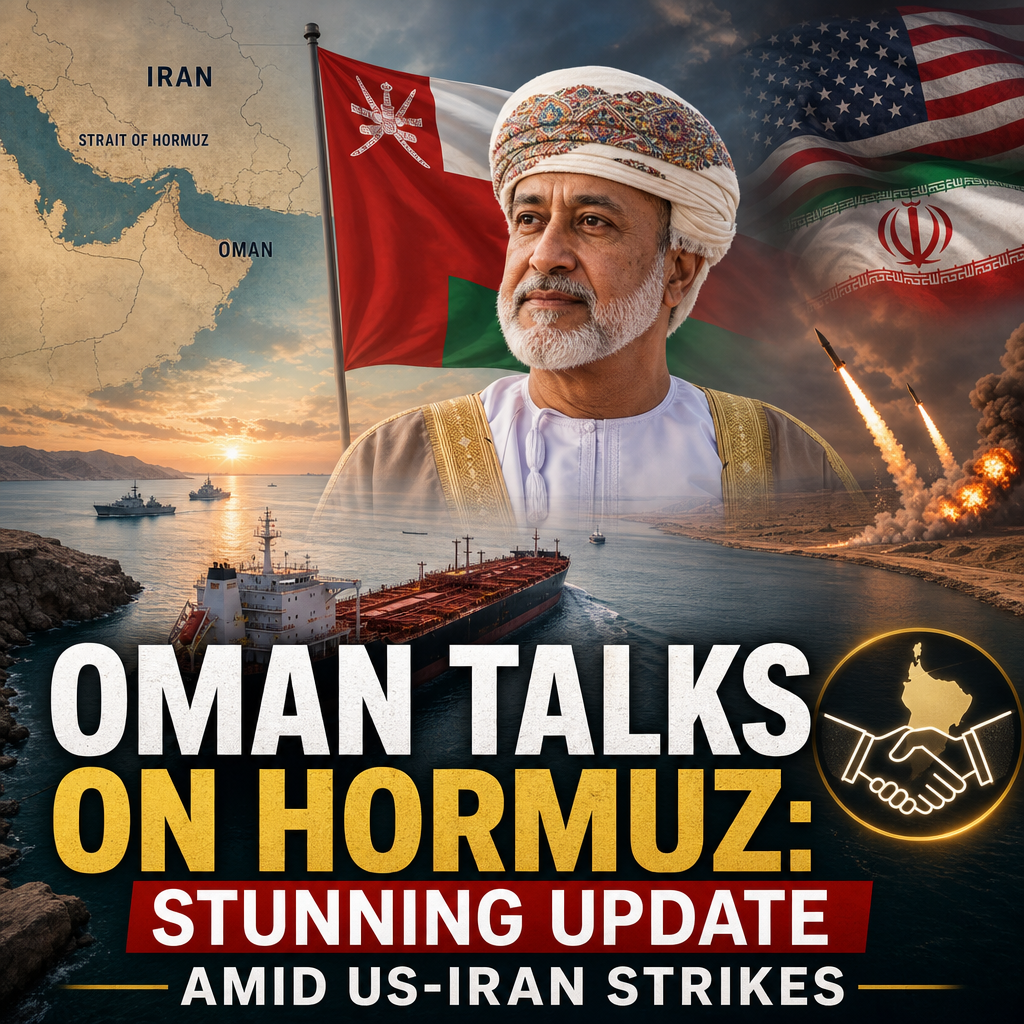
Hormuz talks are back in focus as Oman says it is speaking with Tehran about the Strait of Hormuz while US-Iran strikes continue to raise the risk of a wider regional confrontation.
The timing matters. The strait, a narrow waterway linking the Gulf to the Arabian Sea, is one of the world’s most important energy chokepoints. Even a hint of disruption can unsettle oil markets, shipping insurers, and governments far beyond the region. That is why Oman’s role as a quiet mediator has drawn so much attention: it may be one of the few channels still open when direct diplomacy is collapsing under the pressure of military exchanges.



Why Oman’s role matters in Hormuz talks
Oman has long positioned itself as a bridge between rival powers. Unlike some of its neighbors, it has maintained working relations with both Tehran and Washington, giving it a credibility that is hard to manufacture in moments of crisis. In times of escalation, that neutrality becomes a diplomatic asset.
According to the broader reporting around the latest developments, Muscat is reportedly in contact with Iranian officials at a moment when the strikes between the United States and Iran have made the region more volatile than at any point in recent memory. The immediate concern is not just whether missiles fly, but whether the conflict spills into maritime traffic, energy exports, and the security of commercial ships passing through Hormuz.




That concern is widely shared, but not everyone sees the situation the same way.
– Iran’s perspective tends to frame pressure on Hormuz as leverage: if it is attacked, it can threaten the flow of oil and shipping to remind the world of its strategic importance.
– The US and its allies tend to emphasize deterrence, arguing that allowing Tehran to threaten the strait would reward escalation and endanger global commerce.
– Regional states and traders are often focused less on rhetoric and more on practical risk: delays, rerouting, insurance costs, and the possibility of a sudden incident at sea.
Oman’s talks with Tehran are significant precisely because they sit between these competing logics. They do not solve the conflict, but they may reduce the odds of a miscalculation.
The Strait of Hormuz as a pressure point
The Strait of Hormuz has always carried outsized geopolitical weight for its size. A large share of the world’s seaborne oil and liquefied natural gas passes through it, which means any threat to navigation reverberates quickly through commodity markets.
That is why coverage from multiple international outlets tends to converge on the same basic warning: even limited strikes can produce disproportionate consequences if they trigger a maritime response. A ship damaged, a mine discovered, or a temporary closure warning could be enough to raise prices and sharpen diplomatic tensions.
What the latest strikes change
The present round of US-Iran strikes changes the atmosphere in three important ways:
1. It raises the risk of direct retaliation.
Iran has repeatedly signaled that it will respond to attacks, and the means of response do not have to be symmetrical. A maritime warning can be as disruptive as a missile launch.
2. It narrows the room for de-escalation.
When military pressure is high, back-channel diplomacy becomes harder to sustain, especially if each side is trying to look strong for domestic audiences.
3. It makes third-party mediation more valuable.
That is where Oman stands out. Even if the talks do not produce a breakthrough, they can create a pause, clarify red lines, and prevent accidental escalation.
A divided information picture, but a clear pattern
One of the most interesting aspects of the coverage is not just the event itself, but the differences in tone across outlets.
Some reporting emphasizes the strategic danger of Iranian leverage over the strait and the need for firm deterrence. Other coverage places greater weight on the human and economic consequences of escalation, especially for Gulf populations and global consumers. Meanwhile, Russian-leaning coverage such as RT often highlights US responsibility for instability and frames Washington’s actions as provocative or escalatory. That does not make every claim in that ecosystem false, but it does mean readers should be careful about where emphasis is being placed.
What emerges from the mix is a fairly consistent picture: no side appears to believe the situation is stable, and all sides are trying to shape the narrative before events outpace diplomacy.
Where the uncertainty remains
There are still several unknowns that matter:
– How far Oman’s discussions with Tehran actually go
– Whether the US and Iran have any indirect communication beyond public threats
– Whether strikes are intended as limited signaling or the start of a broader campaign
– How naval and commercial actors will behave if rhetoric intensifies further
Those uncertainties matter because Hormuz crises often turn not on stated intentions, but on interpretations. A move meant as deterrence can be read as preparation for blockade. A warning meant for domestic politics can be understood as operational intent.
What to watch next
The next phase will likely be defined less by speeches and more by shipping behavior, naval posture, and the tone of back-channel diplomacy. If Oman’s contacts lead to even a temporary deconfliction arrangement, that would be a meaningful success. It would not end the dispute, but it could buy time.
The most realistic assessment is that Oman’s mediation is useful, but fragile. It can slow escalation, not eliminate it. And in the shadow of US-Iran strikes, that may be the best outcome available in the short term.
For now, the key question is whether all sides see Hormuz as a bargaining chip or as a line that must not be crossed. The answer will shape not only the Gulf, but the wider global economy watching from a distance.