Mafia Buying Missing Ukraine Weapons: Shocking Best Report


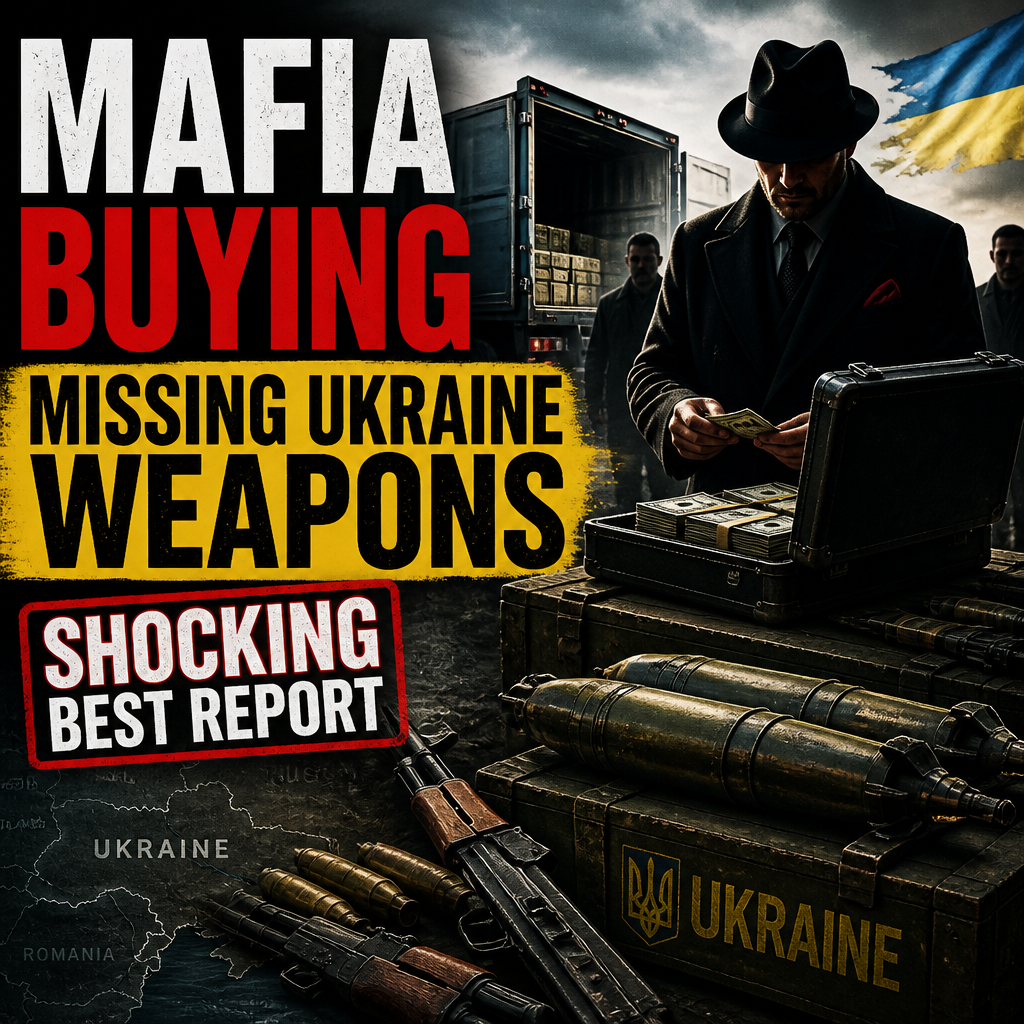
Mafia Buying Missing Ukraine Weapons is a claim that has reignited fears about where battlefield arms end up once they disappear from official oversight, but the reality is more complicated than a single shocking headline suggests.
Reports alleging that organized crime groups are buying weapons linked to the war in Ukraine tap into a familiar post-conflict concern: when a battlefield is flooded with rifles, grenades, drones, and ammunition, some of it inevitably goes missing. What makes this story especially sensitive is the scale of Western military support for Kyiv, the persistence of corruption risks in war zones, and the longstanding ability of criminal networks to move illicit goods across borders. Still, the most responsible reading of the available reporting is not that a proven, continent-wide weapons pipeline has been conclusively mapped out, but that there are credible reasons to worry about leakage, opportunistic trafficking, and the difficulty of tracking every piece of equipment once it enters a combat environment.



What the reporting is really saying
The most attention-grabbing version of the story comes from reporting that suggests Italian mafia groups may be seeking or purchasing weapons that have gone missing in Ukraine. That allegation matters because it connects two separate anxieties: Europe’s organized crime infrastructure and the vast quantity of arms circulating during the war. But the claim should be handled carefully. “Missing” can mean many different things: stolen from depots, lost in combat, sold by corrupt intermediaries, or simply unaccounted for in a fast-moving war.
This is where other international coverage helps put the issue in context. Al Jazeera’s war reporting has repeatedly highlighted the enormous human and logistical strain inside Ukraine, including the challenge of governance under wartime conditions. In that environment, it is plausible that some weapons could slip through controls, particularly if supply lines are stretched and administrative oversight is uneven. Sky News, meanwhile, has consistently covered the wider security consequences of the war for Europe, including the possibility that instability in one country can feed criminal markets elsewhere. Put together, the picture is less about a single dramatic transfer and more about a structural vulnerability.




A useful way to think about this is in three layers:
– Battlefield chaos: Weapons can be lost, abandoned, or captured.
– Internal corruption and diversion: Some arms may be stolen or sold through illicit channels.
– Transnational crime demand: Groups with money and logistics can try to buy what is available.
That chain does not prove a widespread mafia-Ukraine weapons market on its own, but it does explain why the allegation cannot be dismissed out of hand.
Why organized crime would be interested in these weapons
Organized crime groups are rarely interested in weapons for symbolic reasons. They want leverage, protection, intimidation, and profit. In Europe, criminal networks already traffic narcotics, counterfeit goods, and people; weapons are another tradable asset. If combat weapons from Ukraine are accessible, they may be attractive because they can be sold to smaller gangs, used for protection rackets, or stockpiled for future violence.
The concern is not just theoretical. European law enforcement agencies have long warned that weapons from conflict zones can seep into criminal markets after wars or state collapse. The Balkans, Libya, and Syria all demonstrated how conflict-zone arms can remain in circulation for years. Ukraine, with a much larger scale of military activity and sustained international weapons support, presents a bigger version of the same risk.
That said, the existence of criminal demand does not automatically mean large numbers of weapons are being absorbed by mafia groups. Trafficking depends on many hurdles: border checks, source access, transport routes, cash buyers, and trustworthy middlemen. Firearms are bulky and visible compared with drugs or digital fraud, which makes them harder to move quietly in large quantities. So while organized crime interest is real, the volume that can actually be transferred is another matter.
The evidence gap and why caution matters
One of the most important points in this debate is that public reporting and proof are not always the same thing. Allegations about mafia-linked purchases may be based on intelligence, police concern, or isolated incidents. Those are not trivial, but they are not the same as a verified pattern showing that large stores of Ukrainian weapons are now routinely ending up in criminal hands.
That distinction matters for at least three reasons.
First, exaggerated claims can distort public understanding of Ukraine’s battlefield needs. A country defending itself against invasion still requires weapons, and blanket suspicion can be used to undermine legitimate assistance.
Second, sensational reporting can obscure the real policy problem: not whether every weapon is traceable, but how to improve end-use monitoring, inventory controls, and anti-corruption safeguards.
Third, panic-based narratives can feed disinformation. Russia-friendly outlets have an obvious interest in amplifying stories that suggest Western aid to Ukraine is fuelling crime or corruption. That does not mean every concern is false; it means the context deserves scrutiny.
A fair conclusion is that the risk of diversion is credible, the organized crime angle is plausible, and isolated incidents may already exist. But the leap from “some weapons are missing” to “mafia networks are broadly arming themselves from Ukraine” needs stronger public evidence than headlines alone.
What should happen next
If governments want to reduce the risk, the answer is not denial. It is tighter oversight.
Key steps include:
– stronger serial-number tracking and digital inventory systems
– more frequent audits of weapons stockpiles
– better cooperation between Ukrainian authorities, NATO states, and Europol
– targeted anti-corruption investigations at border crossings and logistics hubs
– intelligence sharing on buyers, brokers, and transport networks
These are not glamorous measures, but they are the ones most likely to matter. They also align with the broader reporting across international outlets: the war’s consequences do not stop at the front line. They spill into governance, policing, and Europe’s criminal underworld.
The smartest takeaway is neither alarmism nor dismissal. The possibility that organized crime is trying to exploit missing weapons from Ukraine is serious enough to warrant action, but not yet clear enough to justify sweeping conclusions. In other words, the danger appears real, but the full scale of it remains uncertain.