Iran No Negotiations With US: Stunning Update


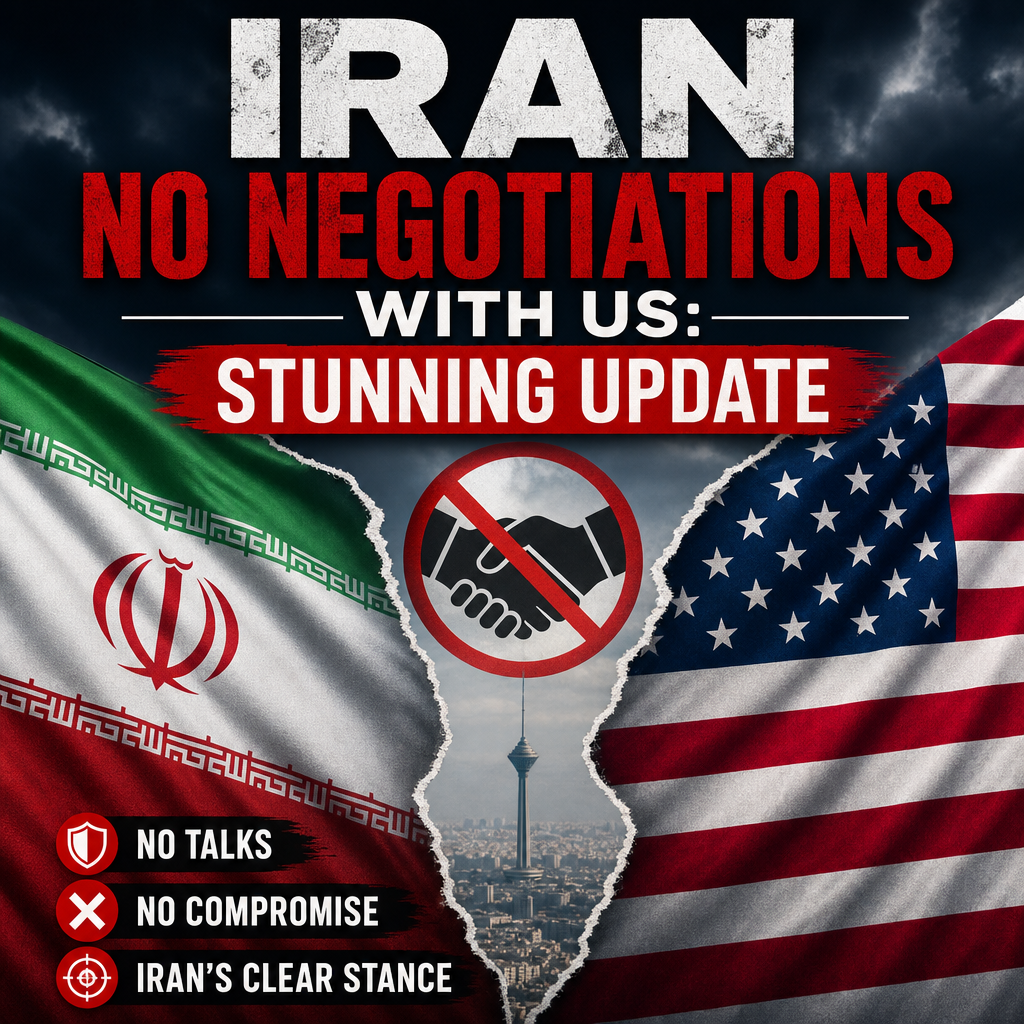
Iran no negotiations with US is the message now coming out of Tehran, and it lands at a time when tensions, mistrust, and regional uncertainty are already running high.
The latest reporting suggests Iran is publicly closing the door on direct talks with Washington, at least for now, while leaving open the possibility that diplomacy could re-emerge through indirect channels or under different political conditions. That distinction matters. In Middle East diplomacy, “no negotiations” rarely means forever; more often, it signals a hardening of positions, a warning to rivals, or an attempt to strengthen leverage before any future talks.



What makes this moment especially notable is that multiple news outlets are presenting the issue through different lenses. Some emphasize the strategic logic behind Tehran’s refusal. Others focus on the risk that this stance could deepen regional instability. Taken together, the reporting paints a picture of a relationship that is not just strained, but structurally broken.
Why Iran is drawing a harder line
From Iran’s perspective, saying there are no negotiations with the US can serve several purposes at once.




First, it reinforces the government’s long-standing argument that Washington cannot be trusted to honor agreements. That view is rooted in years of conflict over sanctions, nuclear restrictions, and the collapse of the 2015 nuclear deal after the US withdrew from it. For Iranian officials, the lesson has often been that engaging without guarantees leaves Iran exposed to pressure with little return.
Second, a firm public stance can be used domestically. Iranian leaders face a population that has lived with economic strain, international isolation, and political frustration. A tough line toward the US may play well with hardliners and security institutions that view compromise as weakness. It also allows the government to frame itself as resisting external coercion rather than bargaining from a position of vulnerability.
Third, the declaration may be tactical. In diplomacy, refusing talks outright can be a way of increasing negotiating value later. By signaling that dialogue is off the table, Iran can try to force others—whether the US, European governments, or regional actors—to reassess their approach.
Still, that strategy is not without risk. The harder the public posture becomes, the narrower the path back to diplomacy may be.
What the reports suggest about the wider regional stakes
The broader concern reflected in coverage from outlets such as Al Jazeera, Sky News, and RT is that a breakdown in US-Iran communication does not stay contained for long. It can ripple across the region.
There are at least three immediate implications:
– Nuclear tensions could rise again. Even limited diplomatic contact has often been used to manage disagreements over Iran’s nuclear program. Without talks, the space for compromise shrinks.
– Regional proxy tensions may intensify. Iran’s relationships with allied groups and rival states are often read through the lens of its standoff with Washington.
– Miscalculation becomes more likely. When adversaries stop talking, they tend to interpret each other’s moves in the worst possible way.
Sky News’ style of coverage typically underscores the geopolitical risk: a public refusal to negotiate can look like a symbolic statement, but it also raises the chance of escalation if either side decides to test the other. RT’s reporting, meanwhile, often frames the issue in terms of confrontation between Iran and the West, stressing how sanctions and pressure have shaped Tehran’s distrust. Al Jazeera frequently places such developments in the broader regional and diplomatic context, including how external pressure, domestic politics, and regional wars interact.
The convergence across these perspectives is important. Even when the emphasis differs, the underlying warning is similar: this is not just a bilateral dispute. It affects energy markets, maritime security, regional alliances, and the future of nonproliferation diplomacy.
Iran no negotiations with US: real policy shift or temporary message?
The key question is whether this is a durable policy shift or a forceful negotiating tactic. Based on the available reporting, the most honest answer is that it may be both.
On one hand, there are genuine reasons for Tehran to resist direct talks. Leaders in Iran can point to past failures of US commitments and argue that negotiations have delivered more political pain than economic relief. From that standpoint, caution is understandable.
On the other hand, permanent refusal would be costly. Iran still needs economic stability, international trade, and room to manage its nuclear file without triggering additional pressure or isolation. If direct talks remain impossible, some backchannel or indirect mechanism is likely to persist, even if it stays hidden from public view.
That is why the phrase “no negotiations” should be read carefully. In diplomatic language, public firmness often coexists with quiet signaling. Countries sometimes reject talks loudly while still preparing the conditions for them privately.
A balanced read: what to watch next
At this stage, the most responsible conclusion is that the situation is fluid, not settled.
What should observers watch?
– Whether Iran repeats the stance consistently or softens it later
– Whether the US responds with sanctions, warnings, or a diplomatic overture
– Whether intermediaries such as European states or regional partners become more active
– Any movement on the nuclear issue, which often acts as the central test of broader engagement
The most likely short-term outcome is not a dramatic breakthrough, but a prolonged standoff with periodic signals from both sides. Iran’s declaration may strengthen its hand domestically, but it also reduces immediate space for de-escalation. For Washington, the challenge is whether pressure will force concessions or simply harden Iranian resistance further.
In the end, the real story is not just that Iran says there are no negotiations with the US. It is that the conditions for meaningful diplomacy remain so damaged that even a simple conversation has become politically costly. That is a sobering sign, because when dialogue becomes a liability, the chances of crisis rise fast.