
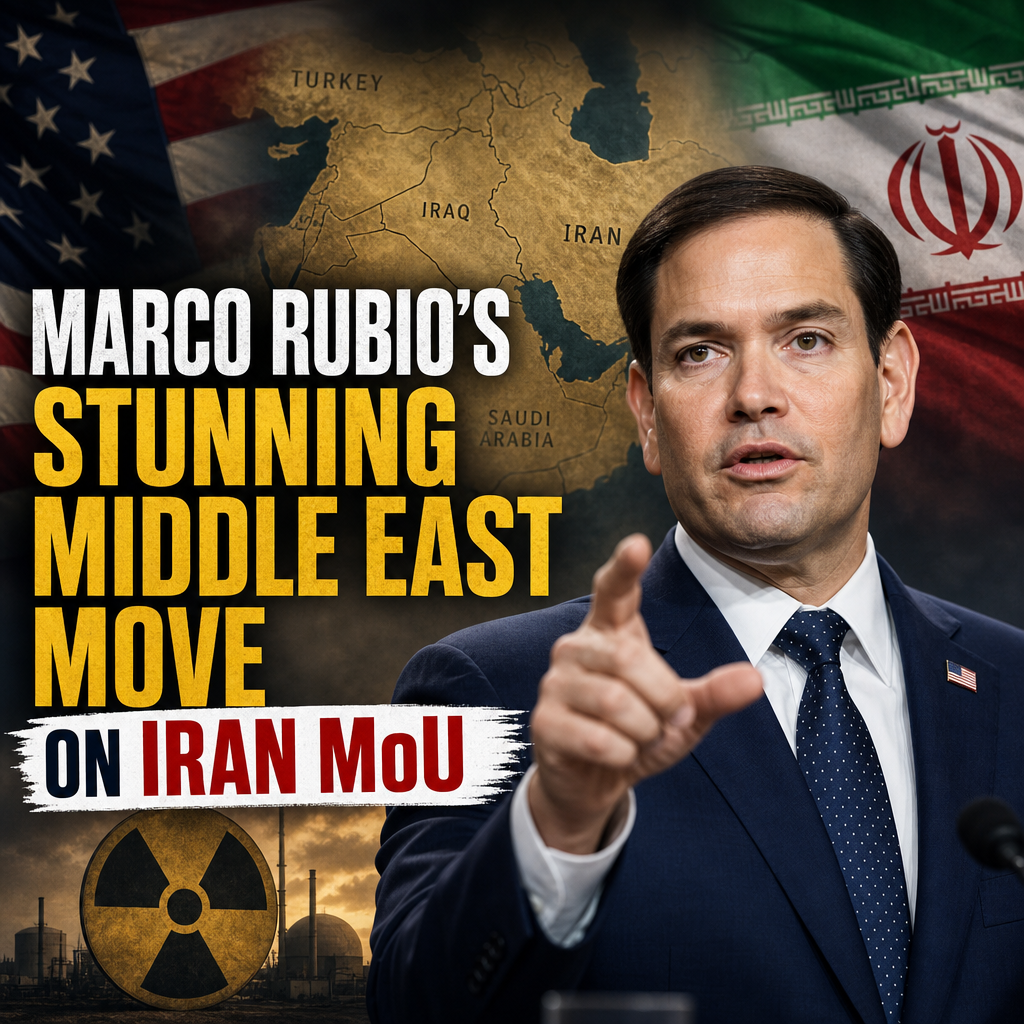
Marco Rubio’s Stunning Middle East Move on Iran MoU


Marco Rubio’s Middle East move on Iran MoU has quickly become one of the most closely watched diplomatic developments of the week, not because it promises an immediate breakthrough, but because it signals how seriously Washington is treating the risks around Iran, the Strait of Hormuz, and the wider regional balance.
Rubio’s trip, as described in reporting from Al Jazeera and echoed in international coverage elsewhere, appears aimed at managing a tense moment rather than announcing a finished deal. That distinction matters. In the Middle East, even a small shift in language, posture, or signaling can influence markets, military readiness, and the calculations of regional powers. What stands out here is that the move is being framed less as a peace mission than as a pressure test: can Washington keep allies aligned, keep shipping lanes open, and keep Iran from escalating while negotiations remain uncertain?



Why the Iran MoU matters now
At the center of the story is the idea of a memorandum of understanding, or MoU, tied to Iran and the security of the Hormuz corridor. The Strait of Hormuz is one of the world’s most important energy chokepoints, and any fear of disruption can ripple far beyond the Gulf. That is why the issue is being watched not only by governments, but also by traders, shipping firms, and oil-importing countries.
The reporting suggests that Rubio’s mission is linked to the broader question of deterrence: how to prevent the current diplomatic standoff from spilling into direct confrontation. In that sense, the MoU is not just a document. It is a signal of intent. If Washington and its partners can present a coherent front, it may reduce the chances of miscalculation. If they cannot, the risk of escalation rises.




Different outlets tend to emphasize different parts of that picture:
– Al Jazeera’s framing places the story in the context of regional diplomacy and the wider consequences of U.S.-Iran tensions.
– Sky News coverage, in a broader international sense, tends to highlight the practical implications for allies, security cooperation, and the possibility of a fast-moving crisis.
– RT’s perspective often underscores the geopolitical rivalry angle, portraying U.S. moves through the lens of confrontation, sanctions pressure, and Western influence in the region.
Taken together, those viewpoints show why this trip is being read so differently depending on the audience. For some, it is a stabilizing diplomatic effort. For others, it looks like another round of hardline U.S. signaling.
Marco Rubio’s Middle East move: diplomacy, deterrence, and domestic politics
Rubio’s involvement is notable because he is not just a symbolic messenger. As a senior U.S. figure with a long record of hawkish views on Iran, his presence in the region suggests the administration wants both credibility and flexibility. On one hand, he can reassure partners that Washington is paying attention. On the other, he can reinforce the idea that any deal with Iran will be tied to enforceable conditions, not vague promises.
That creates an interesting tension. A tougher messenger can strengthen deterrence, but it can also narrow the diplomatic space. Iran is unlikely to respond warmly to a U.S. approach that feels like an ultimatum. At the same time, regional allies—especially those most exposed to instability in the Gulf—may prefer firmness over ambiguity. So the trip sits at the intersection of two demands that are not always easy to reconcile: de-escalation and resolve.
There is also a domestic political dimension. Any movement involving Iran is filtered through Washington’s internal debate over sanctions, security, and the legacy of past nuclear negotiations. That means Rubio’s role could be read as part policy mission, part political message. It reassures hardliners that the U.S. will not concede too much, while also giving the administration room to argue that it is actively preventing a larger crisis.
What the trip may achieve
A realistic assessment should avoid overhyping the visit. It is unlikely to produce an immediate, sweeping breakthrough. But it could still matter in several practical ways:
– strengthen coordination with Gulf partners
– clarify U.S. red lines around maritime security
– reduce confusion about Washington’s negotiating posture
– send a market signal that disruption in Hormuz will be treated seriously
– create space for quieter backchannel discussions
In other words, the value may lie in managing expectations and preventing accidents, not in signing a grand agreement.
The bigger question: deal-making or damage control?
The most honest conclusion is that Rubio’s trip reflects both opportunity and fragility. If the MoU leads to real cooperation, it could lower the temperature around one of the world’s most dangerous flashpoints. But if it is seen as one-sided or purely coercive, it may harden the very positions it is meant to soften.
That is the central uncertainty running through the coverage. There is no clear evidence yet that a durable breakthrough is close. What is clear is that the stakes extend well beyond diplomatic optics. The Hormuz route matters to global energy security, Gulf allies care deeply about reassurance, and Iran will be watching for signs of whether Washington is trying to negotiate, contain, or corner it.
For now, Rubio’s move looks less like the end of a story than the opening of a more delicate phase. The success of the mission will depend on whether the U.S. can balance firmness with enough room for Iran and regional actors to avoid choosing escalation. In this kind of crisis, the most important outcome is often the one that does not make headlines: restraint.

























