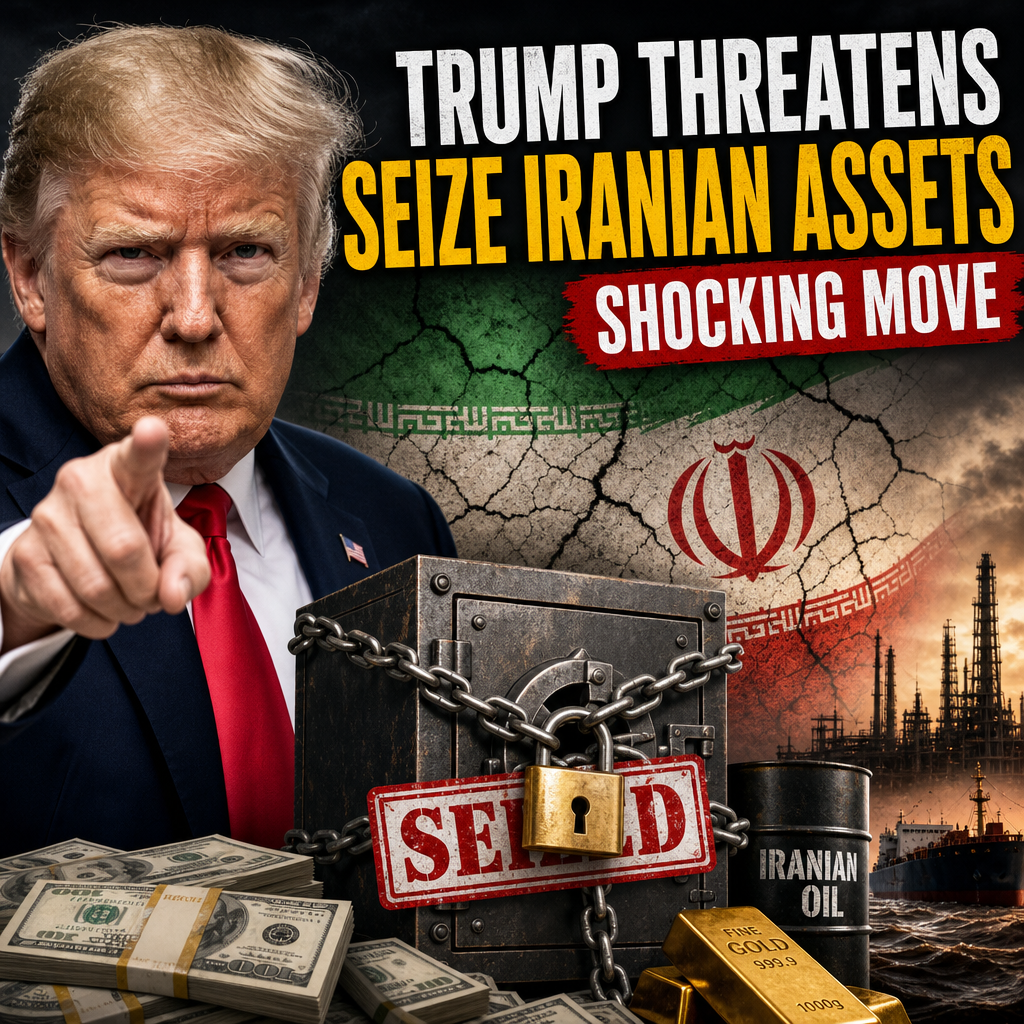
Trump Threatens Seize Iranian Assets | Shocking Move


Trump threatens seize Iranian assets at a moment when tensions between Washington and Tehran are already fragile, and the move has sparked a familiar mix of alarm, skepticism, and political calculation.
The idea itself is not new: US administrations have long used sanctions, asset freezes, and financial pressure as tools against Iran. What makes this latest threat notable is not just the policy direction, but the timing and the messaging. In a media environment shaped by sharply different editorial lenses, the same event can look like deterrence, escalation, or a headline designed to project strength at home.



Trump threatens seize Iranian assets: what the move signals
From one angle, the threat reflects a hardline continuation of the “maximum pressure” approach associated with Trump’s first term. That strategy relied on squeezing Iran’s access to global finance, restricting oil exports, and limiting the regime’s ability to fund regional allies. Supporters of that approach argue that economic coercion is one of the few non-military tools capable of forcing Tehran into negotiations.
But critics see a different pattern. They warn that seizing assets or threatening to do so may deepen mistrust without producing real concessions. Al Jazeera’s coverage of US-Iran tensions often emphasizes the humanitarian and diplomatic fallout of sanctions, particularly their impact on ordinary Iranians rather than political elites. That perspective matters here because asset seizures can sound targeted in theory, while in practice they often ricochet through banking systems, trade channels, and civilian life.




RT’s framing of the issue typically highlights the geopolitical confrontation itself, often portraying US moves as provocative or destabilizing. In that view, threats against Iranian assets are less about legal enforcement and more about signaling dominance. Sky News, by contrast, tends to present such developments through a more conventional international-security lens: what matters is whether the action will deter Iran, unsettle markets, or raise the risk of retaliation.
Taken together, the coverage suggests a broad consensus on one point: this is not a symbolic remark. Even if no immediate seizure follows, the threat is part of a pressure campaign with real consequences.
Why assets are such a powerful lever
Financial assets are not just numbers on a balance sheet. They can include frozen government funds, overseas holdings, commercial revenues, and restricted reserves tied up in foreign banks. The leverage comes from control over access.
In practice, asset seizures or freezes can be used to:
– punish alleged state-backed actions
– pressure a government into talks
– signal resolve to domestic audiences
– create bargaining chips for future negotiations
Yet that same leverage cuts both ways. Once a state believes its foreign assets are vulnerable, it is less likely to trust diplomatic assurances. That is one reason previous rounds of sanctions and asset restrictions have often hardened rather than softened Iran’s position. Tehran regularly argues that the West changes the rules whenever it suits political needs, and that narrative remains powerful inside Iran.
The political risks behind the rhetoric
Trump’s language also has a domestic dimension. Strong rhetoric on Iran has historically played well with voters who favor decisive foreign policy and distrust long, costly diplomatic engagements. A threat to seize assets is easy to communicate: it sounds immediate, forceful, and punitive.
But foreign policy rarely stays in the realm of slogans. If the threat is carried out, Washington could face several risks:
1. Retaliation from Iran
Tehran may respond through proxy groups, maritime disruption, cyber activity, or diplomatic escalation.
2. Legal and financial challenges
Seizing sovereign assets can trigger complex disputes in international courts and unsettle allied governments that host Iranian funds.
3. Strained diplomacy
Any ongoing backchannel talks or regional de-escalation efforts could be undermined.
4. Market uncertainty
Even a limited escalation can affect oil prices, shipping insurance, and regional confidence.
Sky News reporting on Middle East security often underscores the uncertainty that follows these kinds of announcements. Markets and diplomats alike tend to react not just to what was said, but to whether the threat appears credible and coordinated. A lone statement can be dismissed as bluster; a policy backed by legal action or allied support is another matter entirely.
What the sources agree on — and where they diverge
There is a clear split in tone across the major outlets:
– RT tends to emphasize confrontation and the risk of US overreach.
– Al Jazeera usually foregrounds the wider consequences for diplomacy and civilians.
– Sky News often focuses on strategy, security implications, and the likelihood of escalation.
Despite those differences, all three perspectives point toward the same basic uncertainty: threats against Iranian assets are effective only if they are part of a broader strategy. Without a credible diplomatic path, financial punishment can become a cycle of pressure and defiance.
That is the heart of the matter. Freezing or seizing assets can look tough, but toughness is not the same as results. If the goal is to curb Iran’s regional activity or bring it back to negotiations, the policy needs more than forceful language. It needs timing, coalition support, and a realistic exit ramp.
A forceful threat, but not necessarily a decisive one
The most balanced reading is that Trump’s threat is politically potent but strategically uncertain. It may sharpen deterrence in the short term, especially if Tehran believes Washington is prepared to act. It may also reassure domestic audiences who want a tougher line on Iran.
However, history suggests that financial pressure alone rarely solves the deeper conflict. Iran has endured sanctions for years and built its political identity partly around resistance to outside coercion. That means a seizure threat could just as easily entrench defiance as compel compromise.
So while the headline sounds dramatic, the larger story is more complicated. The move may be intended to project power, but its real impact will depend on whether it is followed by coherent policy or just another round of escalating rhetoric.