US Iran Oil Sanctions Lifted: Stunning Positive Talks


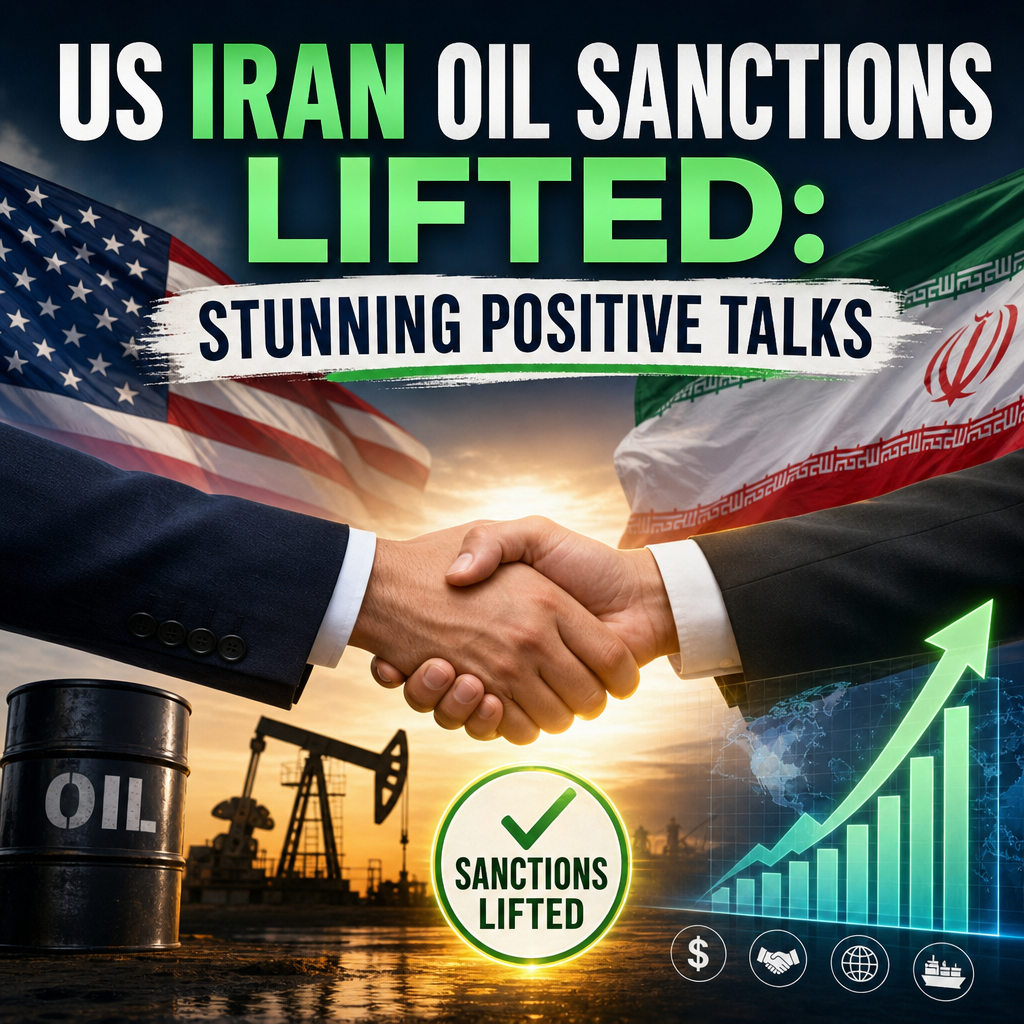
US Iran oil sanctions lifted in a partial move that could signal a shift in one of the world’s most tense geopolitical relationships, but the significance of the decision depends heavily on whether the current talks produce something durable or simply pause a bigger confrontation.
The latest reporting points to an atmosphere of cautious optimism rather than celebration. Some observers see the move as a practical step to ease pressure on global energy markets and create space for diplomacy. Others read it as a risky concession that may weaken leverage over Tehran before a broader agreement is secured. That split captures the heart of the story: this is not just about oil, but about trust, timing, and the balance between economic relief and political strategy.



Why the US Iran oil sanctions lifted decision matters
For years, sanctions on Iranian crude have been one of Washington’s strongest tools for trying to influence Tehran’s behavior. They have also been a major factor in limiting Iran’s ability to sell oil freely on international markets. Any relaxation of those restrictions is therefore far more than a trade issue. It can affect energy prices, regional diplomacy, and the calculations of allies and rivals across the Middle East.
Reports surrounding the move suggest the administration is responding to “encouraging talks” and may be testing whether limited economic easing can keep negotiations alive. That approach has a logic to it: sanctions can punish, but they can also harden positions if they are seen as permanent or politically inflexible. A partial lift may be intended as an incentive, a signal that diplomacy still has value.




But there is a real counterargument. Critics of sanctions relief often warn that once restrictions are loosened, it becomes harder to reapply pressure if talks stall. That concern is especially strong when the issue involves oil revenue, which can quickly strengthen a state’s fiscal position. In that view, any relaxation should be tied to verifiable commitments, not vague assurances or temporary goodwill.
The reporting landscape also shows how differently audiences interpret the same event. Some coverage leans toward the possibility of a breakthrough, emphasizing de-escalation and the chance to stabilize relations. Other accounts frame the move more skeptically, highlighting the historical pattern of distrust and the long record of negotiations that began with optimism and ended in stalemate.
What supporters of the move see
Supporters of a sanctions rollback argue that diplomacy often requires visible gestures. If the goal is to reduce tensions, then opening a path for Iranian oil exports can serve as a confidence-building measure. It may also help reduce pressure on energy markets, especially if supply conditions are tight.
From this perspective, the move reflects realism rather than softness. Broad sanctions have not always achieved their intended political results, and they can sometimes entrench hardliners by allowing them to blame outside powers for domestic hardship. A limited easing, supporters say, may strengthen moderates and prove that negotiations can deliver tangible benefits.
There is also the practical argument that oil markets respond quickly to uncertainty. Even a partial loosening can influence prices, shipping routes, and expectations among producers and buyers. In a world still sensitive to energy disruptions, the economic effect may matter almost as much as the diplomatic symbolism.
Why skeptics remain unconvinced
Skeptics see the decision very differently. To them, “encouraging talks” is not the same as a durable agreement, and lifting sanctions too early risks rewarding uncertainty. Iran’s critics argue that Washington has, in the past, traded leverage for promises that were difficult to verify or enforce.
There is also concern about what the revenue could finance. Oil income is not neutral; it can help stabilize a government, but it can also support regional influence and military capacity. That makes any sanctions relief politically sensitive not just in Washington, but also among U.S. partners who fear a stronger Iran without matching concessions.
A deeper skepticism comes from the long memory of failed diplomacy. Many previous rounds of engagement have produced hopeful headlines and little else. That history means the burden of proof now lies with the negotiators. If the talks are truly progressing, the public will want to see concrete steps, not simply warmer language.
How the region may respond
The reaction from the broader region will likely be mixed. Some governments may welcome anything that lowers the risk of escalation. Others may worry that loosening sanctions changes the strategic balance in ways they cannot control.
Potential outcomes include:
– A temporary easing in oil market pressure if Iranian exports rise
– Renewed diplomatic contact between Washington and Tehran
– Tension among regional rivals who fear Iran gaining more financial room
– Domestic criticism in the U.S. if the move is seen as premature
That combination makes the policy both potentially useful and politically fragile. A diplomatic opening can be valuable, but only if it is managed with clear conditions and transparent goals.
A cautious reading of the moment
The best interpretation is probably neither triumphal nor alarmist. The decision to partially lift oil sanctions may indicate that both sides are willing to keep talking, which is itself meaningful in a relationship marked by confrontation. At the same time, the word “partial” matters. It suggests caution, limits, and perhaps uncertainty about what comes next.
That is why the most responsible conclusion is also the least dramatic: this looks like an early test, not a final settlement. If the talks deepen, the sanctions decision could become the first sign of a broader diplomatic shift. If they collapse, it may be remembered as another brief thaw in a very cold relationship.
For now, the signal is encouraging, but the substance is still unproven. In issues this sensitive, headlines can move faster than history.